Complete Guide to Planning a Youth Baseball or Softball Practice
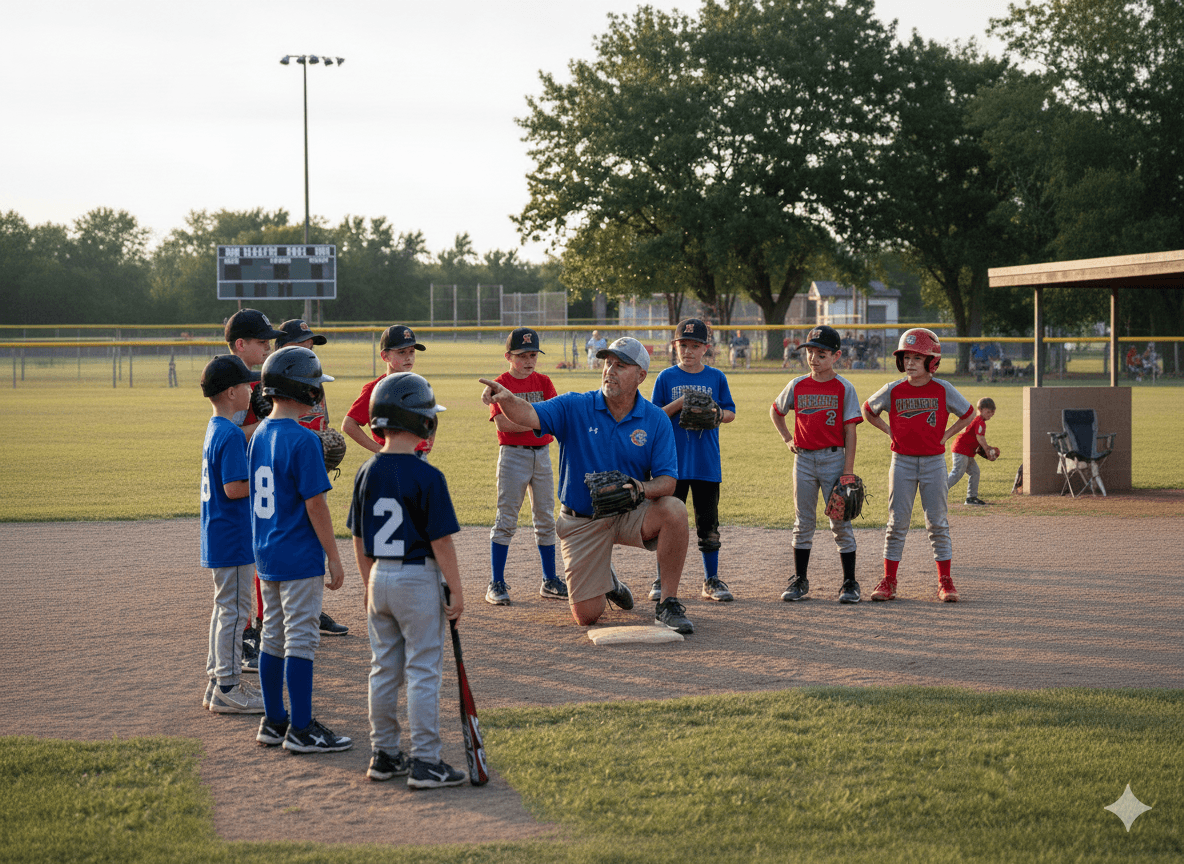
Running effective youth baseball or softball practices requires detailed planning, engaging drills for a wide range of skill levels that focus both on fun and fundamentals. Whether you're coaching 4-6 year olds in tee-ball or 11-12 year olds in competitive little leagues, this comprehensive guide provides everything you need to know about creating engaging, skill-building practices that keep players motivated and developing.
We understand, being a first-time coach can be daunting. But let's not forget, it's not that serious! Going in to your first practice with a detailed schedule and plan is all you need. Then, just like the kids that you're coaching, it's all about repetition! Hear from other coaches who've been in your shoes, you've got this.
From first-time coaches to experienced veterans, you'll find ready-to-use practice plans, fundamental drill progressions, and proven strategies that keep players engaged while building essential baseball skills. According to research from the Positive Coaching Alliance, well-structured practices with clear objectives lead to 40% better skill retention and significantly higher player satisfaction compared to unstructured "just play" approaches.
This guide will provide practical tips on how to create the perfect practice plan tailored to all age levels, and links to useful tools to help take planning from an hour-long task to just minutes.
Looking for ready-made plans instead? Browse our free, printable baseball practice plans and softball practice plans, organized by age group from tee ball through high school. Prefer to build your own? The free practice planner creates a complete, timed plan in minutes.

Why Structured Youth Baseball or Softball Practice Plans Matter
Structured practices are essential for youth baseball development, safety, and player enjoyment. When players know what to expect and coaches maintain organized, focused activities, everyone benefits from increased quality repetitions and enhanced learning opportunities.
Key Benefits of Structured Practices:
- Faster Skill Development: Clear objectives and high repetition rates accelerate learning
- Improved Safety: Organized activities reduce confusion and prevent accidents
- Enhanced Engagement: Players stay focused when they know what's coming next
- Team Culture Building: Structured practices teach discipline, effort, and teamwork
- Parent Confidence: Organized practices demonstrate professional coaching approach
Core Components of Effective Youth Baseball Practices
Every successful youth baseball practice follows a consistent structure with five essential building blocks. Think about breaking your practice into these 5 components when creating your schedule:
1. Team Huddle & Goals (5 minutes)
- Purpose: Set expectations and build team unity
- Activities: Welcome players, announce practice goals, review team rules
- Coaching Tips: Keep it brief, positive, and age-appropriate
Greet your players and put a smile on their faces. Your job as a youth coach isn't just to build a winning team, your goal is to build friendships and create a fun and inclusive environment for everyone. It's always helpful to then read through the practice plan for the day so player's know what to expect. Many coaches will do this in the outfield down by one of the foul lines so that it's easy to transition right into the warmups. You can also combine the team huddle with the warm up. This is just a simple guide, but you do what you want. You're the coach!
A team huddle or meeting is also a good opportunity to ask if anyone is injured or if anyone wants to try out a new position on defense that day. You can discuss prior or upcoming games, things to focus on, or just make more general announcements like Birthdays. This is where you have the freedom to be yourself as a coach. Crack a daily joke before practice if you'd like. Communication, building trust and kicking off that team chemistry starts with the coach!
Pro Tip: Print out the practice schedule and post it in the Dugout so that all the kids can see. They love seeing their names written down and what they will be doing for the day.
2. Dynamic Warm-Up & Throwing Progression (10-15 minutes)
- Purpose: Prepare bodies for activity and develop throwing fundamentals
- Activities: Movement prep, throwing ladder, accuracy games
- Coaching Tips: Focus on proper mechanics, not distance
Always start your practice with a simple and repeatable warmup routine. This should include a good mix of static and dynamic stretches. Get the blood moving and the muscles warmed up to prevent injury. You'll want to do at least 1 or 2 base to base length sprints here. Many coaches will use the end of the warmup to work on baserunning: things like practicing leading off and stealing bases.
Once completed, jump into throwing. Put players in pairs (if there's a remainder you can have a group of three). One player stands on the foul line while the other player is doing the backing up. Start close - maybe 15-20 ft apart barely throwing with any speed. With each toss, The player off of the foul line will take a step or two back and continue throwing. The goal is to ramp up until every player is nearly throwing as hard as they can while still reaching the other player. Once you get 4-5 throws in at max velocity and distance, you can start to wrap up throwing. You don't want to tire the arm out as you'll be throwing a lot during practice. As a coach, you can make this structured where all players throw in unison or you can have the pairs go off and just feel it out themselves. It just depends on your preference and players skill levels.
Pro Tip: During stretching, make one player each day lead the stretching by counting to 10 and having all other players repeat after him. "1, 1, 2, 2, 3, 3! etc." This will teach them to not cheat on stretching time and it's a fun way to get everyone involved with a little bit of rah rah action.
3. Skill Development, Defense (30 to 45 minutes)
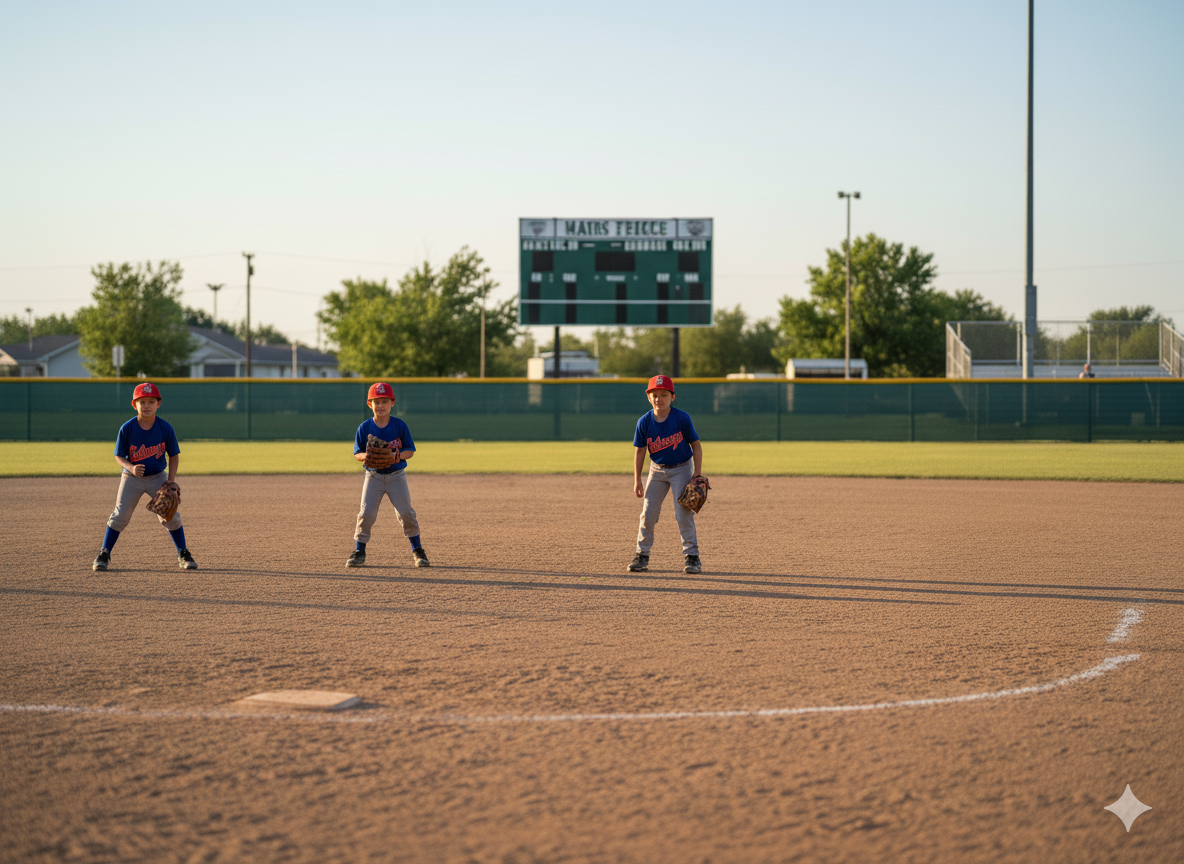
After your team is warmed up and ready to go, then come the meat and potatoes of your practice plan. You'll want to spend the majority of your time and effort focusing on developing skills for offense and defense.
In order to create a good baseball or softball practice plan that emphasizes defense, you'll need to have a good understanding of what positions each player plays. At younger levels, this may not matter, and it may be beneficial to have everybody try everything, but at older levels 9+ this starts to become crucial. Be sure to write it down, or use our practice planner with detailed assignments for every drill to ensure every player is included and working on a skill that they should be working on.
Based on number of coaches/parents, field constraints and equipment, you'll need to determine how to best split these up so that you minimize players standing around doing nothing. Your goal should be to have every player engaged in some sort of drill or activity at any given time. In any case, you need to make sure you cover each of these areas.
Infield
If you have multiple coaches, plan drills that utilize space and work both sides of the infield such as split fungo: one works the left side (3B/SS) while the other works the right (1B/2B). Make a plan so that all positions get to work on fielding grounders and popups running in different directions, they get to throw to every base, and they receive throws covering each of their bases from every position.
Outfield
Plan the outfield drills so that all players get opportunities to play each of the 3 outfield spots, work on fly balls, charging ground balls, and making throws. Script reps moving in, back, and laterally; finish each rep with an aligned throw through the cutoff to every base from 2nd to home. Prioritize reads off the bat over throwing pop ups and using machines.
Pitching
Plan short, age-appropriate pens instead of long sessions. Only include higher-effort mound work when the pitcher has at least 2 full rest days before their next outing; otherwise use flat-ground, dry mechanics, or drill progressions that spare the arm. Track who throws today, cap pitches by age, and add 5 to 10 minutes of fielding practice periodically (bunts, comebackers, 1B cover, picks). Pair pitchers with the catchers when possible. When not performing focused pitching drills, you can use pitchers (without other positions) to conduct catching drills or use them to hit fungos to infielders and outfielders or receive balls.
Catching
Catchers can and should be used to catch live bullpens from catchers, receive throws from infield and outfield drills. They should be yelling out who's throwing the ball where and quarterbacking the infield. But most of all, you need to set time aside to work on blocking drills, framing drills, pitch calling, and throwing runners out.
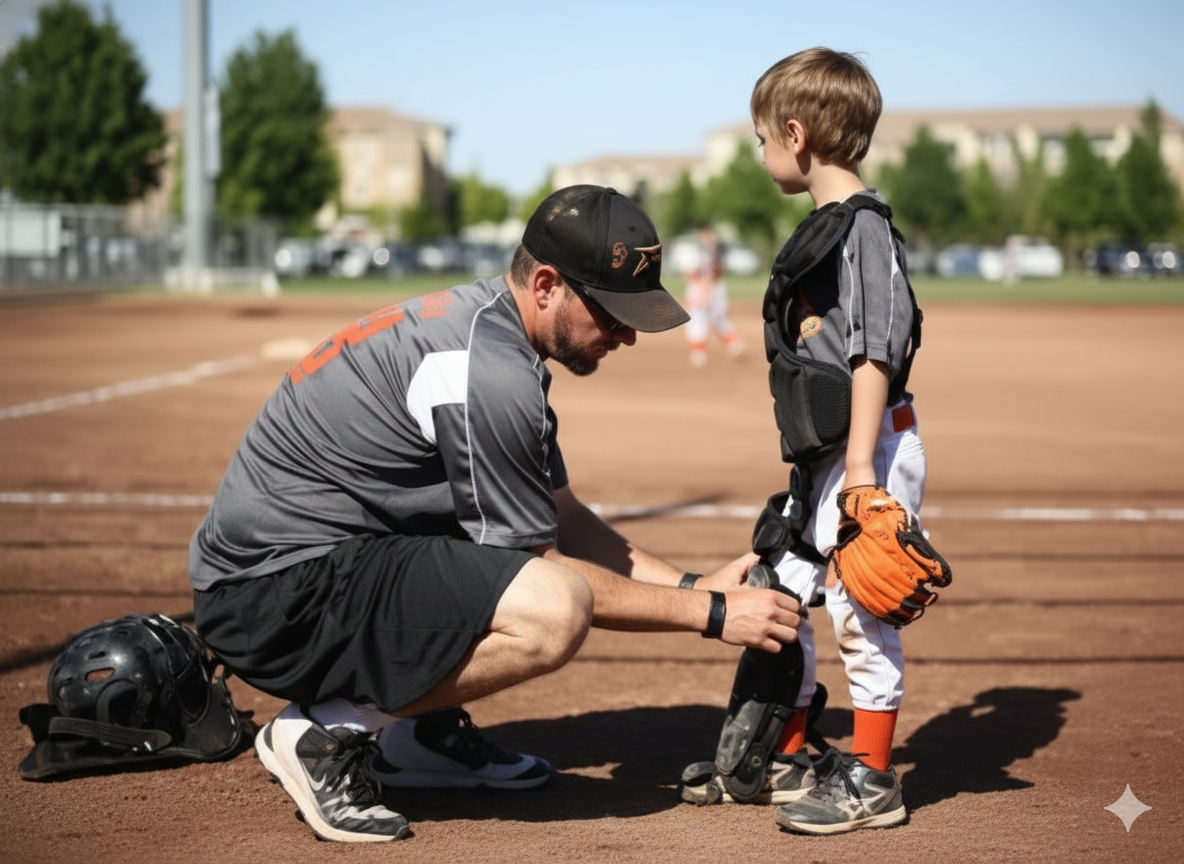
Pro Tip 1: Front-load defense in the schedule so it always gets done well; hitting later becomes a motivator without sacrificing energy for fielding.
Pro Tip 2: End the defensive segment by connecting OF→IF with timed relays and cutoffs. Use a visible timer and small groups to create urgency and clean rotations.
4. Skill Development, Offense (30 to 45 minutes)
- Purpose: Build repeatable contact and smart baserunning with high-rep work
Hitting - every kids favorite part of baseball or softball practice. If you don't score, you can't win. A dedicated and structured plan to get all player's working on their swings and baserunning is vital for coaching a youth baseball or softball team. Again, the goal is to keep as many kids involved with drills at any given time.
Hitting
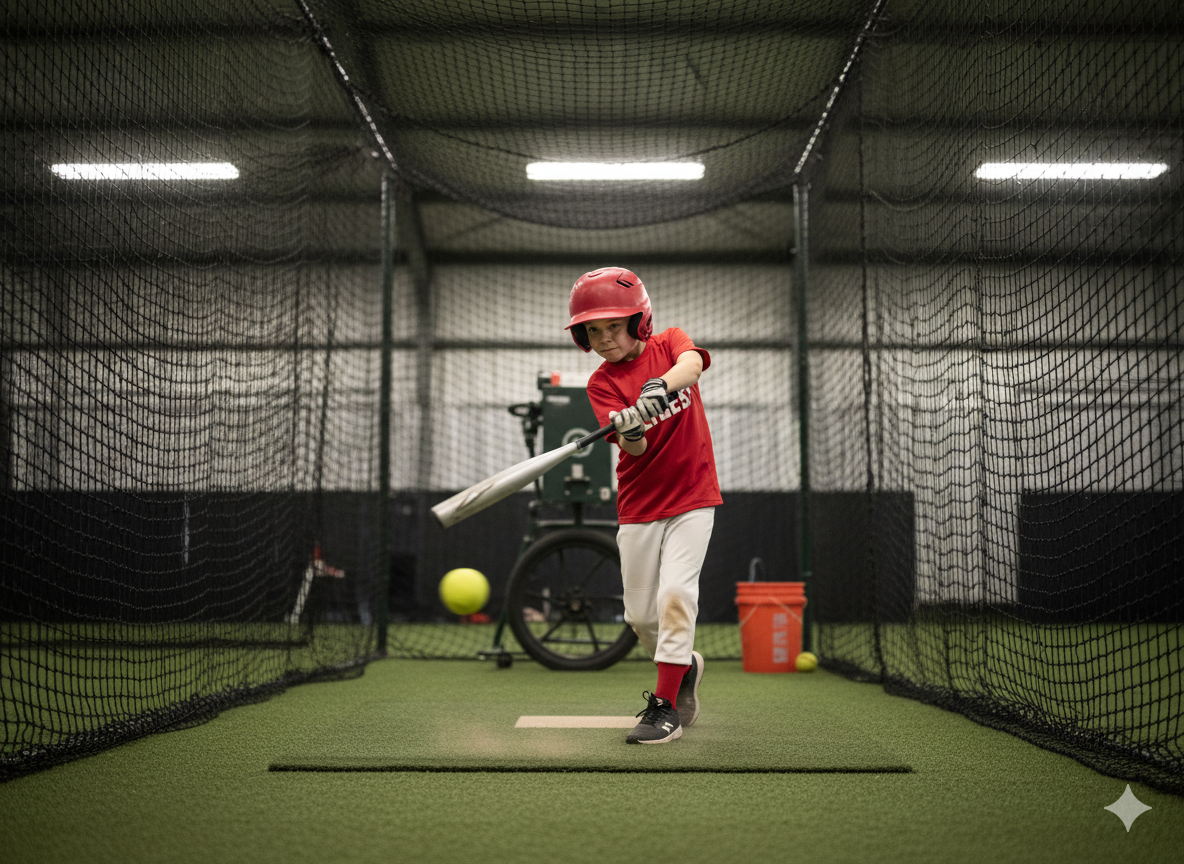
Space and coaches permitting, plan 3-5 hitting stations to keep swings moving. Prioritize live pitching on the field, then live pitching off the field. If there isn't a coach available, soft-toss or tee work are good secondary stations to have. Work in age appropriate drills based on your player's skill levels. At younger levels, dry swings with a focus on mechanics can be beneficial as well. If doing live hitting on the field, you can take that opportunity to make one station a baserunning station.
Baserunning
Block baserunning in short circuits or pair with hitting on the field to get live reads. Carve out time to practice running through 1st base, rounding bases (left-inside corner), and understanding what to do in different game situations (tagging on popups, freezing on line drives etc.). Create lines and stack runners so multiple are going at once. Match practice plan to league rules (lead-offs/steals). Baserunning practice can also be seperated from hitting drills and used as conditioning, or paired with defense work as you will need baserunners to simulate situational defense.
Pro-Tip: Make games out of batting practice. Keep track of how many hits the players get and promote friendly competition amongst teammates.
5. Game-Like Situations (15 to 25 minutes)
- Purpose: Apply offense and defense together with live reads and decisions
- Activities: Scripted defensive situations with live base runners and batted balls
- Coaching Tips: Start simple; use both sides of the ball; add pressure gradually
Script scenarios before you start (e.g., R1/0 outs; R2/1 out; bases loaded/2 outs). Use our free digital chalkboard to diagram plays and show players exactly where they need to be. Announce the state, place runners, and alternate balls to LF/CF/RF and different infielders. Freeze for 5 to 10 seconds only to check positioning/responsibilities, recap what just happened, then rerun at game speed.
Be sure to mix in bunts, pitcher's fielding practice and long outfield relays if you didn't get the chance to odo so earlier in the practice. Rotate who fields and who runs so everyone rehearses both sides. Cap the block and keep a clear rotation order to maintain pace. Ensure that before every situation, all players are assessing the situation and communicating what needs to happen "Infield turn two, outfield go three!".
Pro Tip: Use a simple scoreboard, award points for the correct defensive decision and for the correct baserunning read to keep both units locked in.
6. Optional Strength & Conditioning, Cool-Down & Wrap-Up (5-10 minutes)
- Purpose: Reinforce learning and build team culture
- Activities: Light stretching or short movement circuit, review highlights, set next goals
- Coaching Tips: End on a positive note, celebrate effort, keep cadence consistent
Although baseball player's come in all sorts of shapes and sizes, it's still a sport. And all athletes need to work on strength and conditioning. Use the field to do pole to pole foul runs, base running sprints, or more standard workouts like pushups, lunges etc. If you're a nice coach you can do this on specific days of the week instead of at every practice.
Afterwards, plan a 2 to 3 minute cool-down (stretching/mobility), a 1 to 2 minute recap (one team win + one skill to revisit), and a quick preview of next practice or game so families know what’s coming. Keep the cadence consistent so players learn the rhythm of closing together. Invite 1 to 2 player shout-outs to reinforce team culture. After practice, take the time to speak to player's and parents individually to stay connected and get to know everyone. This works great to build trust and promote open communication between player's and parents.
Pro Tip: Rotate a “practice captain” who leads cool-down, shares one learning, and calls the team cheer.
Equipment for Youth Baseball and Softball Practice
You don’t need much to run a great session: a couple of buckets of balls (mix game balls and softies), one or two tees, a portable net, a handful of cones and bases, and, if you coach older ages, some light bands for arm care. A clipboard, a marker, and tape for targets make the day smoother; water and ice keep everyone safe. As a coach, it's your job or the league's job to make sure field reservations are in order. Make sure you know what days and hours you have the field!
Final Pre-Practice Checklist
Before you blow the whistle: post the plan where players can see it; stage buckets at each station; assign coaches or parent helpers; lay out safety gear (L-screen, catcher’s mask, helmets); and set a timer so blocks stay tight.
Youth Baseball and Softball Practice Plan Examples
The following section provides simple examples of a standard youth baseball or softball practice plan that you can use as inspiration or implement directly with your team.
Looking for ready-to-use templates? Check out our complete library of downloadable practice plans:
- Baseball Practice Plans - Ages 4-12, multiple durations and formats
- Softball Practice Plans - Ages 4-12, multiple durations and formats
Each template includes both station-based and timeline formats, detailed drill instructions, and coaching tips. Or use our Practice Planner to build and generate your own custom practice plans in minutes.
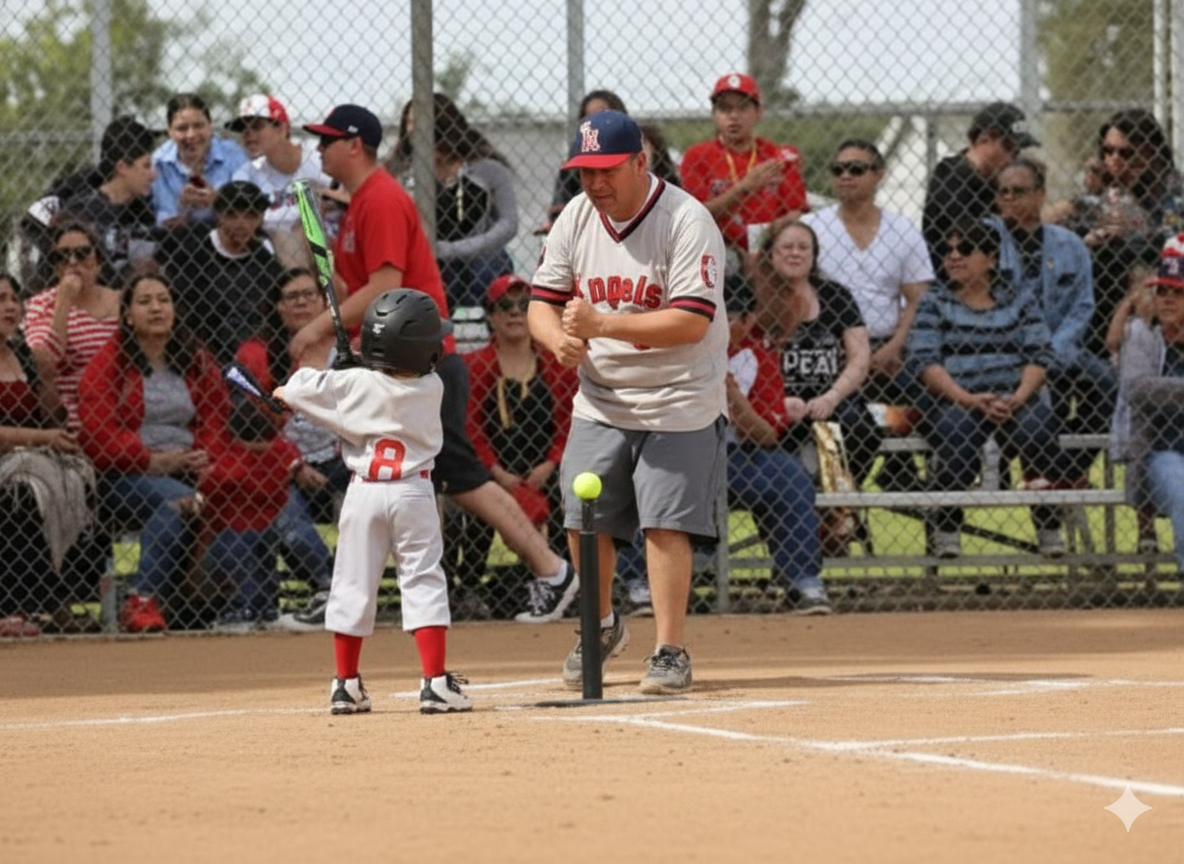
Baseball & Softball Practice Plan Example: Ages 5 to 6 (Tee-Ball)
Development focus: movement games, safe two-hand catching, simple grounders, base tags and turns, short throwing, lots of fun game play.
Practice Plan A (90 Minutes):
- 5:00 to 5:05: Huddle, safety rules, today's goals
- 5:05 to 5:15: Dynamic movement (games like red light/green light)
- 5:15 to 5:25: Throwing intro (very short partner toss) + big target game (Throwing Ladder Progression scaled short)
- 5:25 to 5:45: Defense Stations (3 stations, 6-7 minutes each, rotate)
- Station 1: Alligator Hands Grounders, Coach rolls soft grounders; players use "alligator hands" (glove on ground, bare hand on top) to secure ball, then toss to bucket 10 feet away
- Station 2: Bucket Catches, Players stand 8 feet from coach; coach tosses tennis balls underhand; focus on two-hand catches and "give" with the ball
- Station 3: Base Tag Races, Players practice stepping on bases with proper foot while holding ball; make it a fun race between groups
- 5:45 to 6:05: Offense Stations (3 stations, 6-7 minutes each, rotate)
- Station 1: Tee Work Basics, Focus on contact, not distance; use big colorful targets 15 feet away; celebrate every contact
- Station 2: Soft Toss to Net, Coach tosses underhand from side; players swing at waist-high tosses into net; emphasize "hit the ball hard"
- Station 3: Running Through First, Practice running through first base without slowing down; use cones to create "running lane"
- 6:05 to 6:20: Team Game Situations, Three-Base Scrimmage (coach toss; force outs only)
- 6:20 to 6:25: Finisher, Relay races/clean-up game (Relays & Cutoffs Circuit)
- 6:25 to 6:30: Wrap-up, 1 cue to remember, team cheer
Why this works: Short, playful blocks keep attention high and create safe repetitions. Every player throws, fields, runs, and hits in a single session, building early confidence.
Practice Plan B (120 Minutes):
- 5:00 to 5:05: Huddle, roles (line leaders, ball helpers)
- 5:05 to 5:15: Movement circuit (stations: skips, shuffles, karaoke)
- 5:15 to 5:25: Throwing intro + cone knockdown (Throwing Ladder Progression scaled short)
- 5:25 to 6:05: Defense Stations (4 stations, 8-10 minutes each, rotate)
- Station 1: 30 Second Grounders, Coach rolls grounders; players field and toss to bucket; count successful catches in 30 seconds
- Station 2: Outfield Reads & Drops, Coach tosses fly balls; players practice calling "mine" and catching with two hands above head
- Station 3: Throwing to Targets, Set up hula hoops or cones 20 feet away; players practice accurate throws to targets
- Station 4: First Base Footwork, Practice proper footwork for receiving throws at first base; use tennis balls for safety
- 6:05 to 6:35: Offense Stations (3 stations, 8-10 minutes each, rotate)
- Station 1: Tee Work Basics, Multiple tees at different heights; focus on level swing and contact
- Station 2: Front Toss Progression, Coach tosses whiffle balls from 8 feet; players work on timing and contact
- Station 3: Base Running Basics, Practice running to first, turning left, and listening for coach's instructions
- 6:35 to 6:55: Team Game Situations, Three-Base Scrimmage
- 6:55 to 7:00: Cool-down, stickers/effort points, preview next practice
Equal-opportunity rotation: Divide into three or four groups and rotate clockwise every block. During scrimmages, change fielding positions so all players experience different roles.
Baseball & Softball Practice Plan: Ages 7 to 8 (Coach Pitch / Late Tee-Ball)
Development focus: throwing basics and short accuracy, safe catching, contact hitting (tee → front toss), simple grounders, base tags and turns, fun game play.

Practice Plan A (90 Minutes):
- 5:00 to 5:05: Huddle, safety rules, today's goals
- 5:05 to 5:15: Dynamic movement (games like red light/green light)
- 5:15 to 5:25: Throwing ladder + accuracy game (Throwing Ladder Progression + 21-Point Throwing Accuracy)
- 5:25 to 5:55: Defense Stations (3 stations, 8-10 minutes each, rotate)
- Station 1: Alligator Hands Grounders, Coach rolls grounders from 15 feet; players field with proper form and throw to coach or bucket; focus on staying low and using two hands
- Station 2: Outfield Reads & Drops, Coach tosses fly balls; players practice getting under the ball and calling "mine"; use tennis balls for safety
- Station 3: Throwing Accuracy Challenge, Set up targets at 25 feet; players earn points for hitting targets; emphasize step-and-throw mechanics
- 5:55 to 6:15: Offense Stations (2 stations, 8-10 minutes each, rotate)
- Station 1: Tee Work Basics, Focus on contact and follow-through; use different tee heights to work on swing plane; celebrate hard contact
- Station 2: Front Toss Progression, Coach tosses from 10 feet; start with easy tosses, progress to different locations; emphasize "see ball, hit ball"
- 6:15 to 6:25: Team Game Situations, Coach-pitch mini-scrimmage (3 pitches per hitter, force outs only)
- 6:25 to 6:30: Wrap-up, 1 cue to remember, team cheer
Why this works: Short, fun blocks maximize attention and create safe repetitions. Every player throws, fields, runs, and hits within a single session, which builds confidence quickly.
Practice Plan B (120 Minutes):
- 5:00 to 5:05: Huddle, roles (line leaders, ball helpers)
- 5:05 to 5:15: Movement circuit (stations: skips, shuffles, karaoke)
- 5:15 to 5:25: Throwing ladder + cone knockdown (Throwing Ladder Progression)
- 5:25 to 6:05: Defense Stations (4 stations, 8-10 minutes each, rotate)
- Station 1: 30 Second Grounders, Coach rolls grounders; players field cleanly and throw to bucket; count successful reps in 30 seconds
- Station 2: Outfield Reads & Drops, Practice reading fly balls off coach's toss; work on proper footwork and communication
- Station 3: Infield Footwork Basics, Practice proper fielding position and footwork without ball; add slow rollers when ready
- Station 4: Catching Fundamentals, Basic receiving position, framing easy tosses, and throwing to second base (use tennis balls)
- 6:05 to 6:35: Offense Stations (3 stations, 8-10 minutes each, rotate)
- Station 1: Tee Work Basics, Work on contact and swing path; use targets to encourage directional hitting
- Station 2: Front Toss Progression, Progress from easy tosses to different locations; focus on timing and balance
- Station 3: All the Way Through 1st Base, Practice running through first base and listening for coach instructions on turns
- 6:35 to 6:55: Team Game Situations, Three-Base Scrimmage (no catcher; runners advance one base)
- 6:55 to 7:00: Cool-down, stickers/effort points, preview next practice
Equal-opportunity rotation: Divide into three or four groups and rotate clockwise every block. During scrimmages, change fielding positions each inning so all players experience different roles.
Baseball & Softball Practice Plan: Ages 9 to 10 (Minors)
Development focus: throwing accuracy and footwork, glove-to-centerline, consistent contact, smarter baserunning, basic cutoffs/force plays. Brief, age-appropriate pitching/catching.
Practice Plan A (90 Minutes):
- 5:00 to 5:05: Huddle, today's focus (accuracy + infield rhythm)
- 5:05 to 5:15: Dynamic warm-up (Dynamic Warmup Routine for Baseball Pitchers)
- 5:15 to 5:25: Throwing ladder + accuracy game (Throwing Ladder Progression + 21-Point Throwing Accuracy)
- 5:25 to 6:05: Skill Development Stations (4 stations, 8-10 minutes each, rotate)
- Station 1 - Hitting: Tee Work Basics → Front Toss Progression, Focus on two-strike approach; work inside/middle/outside locations; emphasize contact over power
- Station 2 - Infield: 30 Second Grounders + Double Play Footwork, Practice right-left-field-throw rhythm; work on quick release and accurate throws through target
- Station 3 - Outfield: Outfield Reads & Drops + Crow Hop Throws, Read balls off bat; practice proper angles and strong throws to cutoff man
- Station 4 - Baserunning: All the Way Through 1st Base + Tag-Up Reads, First-step explosiveness; practice reading fly balls and tag-up situations
- 6:05 to 6:25: Situations block: force plays, cutoffs/relays, communication (Situational Defense Script)
- 6:25 to 6:30: Pitching/Catching intro + wrap (bullpen: 6 to 8 pitch sets; receiving blocks)
Why this works: The schedule protects arms while introducing decisions in small, digestible chunks. Short, purposeful pitching and catching blocks give more players exposure without overloading anyone.
Practice Plan B (120 Minutes):
- 5:00 to 5:05: Huddle, roles, safety
- 5:05 to 5:15: Dynamic + throwing ladder (Dynamic Warmup Routine for Baseball Pitchers); long-toss capped by age
- 5:15 to 6:15: Advanced Skill Stations (4 stations, 12-15 minutes each, rotate)
- Station 1 - Hitting: Tee Work Basics + Situational Hitting, Approach rounds (middle/oppo); contact games; work on hitting with runners in scoring position
- Station 2 - Infield: 30 Second Grounders + Double Play Turns, DP feeds and footwork progressions; practice 6-4-3, 4-6-3, and 5-4-3 double plays
- Station 3 - Outfield: Outfield Reads & Drops + 30 Second Crow Hops, Reads off coach toss; crow-hop to big target; work on hitting cutoff man
- Station 4 - Baserunning: Stealing Bases + First Step Quickness, Steal starts (league rules); aggressive first 3 steps; reading pitcher's timing
- 6:15 to 6:45: Situational scrimmage (coach pitches, scripted base states) (Situational Defense Script)
- 6:45 to 6:55: Pitching/Catching Development
- Pitching: 2 short pens (8 to 10 pitches) per candidate; focus on strike zone command and basic mechanics
- Catching: Basic Blocking + Catcher Pop Time Drill, blocks/receives/throws; work on framing and throwdowns
- 6:55 to 7:00: Cool-down, scoreboard recap, assignments (at-home throws/hits)
Equal-opportunity rotation: Track who plays each spot and rotate middle infield, corners, and outfield throughout practice. Run two to three players through short pens and have everyone work basic receiving and blocking with a catcher’s mask.
Baseball & Softball Practice Plan: Ages 11 to 12 (Majors)
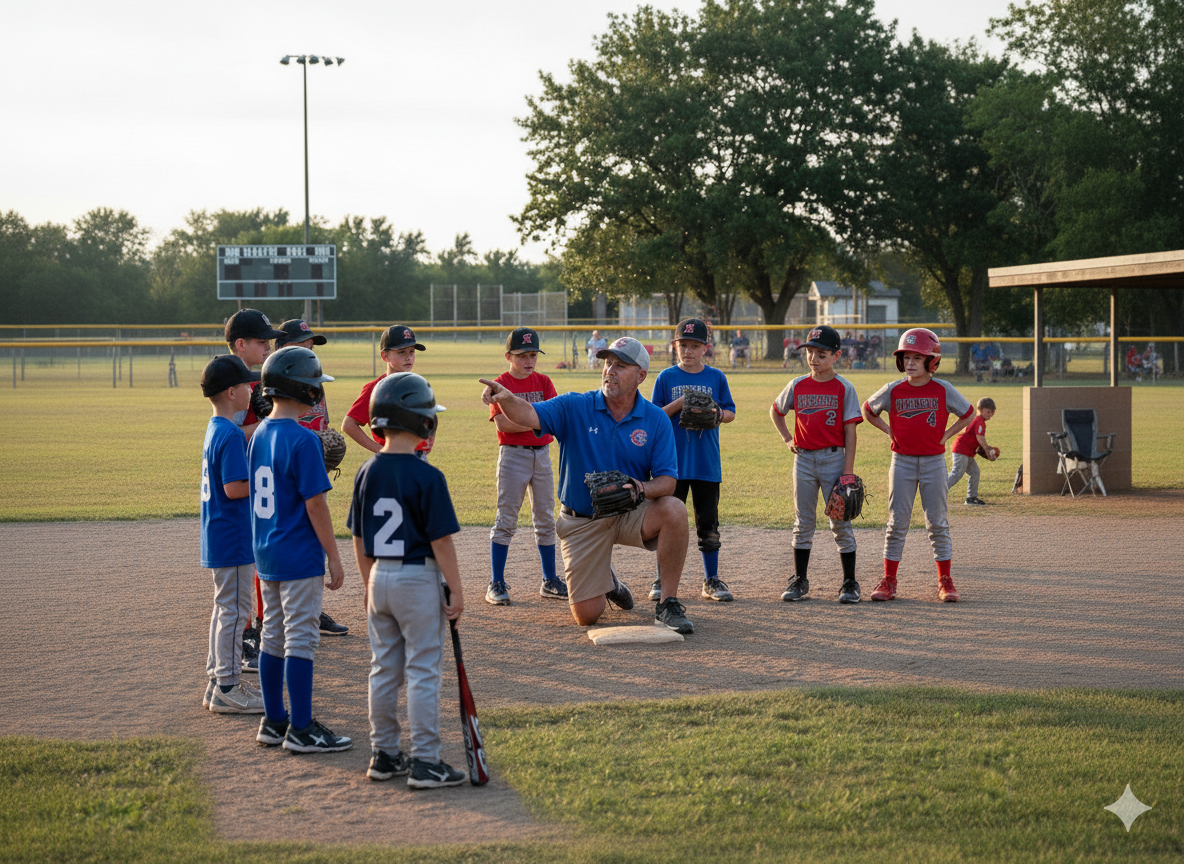
Development focus: repeatable mechanics under pressure, approach at the plate, team defense (cuts/relays/DPs), smart baserunning, structured pitching/catching workloads.
Practice Plan A (90 Minutes):
- 5:00 to 5:05: Huddle, goals (tempo + execution)
- 5:05 to 5:15: Dynamic + throw ladder; finish with accuracy under time (Dynamic Warmup Routine for Baseball Pitchers + Throwing Ladder Progression)
- 5:15 to 5:55: Competitive Skill Stations (4 stations, 8-10 minutes each, rotate)
- Station 1 - Advanced Hitting: Tee Work Basics + Two-Strike Hitting, Approach + two-strike rounds; exit target zones; work on situational hitting (hit-and-run, moving runners)
- Station 2 - Infield Excellence: 30 Second Grounders + Advanced Double Plays, DP turns, backhand/forehand footwork; quick release; work on slow-roller plays and bare-hand pickups
- Station 3 - Outfield/Baserunning: Outfield Reads & Drops + Advanced Baserunning, Reads, drops/angles; first-to-third decision game; work on reading pitcher and stealing techniques
- Station 4 - Catching/Pitching Prep: Framing Drills + Pitching Mechanics, Basic framing and receiving; pitching mechanics without throwing; focus on balance and timing
- 5:55 to 6:15: Situational defense script (cuts/relays, 1st/3rd, bunt D if softball) (Situational Defense Script)
- 6:15 to 6:25: Pitching/Catching blocks (two pens x 10 to 12 pitches; receiving/blocks/throwdowns)
- 6:25 to 6:30: Wrap, KPI check (contact %, GB clean %, execution calls)
Why this works: Reps stay intense and game-relevant, while structured, time-capped battery work builds stamina and skill without fatigue.
Practice Plan B (120 Minutes)
- 5:00 to 5:05: Huddle, roles (infield captains, OF comms lead)
- 5:05 to 5:15: Dynamic + throw ladder; band work (brief) (Dynamic Warmup Routine for Baseball Pitchers)
- 5:15 to 6:15: Elite Development Stations (5 stations, 10-12 minutes each, rotate)
- Station 1 - Advanced Hitting: Tee Work Basics + Situational BP, Approach ladders; situational rounds (runner on 3rd <2 outs); work on pitch recognition and two-strike approach
- Station 2 - Infield Systems: 30 Second Grounders + Bunt Defense, DP systems; slow-roller do-or-die; work on communication and positioning for bunt coverage
- Station 3 - Outfield Excellence: Outfield Reads & Drops + Relay Throws, Angle/drops; throws to cut with timed relays; work on hitting cutoff man and backing up bases
- Station 4 - Advanced Baserunning: Stealing Bases + Reading Pitchers, Reads: dirtballs, first-step steals (league rules); work on getting good jumps and sliding technique
- Station 5 - Battery Work: Pitching Bullpens + Catching Drills, Structured throwing sessions; catching fundamentals including framing, blocking, and throwdowns
- 6:15 to 6:45: Game simulation with scripted scenarios and score (Situational Defense Script)
- 6:45 to 6:55: Specialized Training
- Pitching: Fielding Practice for Pitchers, 2 to 3 quick pens; work on holding runners and fielding bunts
- Catching: Blocking Drills + Catcher Pop Time Drill, Blocking ladder + pop-time reps; work on game-calling and pitcher communication
- 6:55 to 7:00: Cool-down, score recap, individual cue for next practice
Equal-opportunity rotation: Rotate starting assignments across infield, outfield, and catcher. In game simulations, swap roles frequently and share pitching and catching reps among multiple players.
Tips on Building Your Practice Schedule as a New Baseball or Softball Coach
- Combine the huddle and warm-up to save 3 to 5 minutes
- Shorten each station block (e.g., from 12 to 8 to 10 minutes) and keep rotations tight
- Drop one station round and increase intensity on the remaining two
- Replace a scrimmage with 1 to 2 focused situational scripts
- Use whiffle/foam balls for faster, safer reps in tight spaces
- If you have more time, add a second pass through stations or a longer situational game
Quick Start Guide for First-Time Coaches
If you're planning your very first practice and feeling overwhelmed, here's a simple 5-step process to get you started:
Step 1: Choose Your Practice Duration
Most youth practices are 90-120 minutes. For ages 5-7, stick to 60-90 minutes max to match attention spans.
Step 2: Block Out the Big 5 Sections
Use this simple framework:
- Warm-up/Throwing: 15 minutes
- Defense Stations: 30 minutes
- Hitting Stations: 30 minutes
- Game Situations: 20 minutes
- Cool-down/Wrap-up: 5 minutes
Step 3: Pick 2-3 Drills Per Section
Don't overthink it. Choose simple drills from our drill library that match your players' age and skill level. Repetition of a few good drills beats trying to do too many things.
Step 4: Assign Roles
Determine who will run each station (you, assistant coaches, parent volunteers). Write down names next to each drill so everyone knows their responsibilities.
Step 5: Prepare Your Materials
The night before practice, gather:
- Baseballs/softballs (bring extras)
- Bats, tees, helmets
- Cones for station markers
- First aid kit
- Printed practice plan (post it in dugout)
- Clipboard with roster
Pro Tip: For your first few practices, use our Practice Planner to generate a complete, age-appropriate plan in under 5 minutes. It includes drill instructions, time blocks, and coaching tips, everything you need to walk onto the field with confidence.
Common Practice Planning Mistakes to Avoid
1. Too Much Talking, Not Enough Reps
The Problem: Spending 10 minutes explaining a drill that could be demonstrated in 30 seconds. The Fix: Show, don't tell. Demonstrate quickly, then get kids moving. Adjust as they go.
2. Lines That Are Too Long
The Problem: 12 kids in one line waiting for their turn to hit. The Fix: Always run multiple stations. No player should wait more than 2-3 minutes between reps.
3. No Written Plan
The Problem: Winging it leads to wasted time and missed fundamentals. The Fix: Always have a written plan, even if it's simple. Share it with assistants before practice.
4. Ending Practice Late
The Problem: Parents waiting, players getting picked up mid-drill, chaos. The Fix: Set phone alarms for transitions. Build in 5-minute buffer. Respect families' time.
5. Same Positions Every Practice
The Problem: Players never develop versatility or try new challenges. The Fix: Use our practice planner to plan position rotations practices and ensure players are developing in all skills.
6. Forgetting Water Breaks
The Problem: Dehydrated, unfocused players (especially in warm weather). The Fix: Schedule breaks every 20-25 minutes. Make them quick (2-3 minutes) but consistent.
Frequently Asked Questions
How long should a youth baseball practice be?
For ages 5-7: 60-90 minutes maximum. Ages 8-10: 90 minutes. Ages 11-12: 90-120 minutes. Younger players have shorter attention spans, so quality beats duration every time. A focused 75-minute practice with high engagement beats a dragging 2-hour practice where kids lose interest.
What if I don't have enough coaches or parent helpers?
Focus on station drills that can run independently with minimal supervision. For hitting, use tees and soft-toss stations that players can rotate through safely. For defense, use bucket drills where players field and toss into buckets. Design your practice assuming you're the only adult, any extra help is a bonus.
How do I keep players engaged who are waiting their turn?
The key is minimizing wait time through multiple stations. When waiting is unavoidable, give specific roles: chart hitters, shag balls in outfield, be the "next up" player stretching. For youngest ages, short attention spans mean you need to rotate every 5-7 minutes maximum.
Should I run the same practice for multiple age groups?
No, what works for 8-year-olds will bore 12-year-olds and overwhelm 6-year-olds. Use our age-specific practice plans above as templates. Younger players need more movement games and shorter explanations. Older players need competitive drills and game-situation complexity.
How often should we practice vs. play games?
The ideal ratio depends on age and league structure. For ages 5-8, aim for 2 practices per 1 game. Ages 9-10: 1.5-2 practices per game. Ages 11-12: 1-2 practices per game. You need enough practice time to develop skills, but games provide essential experience and motivation.
What if it rains or we lose field access?
Have a backup plan ready. Options include: gymnasium practice focusing on throwing, base-running, and dry hitting mechanics; classroom session covering baseball IQ topics like situational awareness and rules; or rescheduling immediately rather than waiting (communicate quickly with families).
How do I structure practice when I have kids at different skill levels?
Group players by ability level for certain drills (especially hitting and throwing), but mix groups for others to promote mentorship. Advanced players can demonstrate for beginners. Use the "challenge by choice" approach where players select their difficulty level within the same drill framework.
What should I do if a player is being disruptive?
Address it quickly and privately when possible. First, check if they're bored (not challenged enough) or confused (drill too advanced). Often disruptive behavior stems from lack of engagement. If it continues, have a calm conversation about team expectations. For persistent issues, involve parents and discuss whether baseball is the right fit right now.
Maximizing Practice Efficiency: Advanced Tips
The 4:1 Ratio Rule
For every 1 minute of instruction or explanation, players should get 4 minutes of active repetition. If you find yourself talking more than players are moving, reset and simplify.
Use Visual Timers
Set a visible timer (phone, scoreboard, or large clock) for each drill block. This creates urgency, keeps you on schedule, and helps players transition mentally between activities.
Prepare Your Field in Advance
Arrive 15 minutes early to set up cones, bases, nets, and station markers. Don't waste practice time on setup, every minute counts once players arrive.
Film Your Practices
Occasionally record practice on your phone and review it later. You'll spot inefficiencies you never noticed in real-time: too much standing around, unclear instructions, or drills that need better spacing.
Create a Practice Template
Once you find a practice structure that works, save it as your template. Each week, just swap in different drills while keeping the time blocks and station format consistent. This speeds up planning and creates comfortable routines for players.
Link Practices to Upcoming Games
Review your game lineup for the upcoming weekend and structure practice around those position assignments. If Joey is playing shortstop on Saturday, make sure he gets ground balls on Thursday.
Conclusion
Well-run practices come from clear objectives, smart station design, and tight timing. Use the templates above as a starting point, adapt blocks to your space and staff, and rotate players so everyone gets meaningful reps across offense, defense, throwing, baserunning, and (when appropriate) pitching/catching.
Keep drills simple, age-appropriate, and fun; finish with a short recap so players know what they learned and what's next. The best youth baseball coaches aren't necessarily those with the most experience, they're the ones who plan thoroughly, communicate clearly, and create an environment where every player feels valued and challenged.
Remember that practice planning gets easier with experience. Your first few practices might feel chaotic, and that's completely normal. Each week you'll refine what works for your team's unique personality, skill level, and goals.
Your Next Steps
Ready to plan your next practice? Here's what to do:
- Use the Practice Planner: Build a custom practice plan in under 5 minutes with age-specific drills and coaching tips
- Download Practice Templates: Check out our Baseball Practice Plans and Softball Practice Plans for ready-to-print options
- Explore the Drill Library: Browse 270+ drills with video demonstrations and detailed instructions
Related Resources
Continue developing your coaching skills with these helpful guides:
- 10 Fun Drills to Keep Youth Baseball Players Engaged
- Mastering Softball Lineup Creation
- Batting Order Strategy for Your Youth Team
When you're ready for printable versions or need more ideas, browse the drills library or use the practice planner to build detailed plans in minutes.
Related Documentation
Learn how to use the Dugout Edge practice planning tools:
- Using the Practice Planner - Complete guide to building effective practices
- Building Station-Based Practices - Set up rotations and maximize player engagement
- Adding Drills to Practice - Navigate and customize the drill library
- Player Assignments & Tracking - Assign players to stations and track participation
- Saving & Reusing Plans - Create templates for future practices
Tags
Ready to Generate Your Perfect Lineup?
Try our free softball and baseball lineup generator to create balanced, fair lineups in minutes.
Try Free Lineup Generator