How to Keep Your Batting Order Fair All Season: A Rec League Coach's Guide

Every rec league coach eventually gets the same question from a parent: "Why does my kid always bat last?"
It is a fair question. In competitive ball, the batting order is about winning. In rec leagues, it is about something harder: keeping every kid engaged, developing every player, and making sure no one checks out because they are always stuck at the bottom of the order. Those are two genuinely different jobs, and most batting order guides only talk about one of them.
This guide is for the coach running a rec league team where fairness matters as much as winning. It covers how to rotate your batting order across a full season so the same kids are not always batting first or always batting last, and how to set up a system that you can actually defend to parents when they ask.
If you are looking for the data behind which batting order positions create the most runs and why your best hitter should bat second rather than cleanup, that is a separate question covered in the MLB data batting order guide. This article is about the fairness side of the equation.
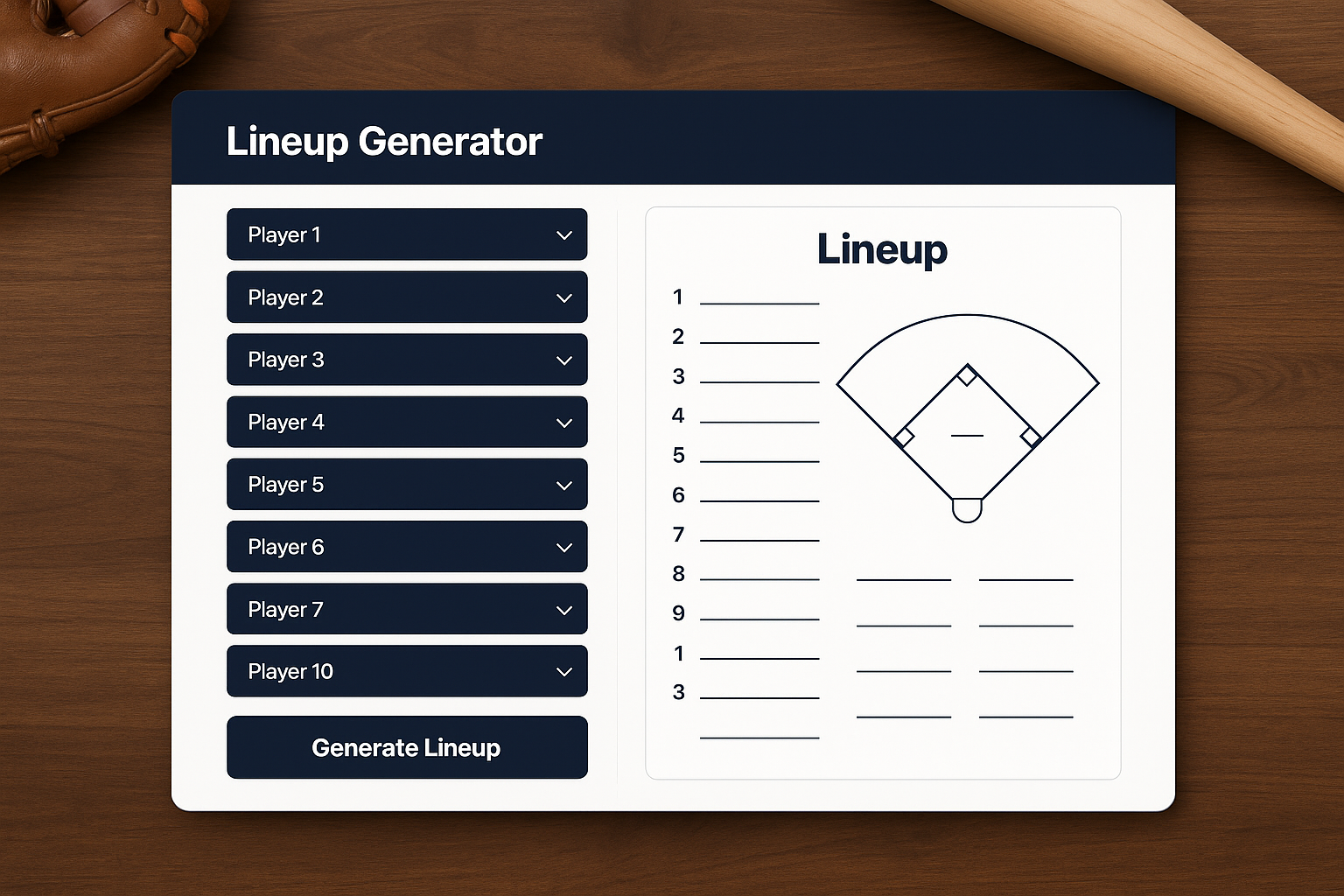
Creating a Batting Order So That Players get Equal Playing Time
If your objective as a coach is to get equal playing time and an equal number of at-bats across the season, there are a few straightforward ways to approach this.
We often tell coaches and parents in this case is to set a random lineup once (or what you think is a winning lineup using the tips in the later paragraphs) and then next game, shift the players up one or two spots in the lineup. Continue to do that each game so that the players that hit at the bottom of the order last game, now leadoff the game. Since players at the bottom of the lineup will get less at-bats on average, this will show to the parents of the players that you are considering fairness and playing time when you set your lineup. Using this strategy, every player will experience hitting at the top of the order, the bottom of the order, and the middle of the order and hopefully all have a relatively equal number of at-bats.
Another way that you could approach a batting order to ensure an equal number of at-bats is to track the number of at-bats every player gets each game.
You can create a free Dugout Edge Account to manage your team and keep track of their at-bats by signing up here.
As the season goes on, and the running total is kept, place players who have less at-bats at the top of the lineup. The goal is to get all players an equal number of at-bats over the entire season regardless of skill level. Absences and sickness are common in youth baseball, so this could be a good strategy to ensure players and parents are happy, and everyone on the team is getting the playing time they deserve. You'll be coach of the year!
A Batting Order Strategy to Win
Crafting a smart batting order strategy can be the difference between a smooth, high-scoring game and a lineup that struggles to get runners across the plate. Whether you're coaching a youth baseball team, a co-ed softball squad, or anything in between, your lineup is more than just names on a sheet, it's your game plan. In this section, we'll walk through how to set a batting order, common lineup strategies, and how to adapt your approach for different leagues and player types. And let's face it, everybody has more fun when you're winning!
Why Batting Order Strategy Matters (Especially in Youth and Co-ed Leagues)
Unlike the pros, coaching in youth or co-ed leagues means balancing development, fairness, and competitiveness. You're not just trying to win, you're helping kids grow their skills and confidence. Baseball has a lot more strategy than people think and creating a lineup is no different. Just like how you're not going to put your shortest player at Center in basketball, there are certain characteristics (strengths and weaknesses) of every player that will be vital when creating your lineup for a game.
A thoughtful baseball batting order strategy (or softball batting order strategy) sets your team up for success by:
Maximizing scoring chances by ensuring the best players get the most at-bats.
Creating consistent scoring opportunities throughout the game to build momentum and keep energy high
Building player confidence by putting them in a position to show off their strengths and allowing them the chance to earn a promotion to a higher spot in the lineup
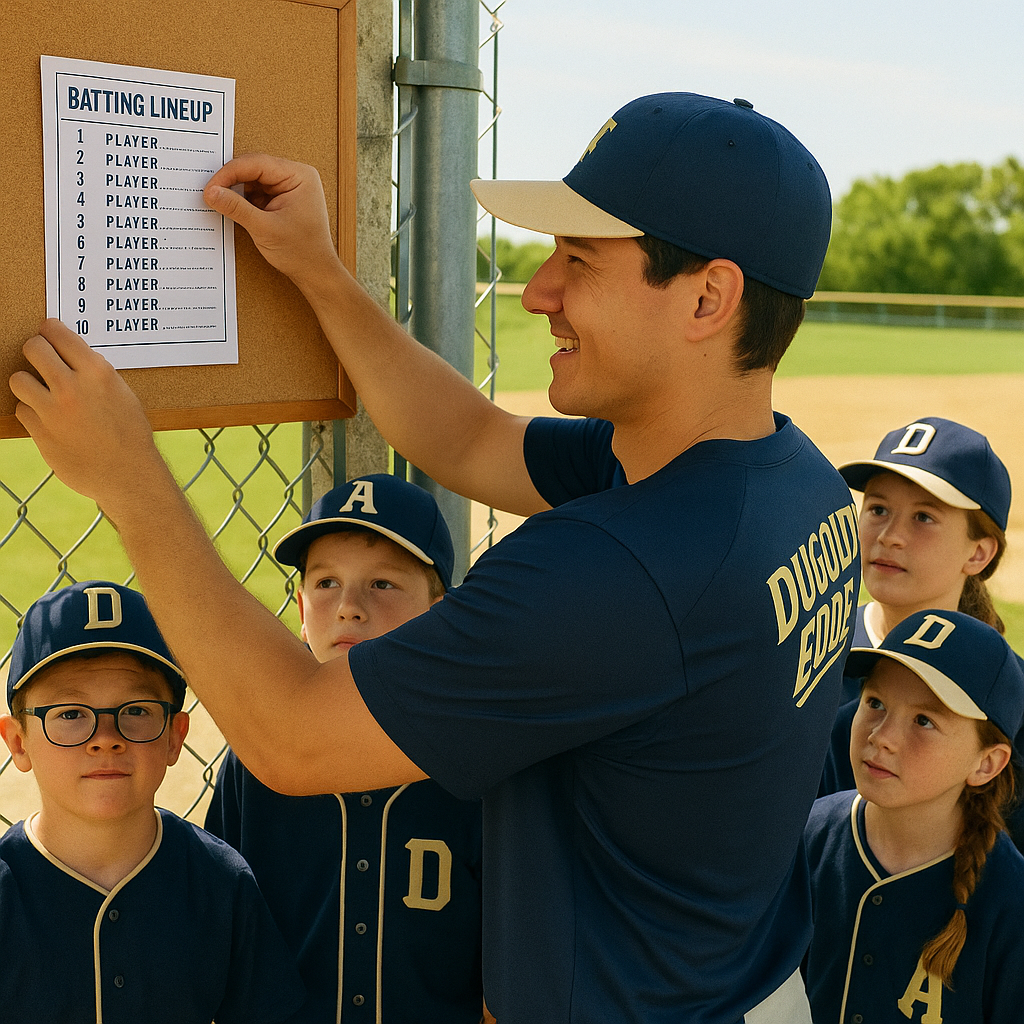
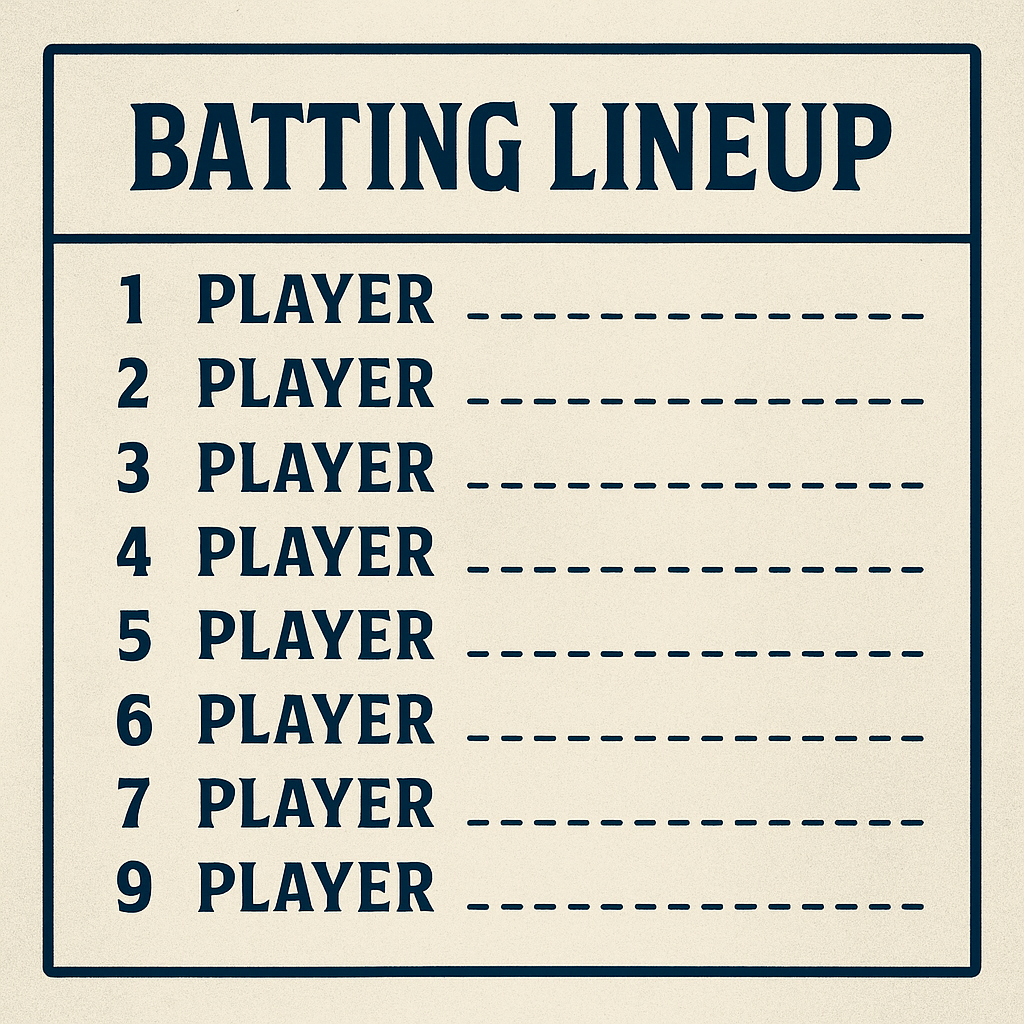
The Classic Batting Order Explained
Here's a breakdown of each spot in the lineup and the type of hitter you typically want there:
Leadoff Hitter: One of your best contact hitters with high on-base percentage, fast and sets the tone. At younger levels 6-12, many coaches put their best hitters here to maximize the chances of them hitting and to start the game off on a high note.
2nd Leadoff - The number 2 hitter should hit for high average, get on base (2nd to leadoff hitter) and hit for a little bit of power. They will handle the bat well and can bunt to advance runners your leadoff hitter or drive them in. They'll be one of your best all around hitters.
Best All-Around Hitter: Your best all around hitter will normally bat third. That way, they are guaranteed to hit in the first inning, and also have a good chance that someone is on base. They can drive in the first two players that typically get on base, while also getting on themselves for the power hitters to drive them in.
Cleanup Hitter: Strongest power hitter to drive in early baserunners. This player will not only have power though. They will make contact often enough that they don't strand players on the base paths. You can think of this position as your backup
Second Power Hitter: Protects the cleanup hitter so that pitchers don't just walk them and also drives in middle-of-order. Think of them as like your second best power hitter.
Devloping Power Hitter - Hopefully your power hitters have cleared the bases and driven in your on base machines. But if that doesn't happen, the person in the 6th spot will be there to back them up. In the 6th spot, you'll want someone who can also drive players in as they will often have people on base in front of them. This might be a developing power hitter or a player that makes a lot of contact but isn't in your top 5 hitters.
**The Bottom of the Order (7,8,9+) ** - The bottom of the order is where your developing or slumping hitters will hit. It doesn't necessarily mean they are worse than the others. A strong strategically crafted bottom of the order is just as important as the top of the order. You may want to place someone who gets on base a lot as the last hitter to act as a 2nd leadoff hitter for the top of the lineup. In youth leagues, you may want to space struggling hitters out to not kill momentum. Especially if you are playing in a league where more than 9 players bat. In general, you can order players after 5 in descending order from best to worst if that keeps things simple.
Additional Batting Order Strategy Tips for Youth Baseball
In youth leagues, the traditional batting order may not always be the best fit. Here are some additional tips to craft a batting order that wins.
Prioritize Contact and Confidence
Put players who consistently make contact early in the lineup. Confidence builds momentum.
Avoid Clumping Struggles
Don't place three struggling hitters in a row. Spread them out to keep innings alive.
Think in Pairs
Pair hitters who complement each other, for example, a fast baserunner followed by a solid bunter or power hitter.
Use Your Observations
Unless you're in a really competitive league, you're probably not tracking advanced stats, pay attention to:
Who puts the ball in play most often
Who's mentally ready in pressure moments
Who runs the bases well
These are the intangible components of offense that don't necessarily relate to being a good hitter, but may warrant a move up in the lineup.
Use Dugout Edge's Batting Lineup Generator to Optimize Your Batting Order for Success
Instead of manually guessing each week, let tools do the heavy lifting backed by data. Dugout Edge offers tools designed specifically for youth baseball and softball coaches. Our tools make it easy for coaches to:
Log key player stats like on-base percentage (OBP), slugging, strikeout rate, and contact rate
Monitor trends like who's improving, who's consistent, and who's ready for a promotion in the order
Ensure Fair Lineups through at-bat and playing time tracking
Once your data is in, just input player attendance and availability and Dugout Edge uses advanced lineup algorithms to suggest the optimal batting order for your team. Try it now to see the tips from this article in action.
When to Change the Batting Order

Bad games happen, don't overreact but don't wait too long either. You should consider changing your lineup:
After 2 to 3 games of poor flow or production
If a player is struggling with confidence or mechanics (drop them down in the order)
If a new player shows promise during practice (move them up in the order)
Based on opponent pitching and team matchups. Who hits lefties better? Who can hit the flamethrowers?
FAQ: Batting Order Strategy in Youth Baseball & Softball
Q: What's the best batting order for 10U teams?
A: Focus on contact hitters early, power in the middle, and rotate new players through bottom spots with room for growth.
Q: Should I rotate the batting order every game?
A: For rec leagues, rotating is great for fairness. For competitive play, consistency matters more.
Q: How do I set a co-ed batting order fairly?
A: Avoid clustering by gender or skill level. Mix strengths evenly and encourage everyone to contribute.
Conclusion: Set Your Team Up for Success
A solid batting order strategy gives your team structure, confidence, and the best chance to perform. Whether you're coaching 8-year-olds in a local rec league or leading a co-ed travel team, smart lineups matter.
Final Tips for Coaches
Trust your instincts, but use structure
Be flexible, real games rarely go exactly to plan
Always lead with encouragement
View lineup building as a coaching moment, not just a chore
Remember, your job isn't just to create the best batting order: it's to create a team culture that values development, teamwork, and effort. At the end of the day, the lineup only plays a small role in the success of a team. It's how hard you work in practice, how well the team supports each other, and at the end of the day, how the performs when it comes to game time.
Related Documentation
Ready to put these strategies into practice? Check out our technical guides for using the Dugout Edge lineup tools:
- Using the Lineup Generator - Step-by-step guide to creating fair, optimized lineups
- Equal Playing Time Settings - Configure fairness algorithm for your team
- Position Preferences & Constraints - Set up position rules and player preferences
- Managing Player Availability - Track attendance and handle last-minute changes
- Co-ed League Configuration - Gender ratio rules and requirements
Don't leave your lineup to chance. Use Dugout Edge to generate balanced, flexible lineups that help your team thrive.

Tags
Ready to Generate Your Perfect Lineup?
Try our free softball and baseball lineup generator to create balanced, fair lineups in minutes.
Try Free Lineup Generator