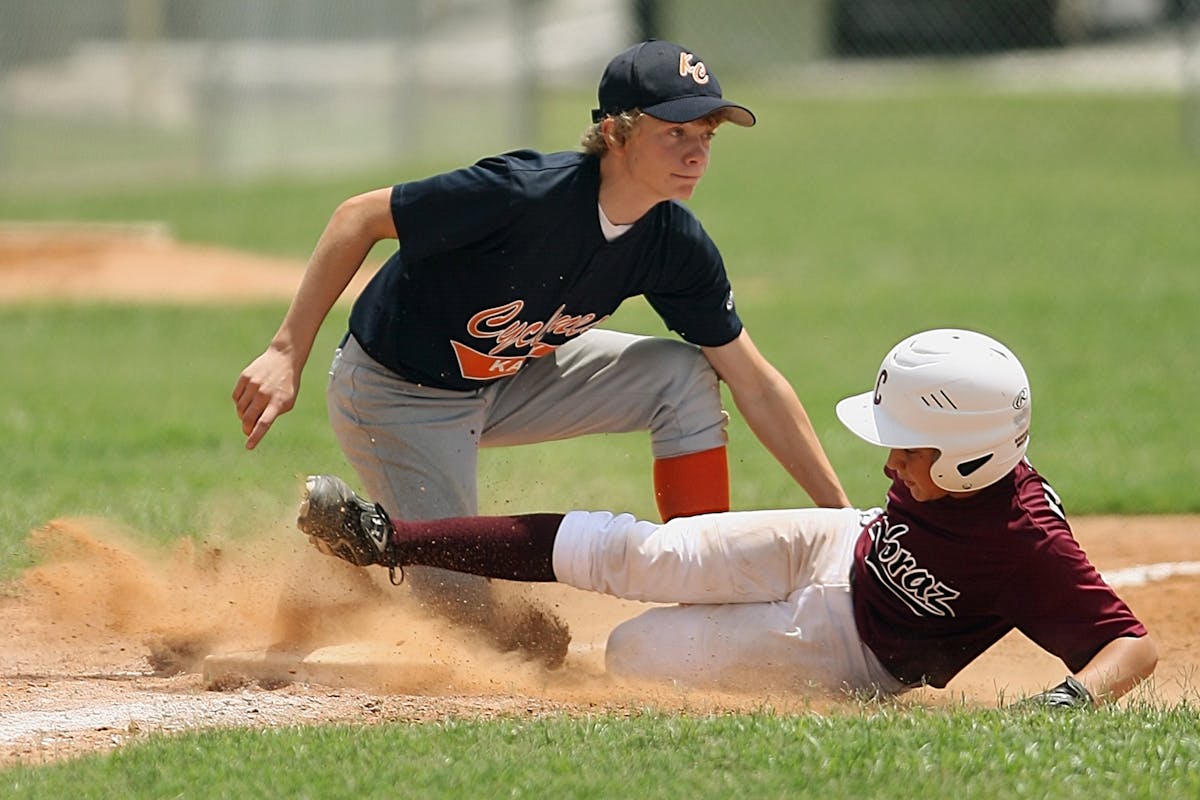
Fielding Ground Balls
Ground balls are the most common defensive play in baseball and softball. Teaching proper technique builds confidence and prevents errors. This guide covers everything from the first step to the throw.
Ready Position
Every great play starts with being ready before the pitch.
The Athletic Stance
- Feet wider than shoulders - Stable, ready to move any direction
- Weight on balls of feet - Never flat-footed
- Knees bent, butt down - Low center of gravity
- Hands out front - Glove open, ready
- Eyes on hitter - Watch contact zone
Pre-Pitch Routine
- Get set as pitcher comes set
- Take a small "hop" or "creep" as pitch is delivered
- Weight forward, ready to react
- Read the swing and ball off the bat
Reading the Ball
Good fielders react instantly because they read the play.
What to Watch
- Hitter's swing plane
- Point of contact (early/late)
- Barrel angle at contact
- Initial ball direction
- Speed off the bat
First-Step Reactions
| Ball Direction | First Move |
|---|---|
| Directly at you | Stay low, approach |
| To glove side | Crossover step |
| To throwing side | Open and run |
| Slow roller | Charge aggressively |
| Hard shot | Knock it down first |
Approaching the Ball
How you get to the ball determines how you'll field it.
The Triangle Approach
Move to get the ball in the center of your body.
- Round the ball slightly - Approach from angle, not straight on
- Create momentum toward target - Moving toward first as you field
- Get low early - Don't drop at the last second
- Short, choppy steps - Control your approach
- Slow down, don't speed up - Control at the ball
Angles Matter
Right: Round ball to create throwing angle to first Wrong: Field on the run without control Right: Get body behind the ball Wrong: Reach with just the glove
Fielding Position
The moment of truth. Get this right and the throw is easy.
Fundamental Fielding Position
- Feet wider than shoulders - Base for stability
- Butt down, knees bent - Low, low, low
- Glove out in front - Not between legs, out front
- Fingers down - Glove touches dirt
- Bare hand nearby - Ready to secure
- Head over the ball - Eyes tracking into glove
The "Triangle"
Your feet and glove form a triangle.
- Ball fields in the middle of the triangle
- Creates clear vision of the ball
- Allows body to block bad hops
"Field It Like an Alligator"
For young players, teach the alligator:
- Glove is bottom jaw (on ground)
- Bare hand is top jaw (above glove)
- "Chomp" the ball, secure it
Handling Different Hops
Not every ground ball bounces the same.
Ideal Hop (Long Hop)
Ball is coming up or at peak of bounce.
- Easiest to field
- Glove presents upward
- Work to get this hop when possible
Short Hop
Ball just bounced, glove catches it on the rise.
- Stay low
- Soft hands, give with the ball
- Glove stays on ground
In-Between Hop
The hardest hop, ball is descending.
- Try to adjust to get long or short hop
- If stuck, stay low and knock it down
- Barehand or kick it to yourself if needed
Slow Roller
Ball barely rolling, must charge.
- Sprint in hard
- Barehand or glove, depending on time
- Field and throw in one motion
The Barehanded Play
Sometimes there's no time for the glove.
When to Barehand
- Slow rollers with fast runner
- Ball has almost stopped
- Bunt plays
- Time is critical
Barehand Technique
- Approach from outside - Don't overrun it
- Field with throwing hand - Outside the ball
- Scoop through the ball - Don't stab
- Continue motion to throw - One fluid movement
- Stay low throughout - Don't stand up to throw
The Transfer
Getting the ball from glove to throwing hand quickly and cleanly.
Quick Transfer Keys
- Two hands to the ball - Secure the catch
- Meet the ball with bare hand - Glove comes to throwing position
- Grip as you transfer - Find four-seam grip
- Funnel to center - Glove comes to chest area
- Separate quickly - Hands break, arm loads
Transfer Drills
Rapid fire: Partner rolls balls, field and throw quickly No-look transfer: Feel the seams, don't look at ball in hand One hand catch: Builds hand-eye, then add transfer
Footwork to Throw
Feet matter as much as hands.
Standard Footwork Pattern
After fielding in center of body:
- Right foot replaces left (for right-handed throwers)
- Shuffle toward target - Quick shuffle step
- Align feet to first - Point toe to target
- Throw on the move - Or set and throw
Throwing Side Ground Ball
Ball to your right (RH thrower):
- Field the ball - May be on the move
- Plant throwing-side foot - Stop momentum
- Crow hop toward target - Align body
- Set and throw - Strong throw needed
Glove Side Ground Ball
Ball to your left (RH thrower):
- Backhand or reverse - Depending on angle
- Plant and spin - Get body around
- Throw across body - Or jump throw
- Accuracy first - Don't rush
Common Fielding Mistakes
Not Getting Low
What it looks like: Fielding standing up, bending at waist Why it's bad: Ball goes under glove, poor vision Fix: "Butt down, chest up" - practice low fielding position
Fielding to the Side
What it looks like: Reaching to glove side, not centered Why it's bad: Can't use body as backstop Fix: Move feet to get centered, round the ball
Glove Up Too High
What it looks like: Glove not on ground, ball goes under Why it's bad: Can't adjust up, can adjust down Fix: "Start on the ground, come up if needed"
Looking Up Too Early
What it looks like: Head comes up before ball is in glove Why it's bad: Takes eyes off ball at critical moment Fix: "Watch it all the way in, then look"
Lazy Feet
What it looks like: Standing still, reaching for balls Why it's bad: Poor position, rushed throws Fix: "Move your feet first, then your glove"
Position-Specific Notes
First Baseman
- Shorter distance to throw
- More scoops than fielding
- Learn to stretch and field
Second Baseman
- Quick footwork essential
- Backhand into double play pivot
- Range to either side
Shortstop
- Longest throw to first
- Strong arm needed
- Master the backhand
Third Baseman
- Hard hit balls
- Quick reactions
- Short hops common
Pitcher
- Reactions, not range
- Field toward first when possible
- Communicate who's got it
Ground Ball Drills
Rollers (5 minutes)
Coach rolls balls from 10-15 feet.
- Focus on proper fielding position
- No throwing, just catching
- Build muscle memory
Triangle Drill (5 minutes)
Field, transfer, fake throw.
- Work on smooth transition
- Check footwork pattern
- Repeat until automatic
Short Hops (5 minutes)
Partner bounces balls to create short hops.
- Stay low
- Soft hands
- Work both sides
Backhand Work (5 minutes)
Coach hits or rolls to backhand side.
- Glove out front
- Reach across body
- Plant and throw
Slow Rollers (5 minutes)
Coach rolls balls that die out.
- Practice charging in
- Barehand technique
- Quick release
Key Reminders
- Ready before every pitch - Expect the ball
- Get your feet moving - Move to the ball, don't wait for it
- Get low early - Low before the ball arrives
- Glove on the ground - It's easier to come up than go down
- Field in front - Out where you can see it
- Use your body - Block balls you can't field cleanly
- Quick transfer - Secure it, grip it, throw it
- Accurate throws - An out is better than a rifle with an error