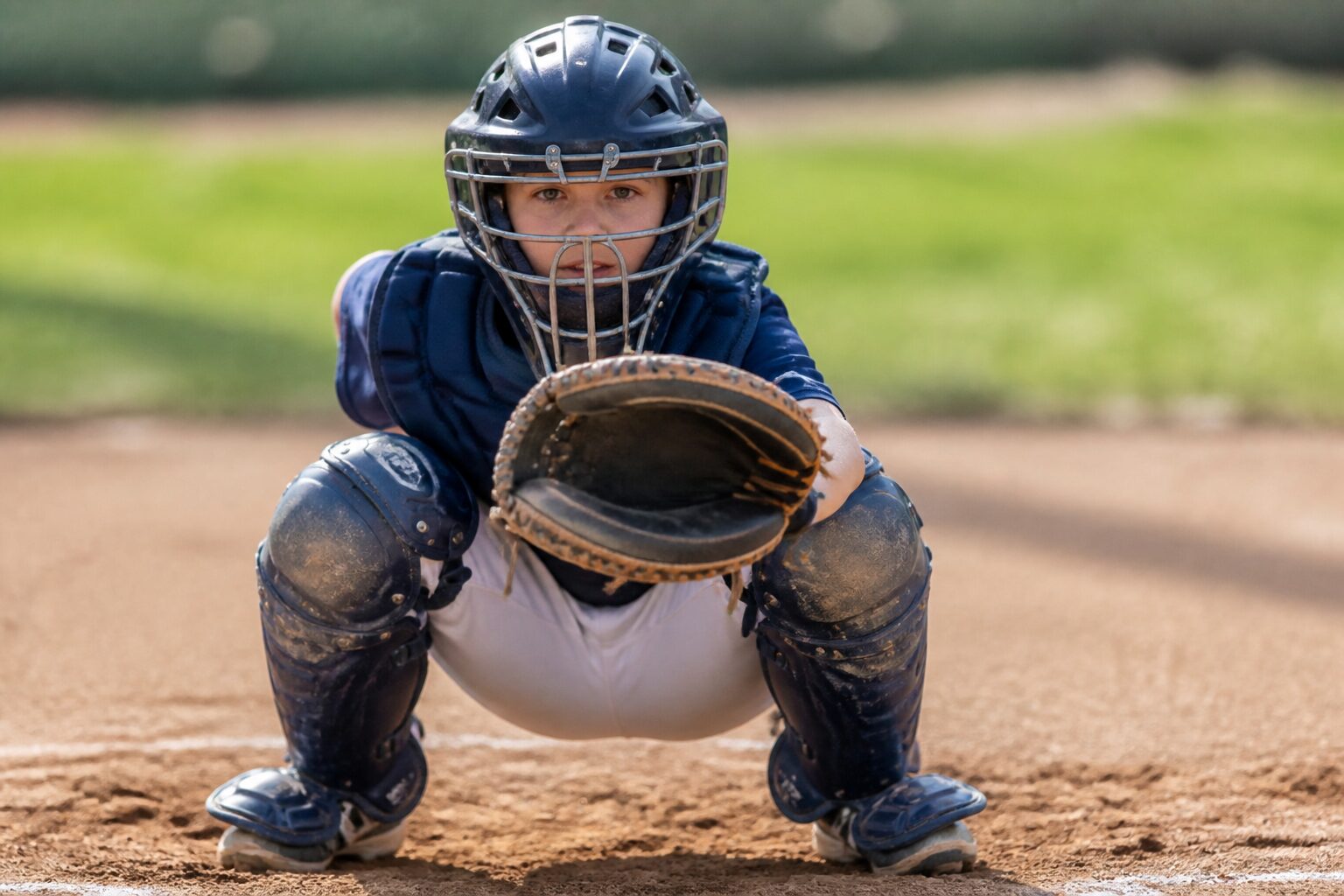
Catching Mechanics
Young catchers improve fastest when the position is taught in layers. Start with body control and ball control. Add throwing and game decisions after the player can receive and block consistently.
Best teaching sequence
- Build an athletic stance first
- Teach receiving and blocking before advanced receiving tricks
- Add clean transfer and throwing footwork next
- Keep every drill short, repeatable, and easy to coach
Build the Position in Layers
Use this order when teaching:
- Stance and balance
- Receiving
- Blocking and recovery
- Transfer and throwing
- Pop-ups, bunts, and tag decisions
If you skip the first layers, the later layers turn messy quickly.
Stance and Setup
Primary stance
- Athletic and relaxed
- Weight on the balls of the feet
- Throwing hand protected
- Quiet glove target
Secondary stance
- Slightly taller
- Body ready to move
- Throwing hand closer to the transfer
- Used when a runner or bunt threat changes the next play
Coach cue
"Set low enough to receive, high enough to move."
Receiving Fundamentals
Teach your catcher to receive the ball, not chase it.
What matters
- Quiet body
- Soft glove
- Catch first, then hold
- Minimal extra movement
What to avoid
- Reaching dramatically
- Pulling the glove after the catch
- Receiving with a rigid body
At youth levels, a clean catch helps the pitcher more than exaggerated framing attempts.
Blocking Comes Before Framing
If you only keep one rule from this page, keep this one.
Blocking matters more for most youth catchers because:
- It prevents free bases
- It keeps innings from snowballing
- It builds confidence for pitchers and coaches
- It creates real game value every week
Blocking checklist
- Beat the ball to the spot
- Get chest behind it
- Keep the chin tucked
- Smother the ball in front
- Recover with eyes up
Coach cue
"Block first. Find it second. Throw only if the play is there."
Transfer and Throwing Footwork
The goal is not a dramatic pop-up. The goal is a clean transfer and an accurate throw.
Teaching focus
- Secure the pitch
- Move the ball quickly to the hand
- Clear the hitter efficiently
- Throw on line to the bag
Better youth standard
Measure success by:
- Was the transfer clean?
- Was the throw on target?
- Did the catcher stay balanced?
Not by whether the player looked flashy.
Ball-in-Play Skills
Once the first layers are steady, add:
- Foul-pop tracking
- Bunt attack footwork
- Plays at home
- Throw decisions with runners
Keep those drills separate from basic receiving days so the player is not overloaded.
Baseball vs Softball Notes
Baseball
- Receiving and sign protection often get more attention once runners can read signs.
- Throws to second and first-and-third decisions show up often in youth baseball.
Softball
- Blocking low movement, bunts, and quick exchange footwork matter constantly.
- Coaches should spend extra reps on throws, short-game reads, and recovery after block attempts.
Shared rule
Do not treat framing as the main mechanic to master at young ages. Make the player reliable before you make the player subtle.
Common Mistakes
Teaching everything at once
Catching falls apart when stance, receiving, blocking, and throwing are all corrected in the same rep.
Over-coaching framing
That usually steals time from the mechanics that affect more plays.
Turning every throw into a max-effort throw
Accurate and repeatable is better than rushed and wild.
Skipping recovery after the block
A good block becomes a bad play if the catcher cannot find the ball quickly.