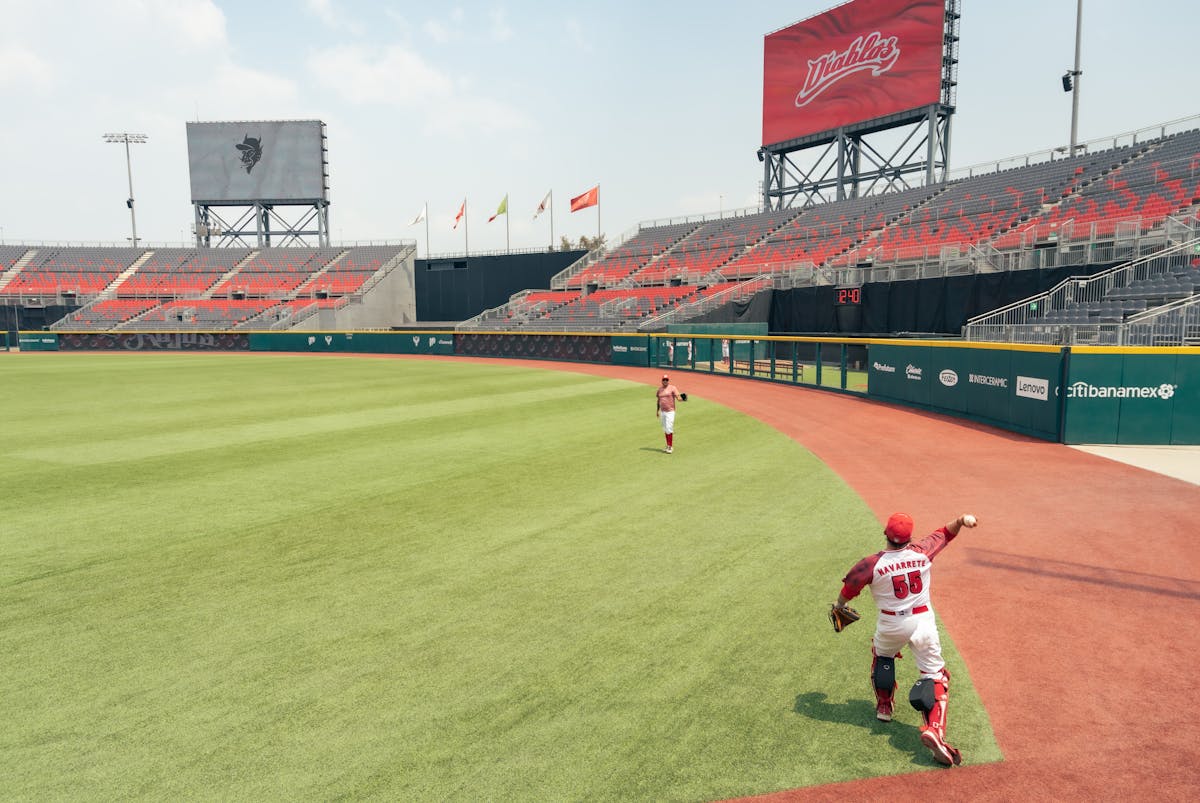
Fielding Fly Balls
Outfielders spend most of the game waiting, then suddenly everything depends on them. Proper fly ball technique ensures routine catches stay routine and difficult catches become makeable. This guide covers everything outfielders need to know.
Ready Position
Preparation starts before the pitch.
The Outfield Stance
- Feet slightly more than shoulder-width - Stable, ready base
- Knees slightly bent - Athletic position
- Weight on balls of feet - Ready to move any direction
- Hands on knees or relaxed - Comfortable
- Eyes on the hitter - Watch the swing
Pre-Pitch Movement
As the pitch is delivered:
- Weight shifts slightly forward
- Small step or bounce to get moving
- Ready to react to contact
- Read the swing
The First Step
The most important step in chasing fly balls.
Reading the Ball
Watch these indicators:
- Swing plane (uppercut vs. level)
- Point of contact
- Sound off the bat
- Initial trajectory
Drop Step
For balls hit over your head:
- Turn immediately - Don't drift back
- First step is back - Drop step toward the ball
- Open hips - Turn to the side ball is hit
- Run, don't backpedal - Turn and sprint
Crossover Step
For balls hit to your side:
- Pivot on inside foot - Toward the ball
- Crossover with outside foot - First full stride
- Sprint to the spot - Run through the route
- Angle back if needed - Ball over your shoulder
Come-In Step
For balls hit in front of you:
- Charge aggressively - Get to the ball fast
- Keep the ball in front - Don't overrun
- Control your approach - Slow down as you arrive
- Be ready to slide - If needed for shoestring catch
Routes to the Ball
Taking the right path makes catches easier.
Direct Route
Ball hit right at you or within a few steps.
- Shortest path
- Adjust slightly as needed
- Minor corrections only
Angle Route
Ball hit to your left or right.
- Run at angle to intercept
- Keep ball in view
- Adjust angle as you track
Drop-and-Run Route
Ball hit well over your head.
- Turn and run to the spot
- Don't look at ball immediately
- Peek over shoulder to track
- Better to overrun and come back
Banana Route
Approach from angle to create momentum.
- Rounds the ball
- Allows momentum toward infield
- Sets up strong throw
Tracking the Ball
Keeping your eye on the fly ball throughout.
How to Track
- Find it immediately - Ball off the bat
- Read the spin - Helps predict movement
- Watch constantly - Brief looks okay on deep balls
- Fine-tune as it descends - Adjust to the landing spot
Wind Considerations
| Wind Direction | Ball Movement |
|---|---|
| Blowing out | Ball carries farther |
| Blowing in | Ball dies, falls short |
| Crosswind | Ball drifts sideways |
| Swirling | Unpredictable, stay alert |
Check wind before each half-inning.
Sun Balls
Balls hit into the sun:
- Sunglasses down - Always wear them
- Glove as shade - Shield your eyes
- Find it early - Before it gets in the sun
- Communicate - Teammate might have better angle
Catching Technique
Securing the ball when it arrives.
Above the Shoulder
For balls at chest level and higher:
- Fingers up - Glove positioned with fingers pointing up
- Catch above the eyes - See ball into glove
- Two hands - Bare hand secures catch
- Squeeze at catch - Secure the ball
Below the Shoulder
For balls below chest level (diving, shoestring):
- Fingers down - Glove inverted
- Extend to the ball - Reach out
- Secure immediately - Ball can pop out
- Protect the ball - Tuck after catch
Basket Catch
Some players prefer catching at the waist:
- Glove palm up, like a basket
- Ball settles into glove
- Less secure than above-shoulder
- Personal preference
Fly Ball Communication
Calling the ball prevents collisions.
The Call
- Loud and repeated: "I got it! I got it! I got it!"
- Call early and call often
- First player to call it has it
- Everyone else clears out
Priority System
Who has priority on the ball:
- Centerfielder - Has priority over corners
- Outfielders - Have priority over infielders
- Shortstop - Priority over other infielders on shallow flies
- Infielders - Coming in is easier than going out
Waving Off
If you call it, own it:
- Wave your glove overhead
- Continue calling
- Don't give it up
- Collision risk if you change
Throwing After the Catch
Getting the ball back in quickly.
Crow Hop
Standard throwing footwork:
- Catch the ball - Secure first
- Transfer immediately - Ball to throwing hand
- Right foot replaces left - Gather momentum
- Hop toward target - Align body
- Strong throw - Hit the cutoff
Momentum Throws
Use your approach:
- Run through the catch when possible
- Catch on glove-side foot
- Transfer and throw in one motion
- Use body momentum
Where to Throw
| Situation | Target |
|---|---|
| Runner tagging | Through the cutoff to the base ahead |
| No runners | Throw to cutoff, hit the relay |
| Deep fly | Hit the cutoff man |
| Shallow fly | May throw direct to base |
Difficult Catches
Plays that require extra skill.
The Diving Catch
- Sprint to the spot - Full speed
- Launch low - Not high into the air
- Extend the glove - Reach for the ball
- Land on your body - Not hands or elbows
- Show the ball - Glove up to show umpire
The Wall Play
Playing balls near the fence:
- Know the wall - Check distance before the game
- Use the warning track - Feel the dirt change
- Find the wall - Hand back to locate
- Make the catch - Then avoid collision
- Practice it - Each park is different
The Over-the-Shoulder Catch
Ball hit over your head to either side:
- Turn and run - Correct side
- Look over shoulder - Inside shoulder to ball
- Run to the spot - Trust your read
- Reach back - Glove extended
- Catch and hold - Show the umpire
Common Mistakes
Standing Still
What it looks like: Waiting to see where ball goes Why it's bad: Late start, catches become difficult Fix: First step immediately, commit to a route
Drifting Back
What it looks like: Taking small steps backward Why it's bad: Too slow, ball goes over head Fix: Drop step and run, don't drift
Running to the Glove Side
What it looks like: Running so ball is on glove side always Why it's bad: Limits range, can't reach backhand Fix: Practice catching on throwing-hand side
Fighting the Sun
What it looks like: Squinting, losing the ball Why it's bad: Routine catches become errors Fix: Sunglasses, glove shade, find it early
No Communication
What it looks like: Two players collide or both pull off Why it's bad: Injuries and errors Fix: Call every ball, practice communication
Fly Ball Drills
Drop Step Drill (5 minutes)
Coach points direction, player drop-steps that way.
- Work both directions
- Full speed
- No ball needed
- Build muscle memory
Tennis Ball Drops (5 minutes)
Coach drops tennis ball from height.
- Player reads and reacts
- Tracks ball down
- Works on soft hands
- Quick first step
Fly Ball Machine (10 minutes)
If available, use pitching machine for flies.
- Mix distances
- Mix directions
- Work specific situations
- Game-like reps
Communication Drill (5 minutes)
Coach hits/throws ball between two players.
- Must call the ball
- One catches, one backs up
- Practice the priority system
- Build trust
Crow Hop Throws (5 minutes)
Catch and throw with proper footwork.
- Emphasis on quick transfer
- Hit the cutoff
- Accuracy first
- Build arm strength
Key Reminders
- First step wins - React immediately
- Turn and run - Don't drift back
- Call the ball - Loud and repeated
- Track it all the way - See it into your glove
- Two hands - Secure the catch
- Know the wall - Check before the game
- Strong throws - Hit the cutoff
- Routine catches are earned - Practice makes them routine