10 Best Training Balls and Wiffle Balls for Baseball Practice in 2026
If you have ever run batting practice in a backyard, a gym, or a field without a backstop, you know that regular baseballs are not always the right tool. They break windows. They bruise kids. They fly over fences and disappear. And they cost real money every time one rolls into a storm drain.
Training balls solve all of those problems. Wiffle balls, foam balls, limited-flight crushers, and weighted training balls each serve a different purpose, and the best coaches use several types depending on the drill. Foam balls let you run indoor hitting stations without risking anyone's safety. Wiffle balls teach pitch recognition and build hand-eye coordination in tight spaces. Limited-flight crushers give you the feel of a real swing with none of the distance. And weighted balls build arm strength, reinforce throwing mechanics, and develop velocity for pitchers.
This guide covers the 10 best training balls and wiffle balls for baseball practice in 2026, organized by type so you can find the right ball for the right drill. Every product listed here is widely available, coach-tested, and priced for youth program budgets.
How I picked these: Training balls earn their spot when they fix a specific thing, whether that is safe indoor reps, slowing the ball down to build confidence, or adding weight to groove a swing. I focused on durability and real coaching use cases, then matched the picks to age and drill, from soft and wiffle balls for younger players to weighted and limited-flight balls for older ones.
Disclosure: This article contains affiliate links. If you make a purchase through these links, The Dugout Edge may earn a small commission at no additional cost to you. We only recommend products we believe in and use for our own teams. Thank you for supporting our site!
Part of our Complete 2026 Coaching Equipment Guide. Also see: Best Practice Baseballs | Best Batting Tees
What to Look For in Training Balls
Before you buy, consider how you will actually use these balls at practice:
- Intended drill type. Foam balls are best for tee work and soft toss. Wiffle balls work great for front toss and pitch recognition. Crushers are ideal for live batting practice in confined areas. Weighted balls are for arm strength and pitching mechanics. Buy the ball that matches the drill.
- Durability. Cheap foam balls shred after a few hundred swings. Cheap wiffle balls crack on the first hard hit. Spend a little more on balls that last the full season, and you save money in the long run.
- Flight characteristics. Limited-flight balls stay in your practice area. Full-flight wiffle balls move unpredictably, which is great for training the eyes but bad for containment. Know what your space requires.
- Size and weight accuracy. The best training balls match regulation size and weight as closely as possible. Undersized or overly light balls can teach bad swing habits if used exclusively.
- Quantity per pack. You need enough balls to run a drill without stopping to collect every 30 seconds. A 12-pack is the minimum for most drills. A bucket of 24 or more keeps practice flowing.
Quick Comparison
| # | Product | Type | Price | Pack Size | Best For |
|---|---|---|---|---|---|
| 1 | GoSports Foam Training Baseballs | Foam | $19.99 | 12 | Overall best foam training ball |
| 2 | LoFli Limited-Flight Training Baseballs | Plastic (limited-flight) | $44.99 | 6 | Realistic swing feel, confined spaces |
| 3 | Wiffle Ball Official | Plastic (wiffle) | $24.48 | 12 | Pitch recognition, backyard practice |
| 4 | SKLZ Foam Baseballs | Foam | $17.99 | 6 | Color-coded drills, young players |
| 5 | QuickPlay Indestructiballs | Plastic (limited-flight) | $24.99 | 12 | Maximum durability |
| 6 | GoSports Foam Baseballs | Foam | $19.99 | 12 | Budget foam option |
| 7 | Magicorange Foam Baseballs | Foam | $16.99 | 12 | Cheapest regulation-size foam |
| 8 | Driveline Weighted Baseballs | Leather (weighted) | $99.99 | 6 | Serious pitching development |
| 9 | SunNordic Weighted Set | Leather (weighted) | $39.99 | 9 | Budget weighted ball training |
| 10 | GoSports Plyometric Training Balls | Rubber (weighted) | $39.99 | 6 | Entry-level plyometric work |
The 10 Best Training Balls and Wiffle Balls
1. GoSports Foam Training Baseball 12-Pack
Our Pick: Best overall choice for most coaches

The GoSports Foam Training Baseball 12-Pack is the best foam training ball value on the market right now. These are regulation size, soft enough to use indoors without damaging walls or windows, and firm enough to give honest feedback when a hitter makes solid contact. The all-foam construction means zero injury risk during soft toss, tee work, and front toss drills, making them ideal for younger age groups and indoor facilities. At $19.99 for a dozen, the per-ball cost is hard to beat, and you get enough to run a full hitting station without stopping to collect every few swings.
GoSports has built a reputation for affordable, reliable training equipment, and these foam baseballs deliver on that promise. They hold their shape through hundreds of sessions, look like a real baseball coming out of the hand, and work on grass, turf, or gym floors. If you are stocking up on foam balls for the season, this 12-pack is the smart starting point.
Price: $19.99 (12-pack)
2. PowerNet Crushers Limited-Flight Training Baseballs
Best Value: Best price-to-performance ratio
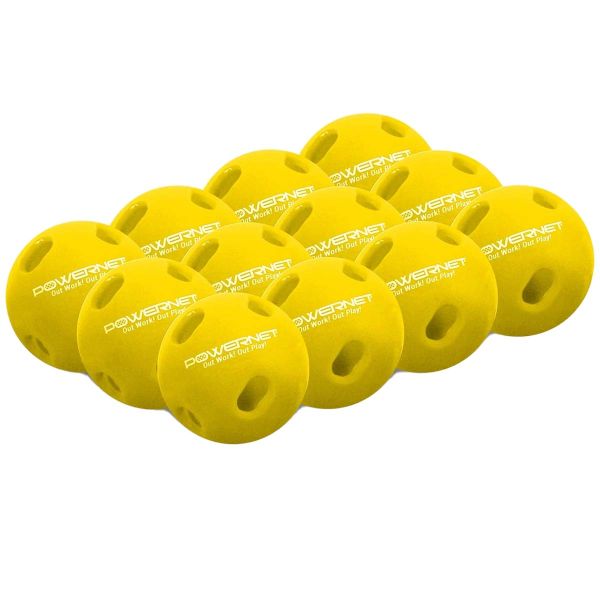
PowerNet Crushers are the go-to limited-flight ball for coaches who want something between a foam ball and a real baseball. These bright red plastic balls compress on impact and pop right back into shape, giving you a satisfying crack on contact without the full distance of a regulation ball. The bright color makes them easy to track out of the hand, which is great for eye training and swing timing. They hold up to full-speed swings from metal bats without cracking or denting, and the 12-pack gives you enough to run a full tee station or soft toss session without constant ball collection. Crushers are built to last multiple seasons.
Price: $44.99 (12-pack)
3. Wiffle Ball Official Baseballs
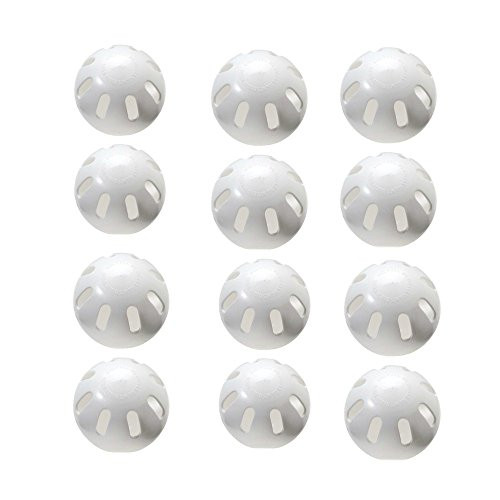
The original Wiffle Ball has been a staple of backyard baseball for decades, and it remains one of the most effective training tools in the game. The perforated design creates unpredictable movement on every pitch, which forces hitters to track the ball all the way to the bat. That translates directly to better pitch recognition when they face live pitching with a regulation baseball. They are lightweight, safe for all ages, and the twelve-ball pack is cheap enough that losing a few over the fence is not a problem. Use them for front toss, pitch tracking drills, or competitive hitting games that keep practice fun. Made in the USA and built the same way they have been for generations.
Price: $24.48 (12-pack)
4. SKLZ Foam Training Baseballs
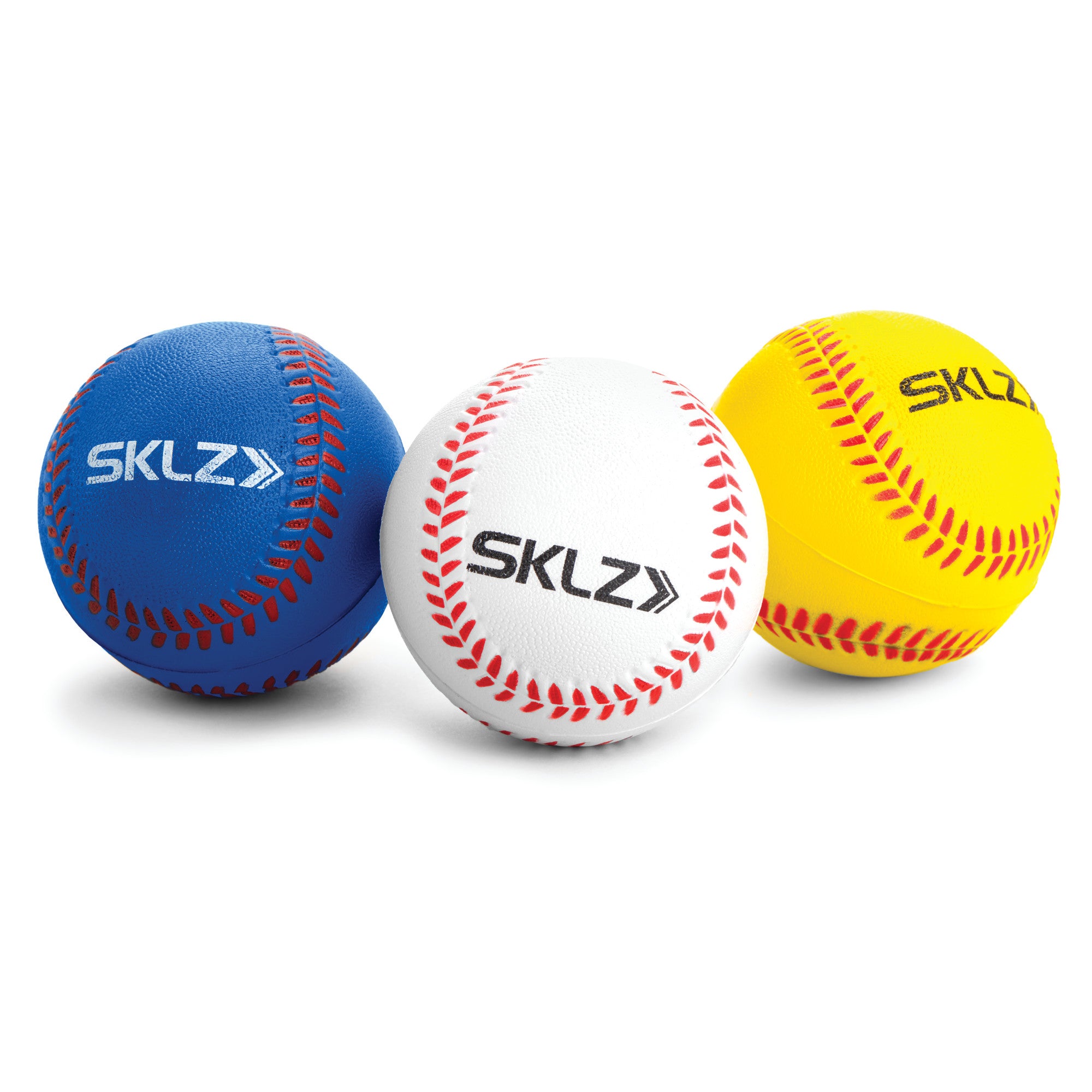
SKLZ has been making reliable training equipment for years, and their foam training baseballs are a solid choice for coaches who need safe, affordable practice balls. The 6-pack comes in three colors (white, yellow, and blue), which is useful for color-coded drills, reaction training, and pitch recognition exercises. Call out a color and have the batter only swing at that one. The 100% foam construction means zero injury risk, making these ideal for younger age groups, indoor facilities, and school programs where safety is the top priority. They are slightly softer than Smushballs, which makes them better for very young players but a bit less realistic for older hitters.
Price: $17.99 (6-pack)
5. QuickPlay Indestructiballs
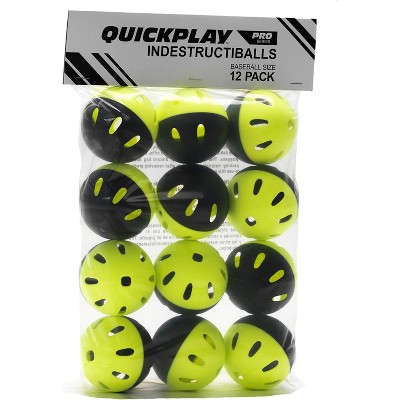
The name is not an exaggeration. Indestructiballs are built from a proprietary pop-back plastic that flexes on contact and immediately returns to its original shape with no cracks, dents, or deformation. These are wiffle-style balls designed for coaches who are tired of replacing cracked plastic balls every few weeks. The two-tone shell makes spin visible in flight, which is a great bonus for pitchers working on grip and spin direction. Limited flight means they stay in your practice area, and the realistic size keeps swings honest. At $24.99 for a 12-pack, the per-ball cost is low, and these will legitimately outlast every other plastic training ball on this list.
Price: $24.99 (12-pack)
6. GoSports Foam Training Baseballs
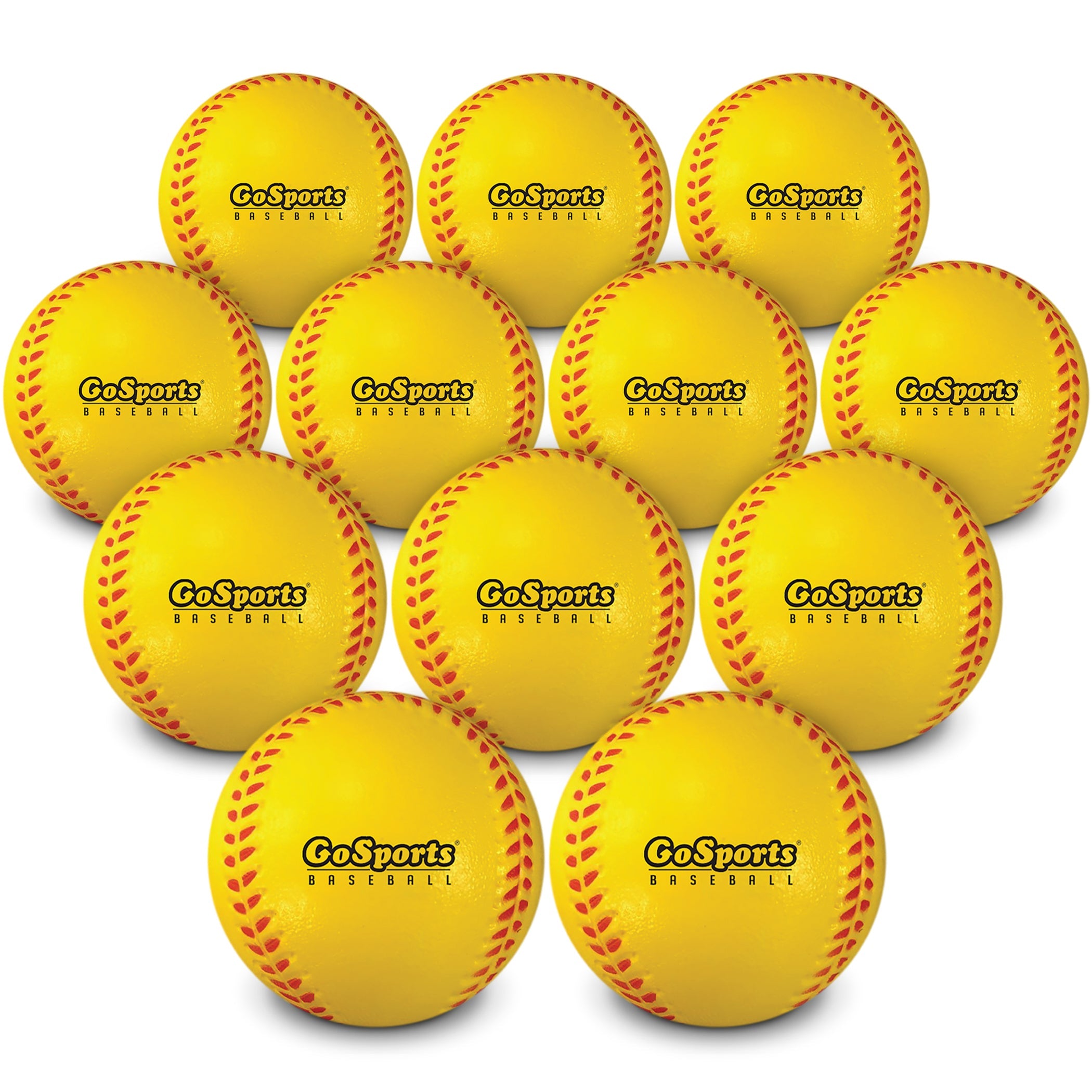
GoSports makes a wide range of affordable training equipment, and their foam baseballs are a solid budget option. The 12-pack gives you enough balls to run a full tee station or soft toss session without stopping to collect after every few swings. They are regulation size with a realistic baseball look, and the all-foam construction keeps everyone safe during indoor and outdoor practice. The foam density gives decent feedback on barrel contact, which is what you want from a training ball. They are not quite as durable as Smushballs over hundreds of sessions, but at about $22 for a dozen, they are a great entry point for coaches stocking up for the first time.
Price: $19.99 (12-pack)
7. Magicorange Foam Practice Baseballs
Best Value: Best price-to-performance ratio

Rawlings discontinued the Hit Trainer, and the honest replacement at this end of the list is an unbranded twelve-pack that does the same job for less. These are PU foam at 2.8 inches across and a 9-inch circumference, which is regulation size, so a hitter is tracking the same shape they will see in a game. Firm enough to give honest feedback off the bat, soft enough for a gym floor or a garage. Twelve balls and a mesh drawstring bag for the price of three of anything with a logo on it, which is the whole argument for buying them.
Price: $16.99 (12-pack)
8. Driveline Leather Weighted Baseballs
Best Value: Best price-to-performance ratio
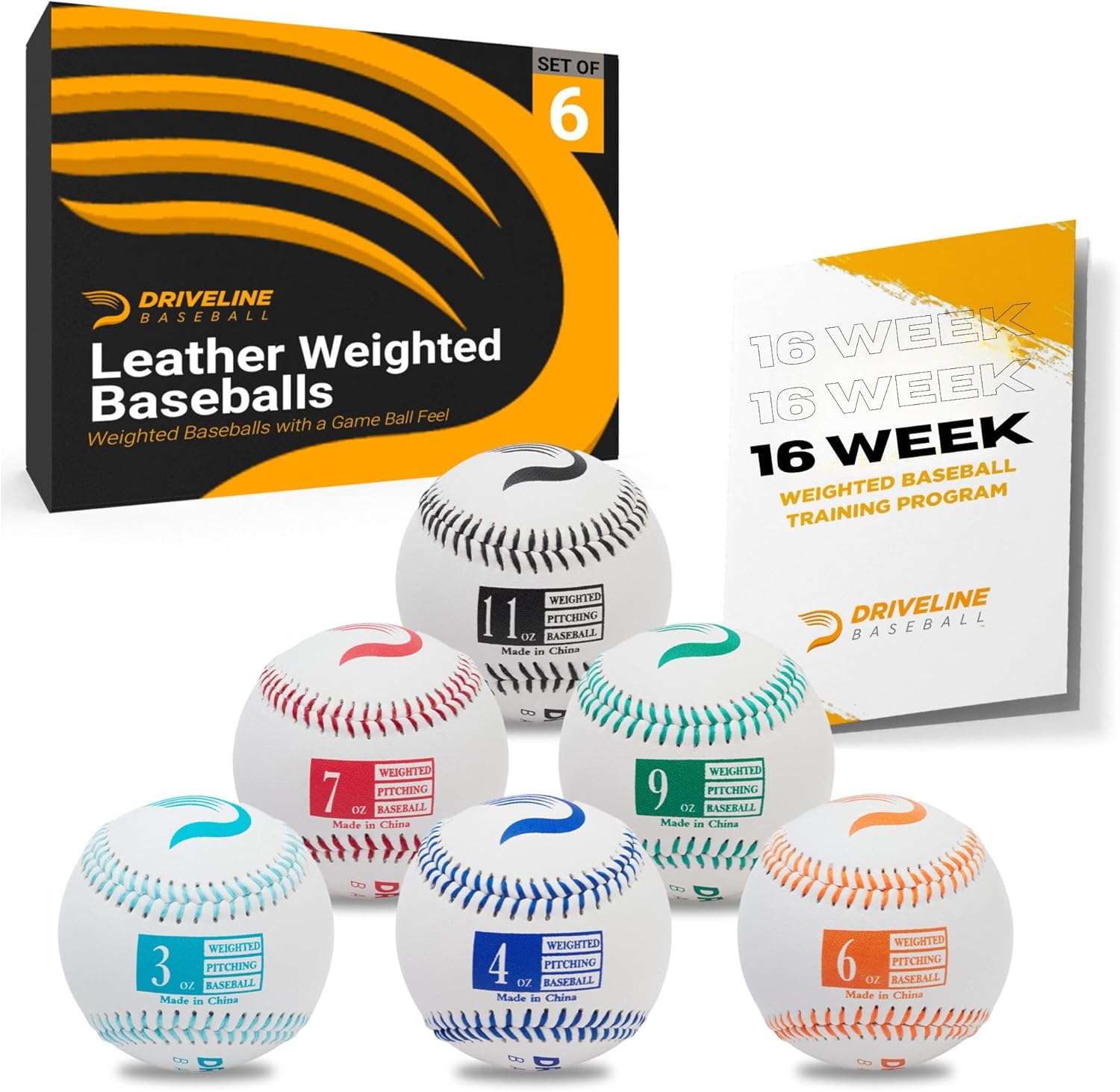
Driveline Baseball is the industry leader in data-driven pitching development, and their leather weighted baseballs are the gold standard for arm care and velocity training. The set includes six balls at different weights (3 oz, 4 oz, 6 oz, 7 oz, 9 oz, and 11 oz) that progress from underload to overload work. The lighter balls train arm speed and deceleration patterns, while the heavier balls build arm strength and reinforce proper mechanics under load. These come with a real leather cover that feels like a game ball, and each purchase includes access to Driveline's 16-week throwing program. This is a serious training tool for pitchers aged 13 and up who are committed to developing velocity safely. Not recommended for younger arms without proper supervision.
Price: $99.99 (set of 6)
9. SunNordic Leather Weighted Baseball Set
Best Value: Best price-to-performance ratio
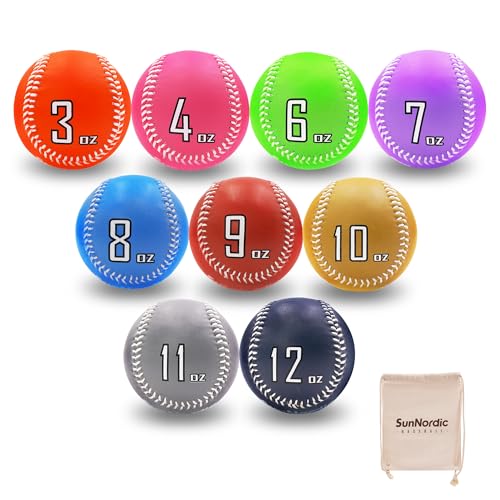
If the Driveline set is the premium option for weighted ball training, this is the budget alternative that still gets the job done. Nine leather balls at varying weights, which is enough to run a full circuit without stopping to collect, and it comes with a carry bag so the set stays a set. Leather rather than rubber means it behaves more like a baseball in the hand, which matters on the lighter balls where a pitcher is working mechanics rather than strength. The same caution applies here as anywhere on this list: weighted ball work is for 13 and up, on a structured progression, supervised.
Price: $39.99 (9-pack)
10. GoSports Plyometric Training Balls
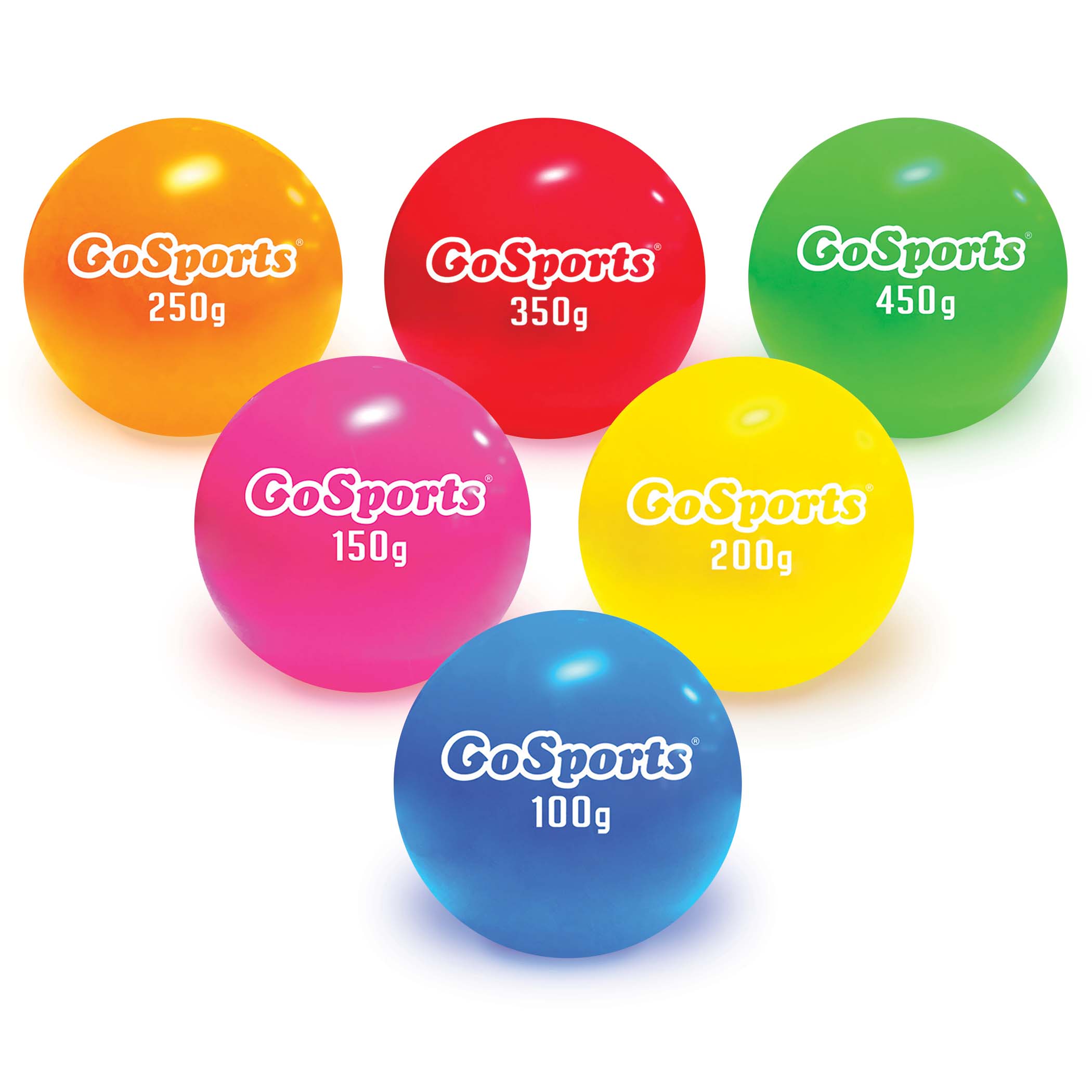
The GoSports Plyometric Training Balls set is an affordable entry point into variable-weight arm training. The set includes six balls at progressive weights (100g, 150g, 200g, 250g, 350g, and 450g), covering the full range from underload to moderate overload work. The color-coded design makes it easy to grab the right weight during a training circuit without checking labels. The durable rubber shell handles throws into nets, walls, and padded targets. For youth coaches introducing their older players to plyometric arm care for the first time, this is a smart starting point that covers the basics without overwhelming the budget. Use it alongside a structured throwing program to keep arms healthy through the season.
Price: $39.99 (set of 6)
Frequently Asked Questions
What is the best training ball for youth batting practice?
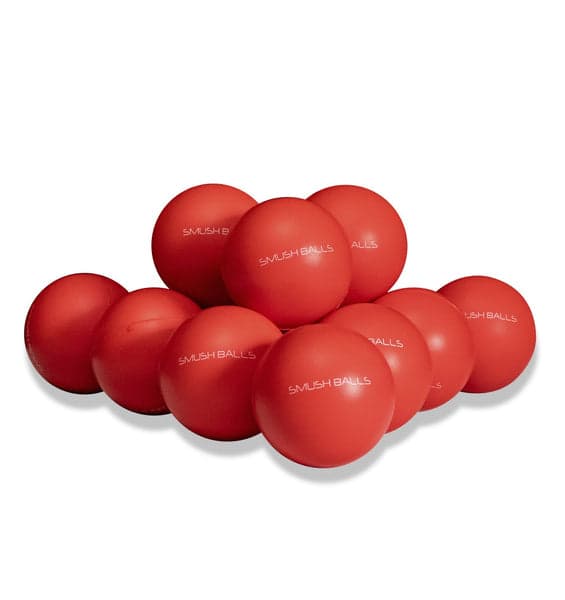
For most youth teams, Smushballs are the best all-around training ball. They are regulation size, safe for indoor and outdoor use, limit flight to about 115 feet, and hold up through thousands of swings. If you need something cheaper, the GoSports Foam Baseballs 12-pack at $21.79 is a solid budget alternative. For coaches who want a plastic ball with more realistic contact feel, the PowerNet Crushers at $44.99 for 12 are the top choice.
Are wiffle balls good for baseball practice?
Yes. Wiffle balls are one of the most effective tools for developing hand-eye coordination and pitch recognition. The unpredictable movement forces hitters to track the ball all the way to the bat, which builds the same visual skills they need against live pitching. Many college and professional hitting coaches use wiffle ball drills in their daily warmup routines. They are also cheap, safe, and perfect for confined practice spaces.
What is the difference between foam balls, wiffle balls, and crushers?
Foam balls (like Smushballs, SKLZ, and GoSports) are made entirely of foam. They are the safest option and ideal for tee work, soft toss, and indoor practice. Wiffle balls (like the official Wiffle Ball) are perforated plastic balls that create movement in flight, making them great for pitch recognition and hand-eye drills. Crushers (like PowerNet Crushers and Indestructiballs) are solid plastic balls that compress on contact and bounce back to shape. They feel more like a real baseball on contact but limit flight distance.
Are weighted baseballs safe for youth players?
Weighted baseballs can be a safe and effective training tool when used properly, but age and supervision matter. Most experts recommend waiting until a player is at least 13 or 14 years old before starting a weighted ball program, and even then, it should follow a structured progression with proper rest periods. The Driveline program includes specific guidelines for safe implementation. For younger players, stick to standard-weight foam and wiffle balls and focus on developing proper mechanics before adding load.
How many training balls do I need for a team practice?
A minimum of 12 balls per station keeps practice flowing. If you are running two hitting stations simultaneously, aim for 24 total. For weighted ball circuits, 6 balls (one at each weight) is standard per athlete. For wiffle ball games and pitch recognition drills, a 6-pack is usually enough since the balls stay in a small area. Buy more than you think you need because balls inevitably get lost, stepped on, or hit into places you cannot retrieve them.
Can I use training balls in a pitching machine?
Standard foam balls, wiffle balls, and crushers are generally not designed for pitching machines and may not feed properly or fly consistently. If you need machine-compatible training balls, look for products specifically labeled as pitching machine compatible, like the Tater Foam Ball (5 oz, designed for machines like the Hack Attack) or machine-specific balls from your machine manufacturer. Using the wrong balls in a pitching machine can damage the machine or create inconsistent pitches.
About the Author
Beau Branton is the founder of Dugout Edge. He played college baseball at Stanford and professionally in the Seattle Mariners organization, coaches youth baseball, and coaches and plays co-ed softball. He picks gear the way he coaches: by what actually holds up to a season of practice and helps players get more quality reps.
Tags
Ready to Generate Your Perfect Lineup?
Try our free softball and baseball lineup generator to create balanced, fair lineups in minutes.
Try Free Lineup Generator