10 Best Practice Baseballs and Game Balls for Coaches in 2026
If you coach youth baseball long enough, you learn that baseballs disappear. They go over fences, into the weeds, into equipment bags that never come back, and occasionally into orbit when a kid connects on a tee ball. A single season can burn through dozens of balls between practice and games, and stocking up at the wrong price point means either wasting money on balls that fall apart after two weeks or spending way more than your budget allows.
The good news is that there are quality options at every price point, whether you need cheap practice balls for daily BP, competition grade balls for scrimmages, official game balls for league play, or reduced injury balls for your youngest players. The key is matching the right ball to the right purpose so you are not using expensive game balls for batting practice or handing tee ball players a rock-hard regulation ball.
We put together this list of the 10 best practice baseballs and game balls for youth coaches in 2026, covering every age group from tee ball through high school. Every product here is widely available, well reviewed by coaches, and priced to make sense for a team budget.
How I picked these: Practice baseballs are a volume purchase, so the real math is durability per dollar, plus a feel and seam that holds up to buckets of swings and grounders without going soft. I focused on what survives a season of heavy use and matched the picks to budget, from bulk training balls to higher-grade leather practice balls.
Disclosure: This article contains affiliate links. If you make a purchase through these links, The Dugout Edge may earn a small commission at no additional cost to you. We only recommend products we believe in and use for our own teams. Thank you for supporting our site!
Part of our Complete 2026 Coaching Equipment Guide. Also see: Best Training Balls and Wiffle Balls | Best Ball Buckets
What to Look For in Practice and Game Baseballs
Before you load up your bucket, consider these key factors:
- Cover material matters more than most coaches realize. Full-grain leather covers hold up longest and feel the most like a real game ball. Synthetic leather covers are cheaper and fine for batting practice, but they scuff faster and lose their shape sooner.
- Core construction affects durability and performance. Solid cork and rubber centers are standard for regulation balls. Composite cork and rubber centers are common in practice balls and still perform well. Polyurethane foam cores are used in reduced injury balls for younger players.
- Seam type impacts grip and pitch movement. Raised seams help younger players grip the ball and are standard across most youth leagues. Flat (or rolled) seams are typically used at the college level and above.
- Age appropriateness is not optional. Tee ball players (ages 4 to 6) need softer, lighter balls. Little League players (ages 7 to 12) use standard youth baseballs. Players 13 and up transition to full regulation baseballs.
- Price per ball is the number that actually matters for your budget. A dozen balls at $60 is $5 per ball. A bucket of 24 at $100 is about $4.17 per ball. Buying in bulk almost always saves money, especially for practice balls you expect to lose.
Which Baseballs Does Your League Require?
Before you buy, check your league's requirements. Using the wrong ball can get it rejected at the plate meeting or disqualify your team from tournament play.
- Little League Baseball: Little League International officially approves specific ball models each year. Rawlings Official League baseballs (ROLF, ROLB2) are among the most widely accepted. Check your district's current approved list before purchasing, as approvals change yearly.
- USSSA Baseball: Most USSSA-sanctioned national and regional tournaments require USSSA-stamped balls. For local USSSA-affiliated leagues, check with your event coordinator before purchasing, as requirements vary. Rawlings USSSA and Diamond USSSA balls are the most common choices. Practice with these balls so pitchers are used to the seam height and feel.
- Babe Ruth / Cal Ripken: These leagues require official Babe Ruth/Cal Ripken-approved game balls for official play. Check your local league's current approved ball list, as the approved models are updated periodically.
- Recreation leagues: Most rec leagues leave ball selection to the coach or organization. Standard practice balls are fine for all practices. Reserve game balls for actual games to save wear.
- High school (NFHS): High school games use NFHS-approved balls (Rawlings, Diamond, and Worth are common). For practice, any ball with similar seam height and core hardness is acceptable.
When in doubt, email your district or league director before placing a bulk order. Buying 6 dozen wrong balls is an expensive mistake.
Quick Comparison
| # | Product | Price/Dozen | Cover | Value Rating | Best For |
|---|---|---|---|---|---|
| 1 | Rawlings R100-UPY Ultimate Practice | ~$79.99 | Synthetic leather | ★★★★★ | Our Pick - Everyday practice (14U) |
| 2 | Rawlings ROLB1X | ~$54.95 | Full-grain leather | ★★★★★ | Best Value - Scrimmages and quality practice (14U) |
| 3 | Rawlings RLLB1 | ~$74.99 | Full-grain leather | ★★★★☆ | Little League game ball (14U) |
| 4 | Diamond D-OB | ~$68.95 | Genuine leather | ★★★★★ | Budget leather practice ball |
| 5 | Diamond DOL-1 | ~$79.84 | Full-grain leather | ★★★★☆ | Youth/travel league game ball |
| 6 | Rawlings OLB3 | ~$31.87 | Synthetic leather | ★★★★☆ | Cheapest BP option (8U) |
| 7 | Champro CBB-200D | ~$49.99 | Full-grain leather | ★★★★★ | High school/travel practice |
| 8 | Rawlings RCAL1 | ~$74.99 | Full-grain leather | ★★★★☆ | Cal Ripken League game ball |
| 9 | Rawlings RIF5L | ~$76.95 | Synthetic | ★★★★☆ | Premium Choice - Safety ball for ages 7 to 10 |
| 10 | Tebery 12-Pack T-Ball Baseballs | ~$25.99 | Faux leather | ★★★★☆ | Tee ball (ages 6 and under) |
The 10 Best Practice Baseballs and Game Balls
1. Rawlings R100-UPY Ultimate Practice Technology Baseballs
Our Pick: Best all-around practice ball for most youth teams

The Rawlings R100-UPY is Rawlings' newest generation of practice baseballs, built with their Ultimate Practice Technology for youth players 14U and under. These balls are designed to hold up through heavy use at batting practice, fielding drills, and bullpen sessions without losing their shape or feel. The durable cover and consistent raised seams give your players a ball that performs like a game ball during practice, which is exactly what you want when developing proper throwing mechanics and bat contact. At roughly $6.67 per ball ($79.99/dozen), they cost more than entry-level practice balls, but the durability means fewer replacements through the season. The 30-ball bucket brings that down to about $4.82 per ball. If you want one ball that handles every drill you throw at it, the R100-UPY is the one to stock your bucket with.
Price: $79.99 per dozen
2. Rawlings ROLB1X Competition Grade Practice Baseballs
Best Value: Game-quality performance at practice ball prices
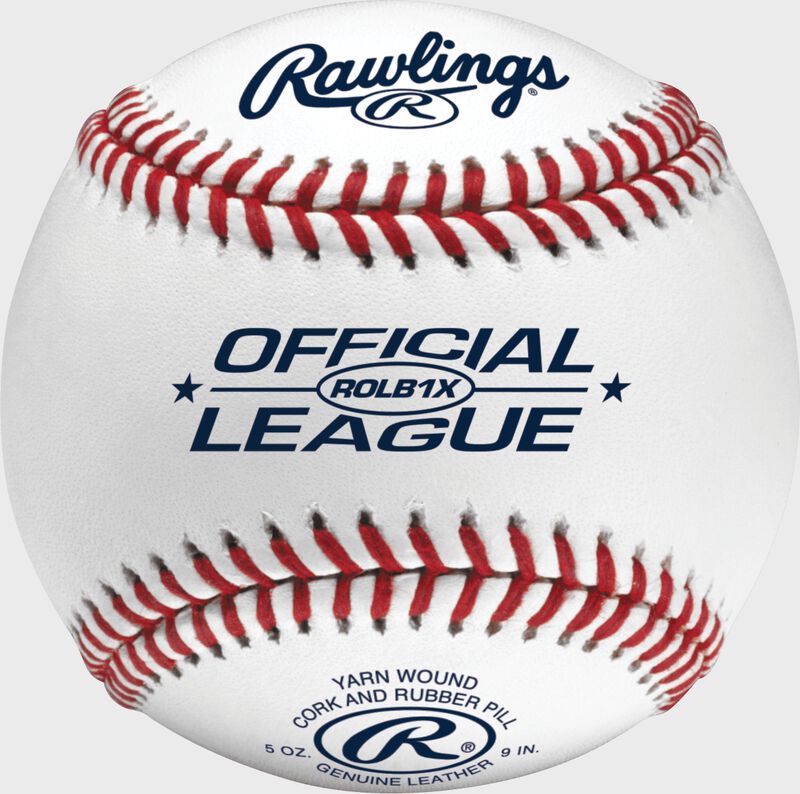
The ROLB1X is a step up from the ROLB2 and sits right in the sweet spot between a practice ball and a game ball. These are competition grade baseballs with a full-grain leather cover, raised seams, and a composite cork and rubber center. The "X" designation means they may have minor cosmetic blemishes, but the performance is identical to the premium version. That is the secret most experienced coaches already know: blem balls play exactly the same and cost significantly less. These work great for scrimmages, intrasquad games, and any practice where you want a game-quality feel without burning through your game ball supply.
Price: $54.95 per dozen
3. Rawlings RLLB1 Little League Competition Grade Baseballs
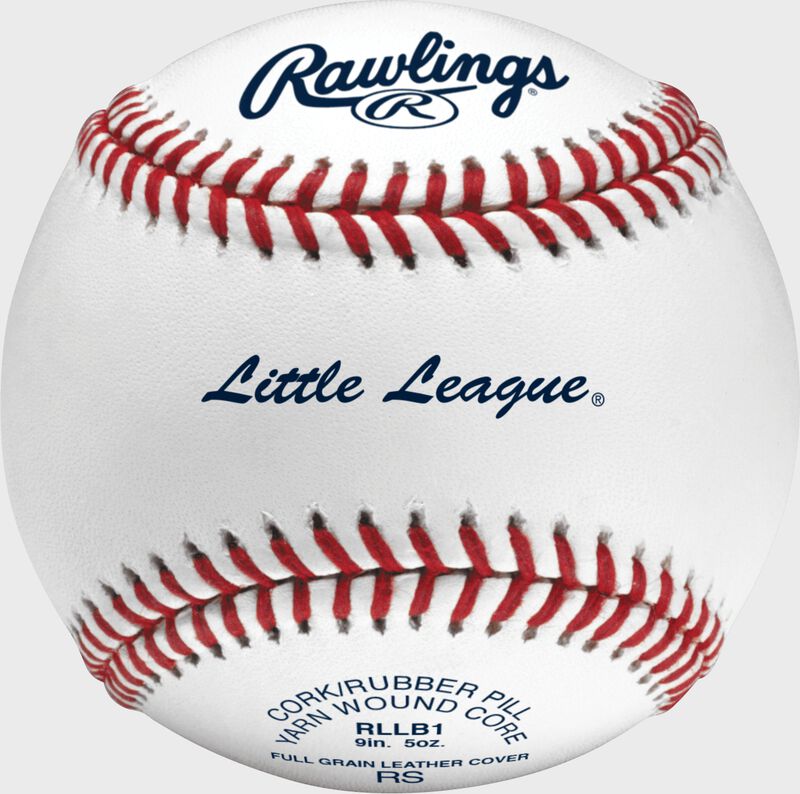
If your league requires official Little League stamped baseballs for games, the Rawlings RLLB1 is the standard. These feature a full-grain leather cover, raised seams for improved grip, and a composite cork and rubber center. They carry the official Little League stamp, making them approved for regular season and tournament play for players 14U and under. The quality is consistent ball to ball, which matters when you are stocking your game bag. Keep these separate from your practice bucket. Use your ROLB2s or ROLB1Xs for practice and save these for game day. Your wallet will thank you.
Price: $74.99 per dozen
4. Diamond D-OB Official League Practice Baseballs
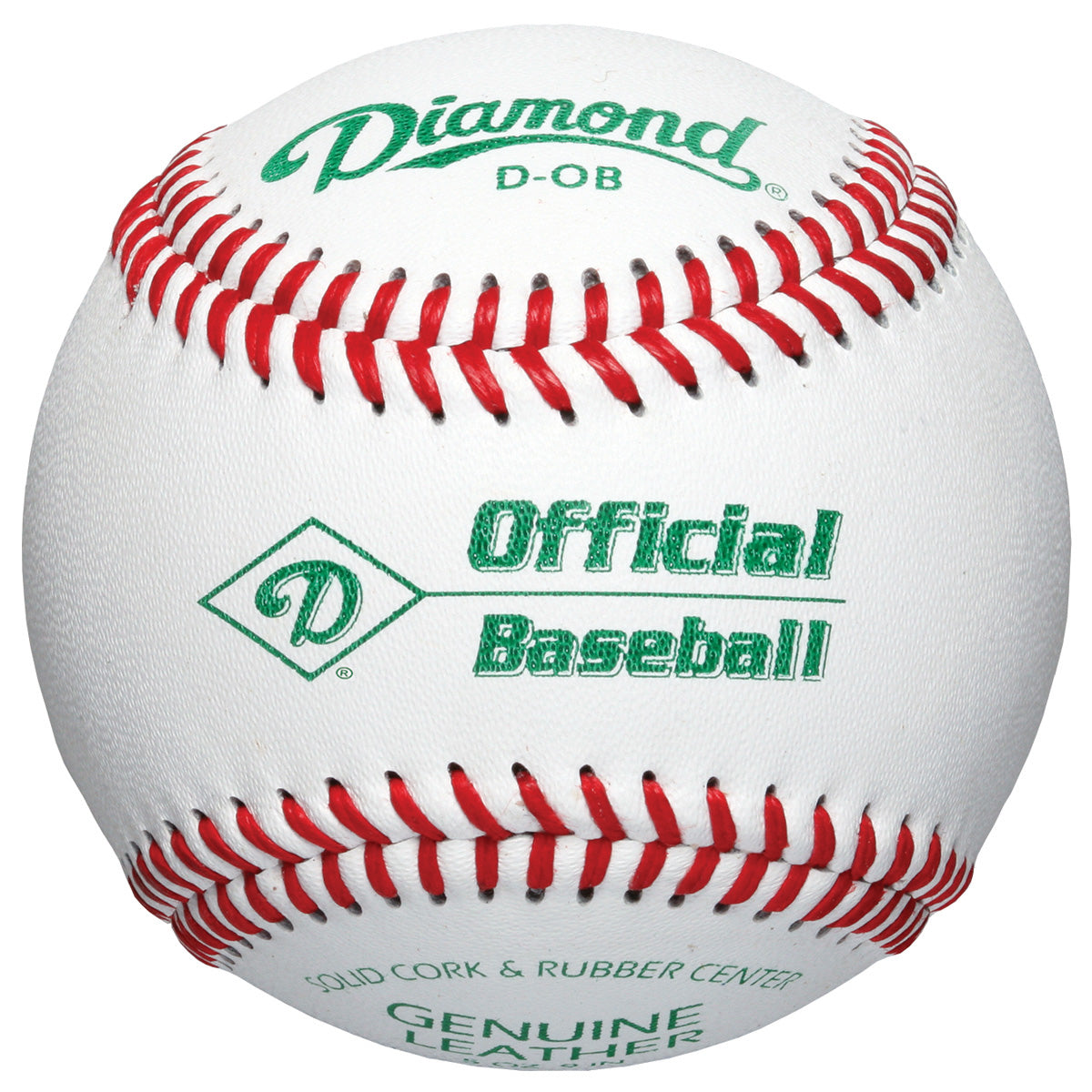
Diamond Sports has been making baseballs for decades, and the D-OB is their most popular practice ball for a reason. It features a genuine leather cover and a solid cork and rubber center at a price that competes directly with synthetic cover balls from other brands. That means you are getting real leather feel and durability at a practice ball price. The red stitching is classic Diamond, and the raised seams provide a solid grip for throwing drills. These are a great option for coaches who want to fill a bucket with leather balls without paying competition grade prices. If you have been buying Rawlings your whole career and want to try something different, give Diamond a look.
Price: $68.95 per dozen
5. Diamond DOL-1 Official League Game Baseballs
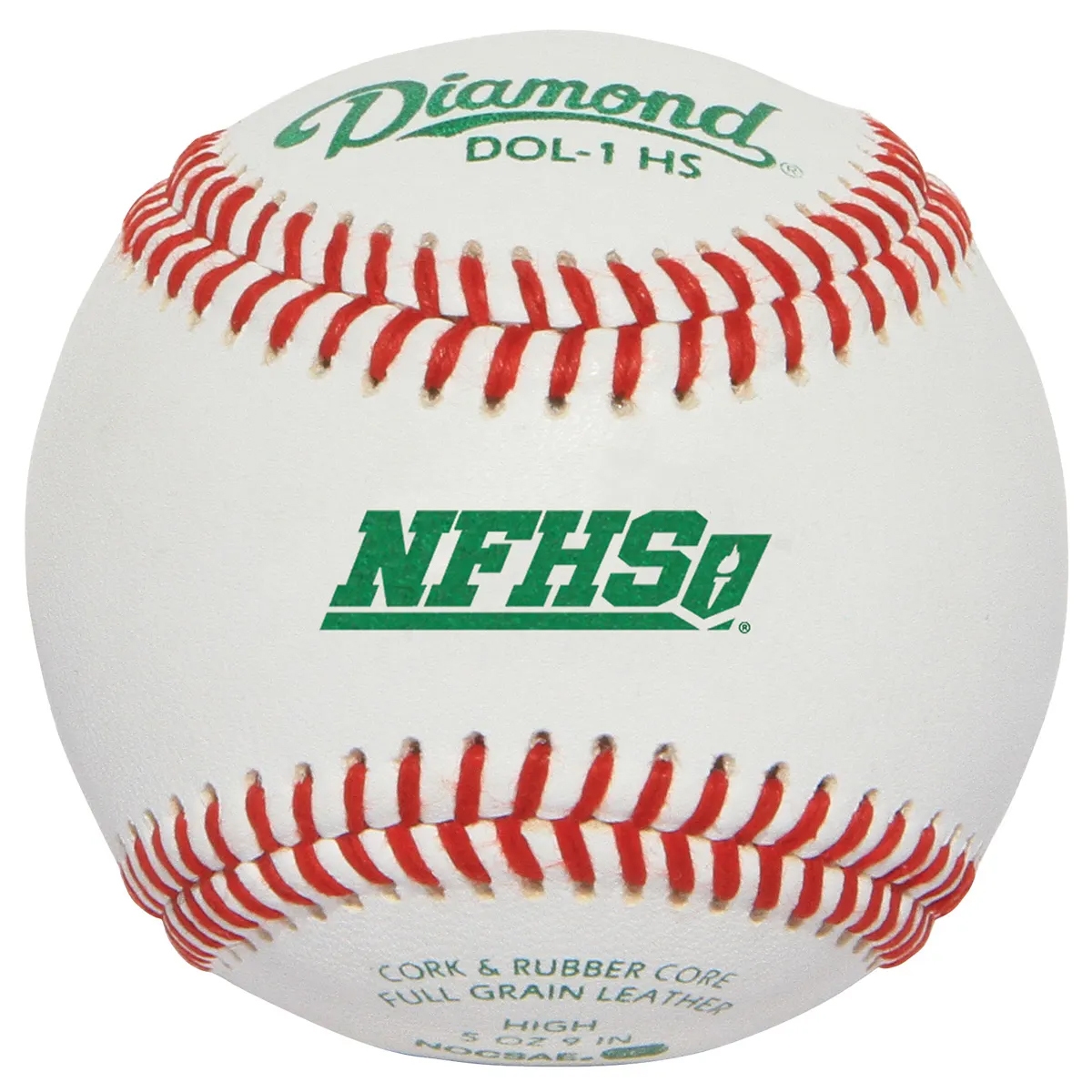
The Diamond DOL-1 is a game quality baseball used by youth leagues, travel ball organizations, and high school JV programs across the country. It features a full-grain leather cover, a cushioned cork center, and metered tension wool yarn winding that gives the ball a consistent feel and flight. USSSA approved versions are available for travel ball coaches who need that stamp. At roughly $80 per dozen, the DOL-1 costs about the same as the Rawlings game balls on this list and delivers similar on-field performance. Many league directors stock these as their official game ball because the quality-to-price ratio is hard to beat.
Price: $79.84 per dozen
6. Rawlings OLB3 Recreational Use Baseballs
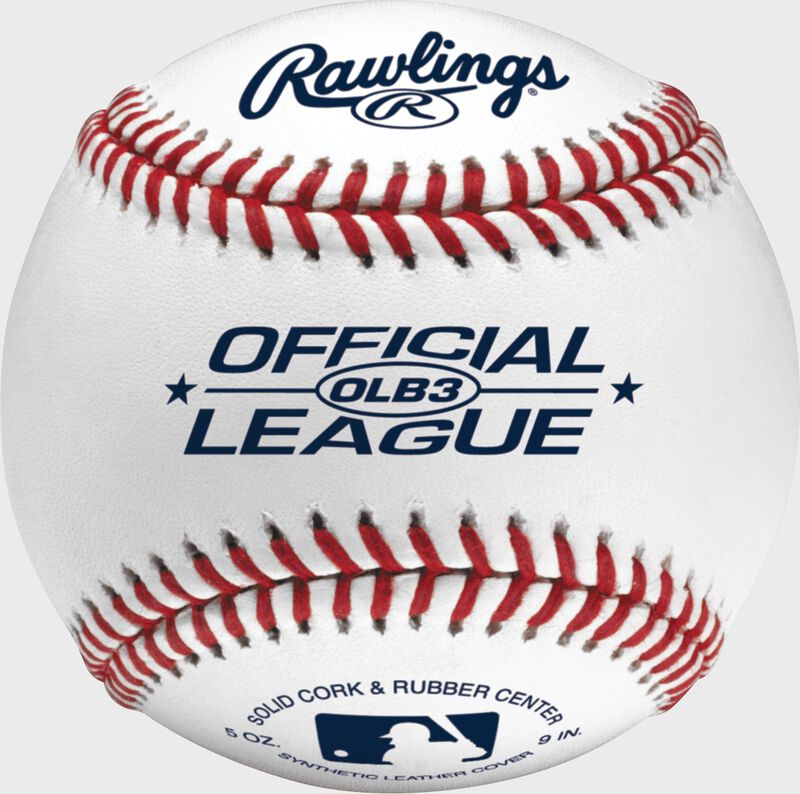
When you need the cheapest option that still looks and feels like a baseball, the OLB3 is where you land. These feature a synthetic leather cover and a solid cork and rubber center with official Major League seams. They are designed for recreational play and batting practice for ages 8 and under, but plenty of coaches use them for general practice with older kids too. The synthetic cover scuffs up faster than leather, and you will notice a slight difference in hand feel, but for BP sessions where you are going to lose three or four balls over the fence anyway, these save real money. Buy a couple dozen, toss them in a bucket, and do not stress when one goes missing.
Price: $31.87 per dozen
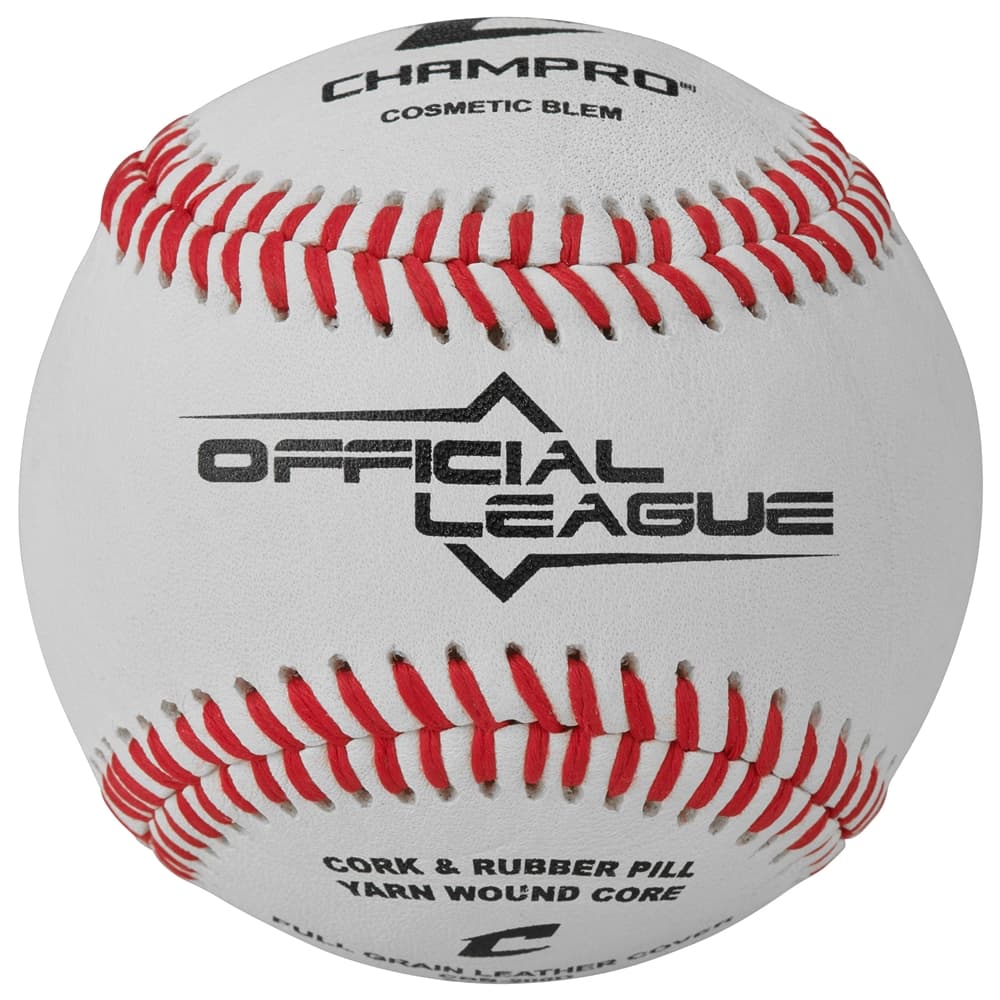
7. Champro CBB-200D Official League Blem Baseballs
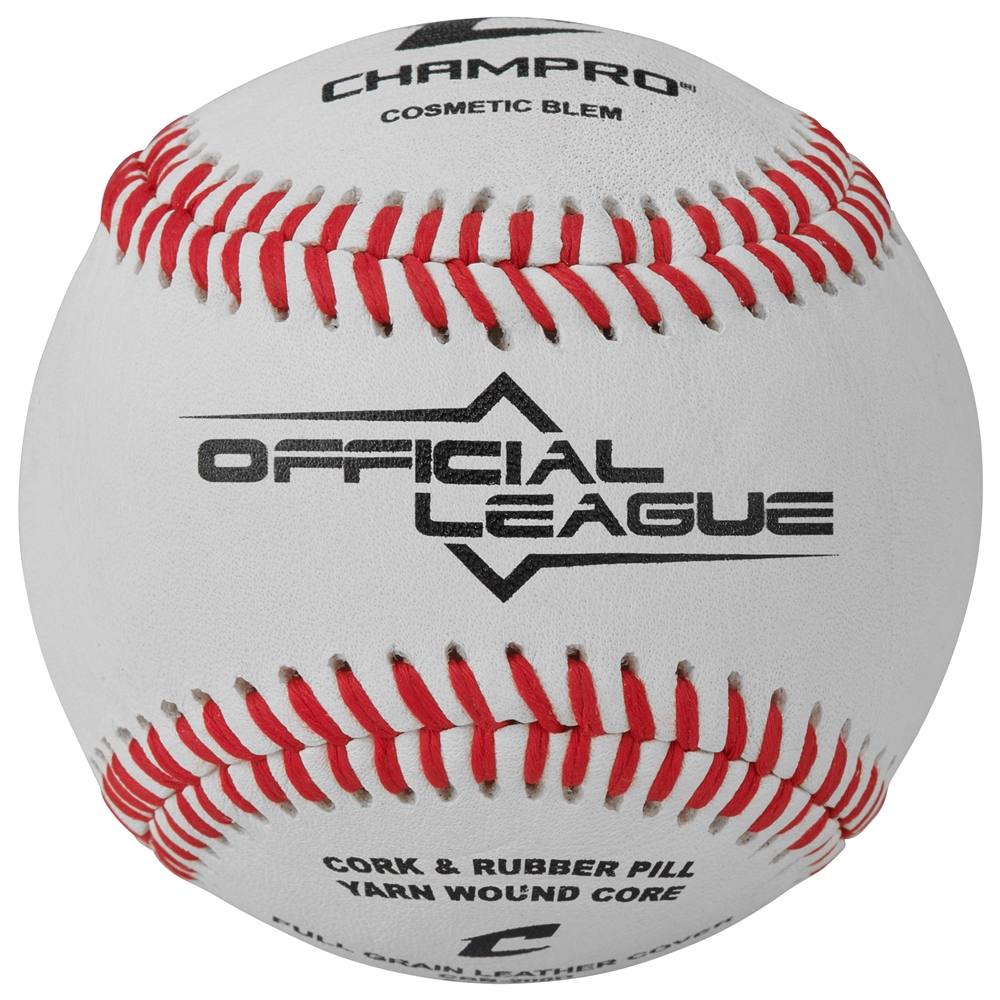
The Champro CBB-200D is another excellent blem ball option that gives you high school grade quality at a practice ball price. These feature a full-grain leather cover, a cushioned cork core, and 5% wool yarn winding. The "blem" designation means there are minor cosmetic imperfections in the cover, but the ball performs identically to the non-blem version. Champro is a trusted name in team sports equipment, and these balls are used by programs across the country for practice and scrimmage play. At around $50 per dozen, about $4.17 per ball, they are the cheapest full-grain leather balls on this list. If your high school or travel ball program needs a leather practice ball that can take a beating, the CBB-200D delivers.
Price: $49.99 per dozen
8. Rawlings RCAL1 Cal Ripken League Baseballs
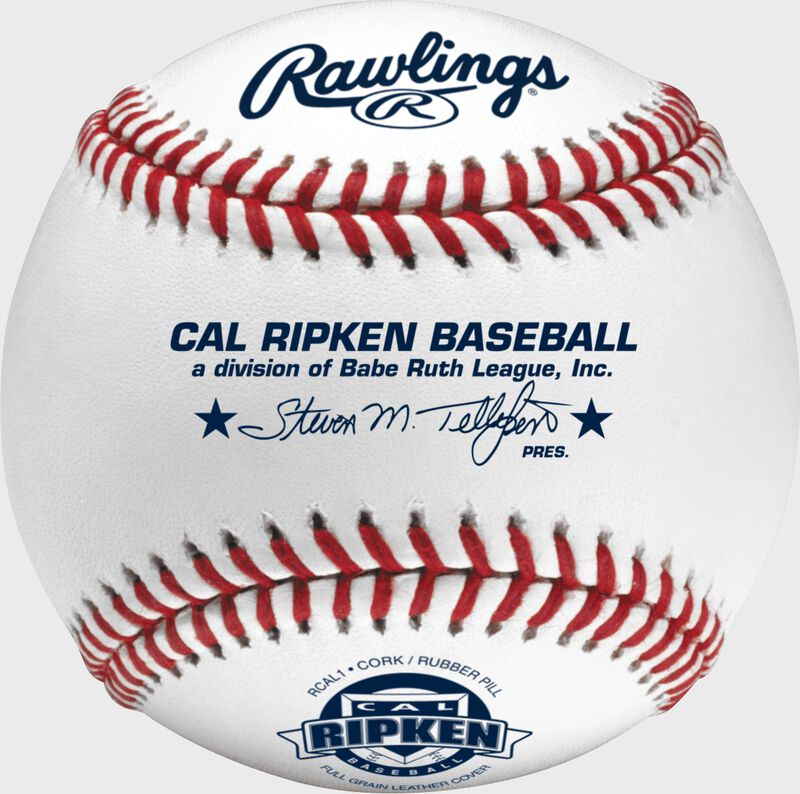
If your players compete in Cal Ripken or Babe Ruth League, the RCAL1 is the official game ball you need. These competition grade baseballs feature a full-grain leather cover, raised seams, and a composite cork and rubber center, and they carry the official Cal Ripken League stamp required for sanctioned play. The quality is on par with the Rawlings RLLB1 Little League ball, just with the Cal Ripken branding and approval. Like any game ball, protect your supply by keeping these out of the practice bucket. Use them for games and intrasquad scrimmages only. For practice, grab a few dozen of the ROLB2s listed above and save your RCAL1s for when it counts.
Price: $74.99 per dozen
9. Rawlings RIF5L Level 5 Reduced Injury Factor Baseballs
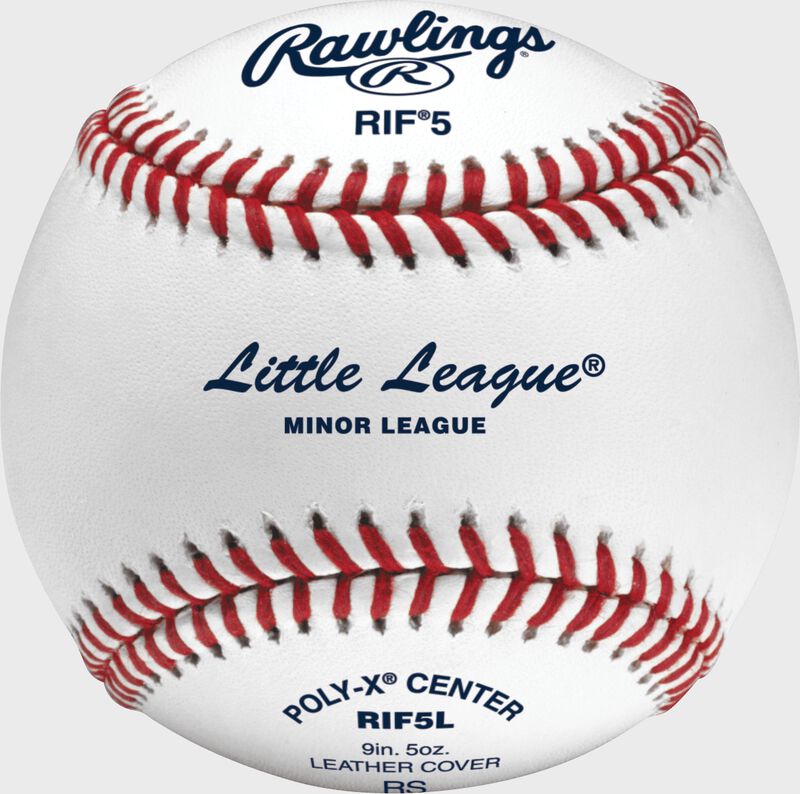
For coaches working with younger or less experienced players, reduced injury factor (RIF) baseballs are a smart investment. The Rawlings RIF5L is a Level 5 ball, which Rawlings rates for players ages 7 to 10 who are still developing their catching and fielding fundamentals. The softer polyurethane core compresses on impact, reducing the risk of injury by up to 80% compared to a standard baseball. These carry the Little League stamp and look like a real baseball, so kids feel like they are playing the real game while coaches get peace of mind. If you run a tee ball or coach pitch program, RIF balls should be standard equipment.
Price: $76.95 per dozen
10. Tebery 12-Pack Standard Size T-Ball Training Baseballs

The Tebery 12-Pack gives you a full dozen soft t-ball baseballs at a price that makes sense for any youth program. These are standard size with a reduced-impact construction that keeps young players safe while they learn to field, catch, and hit off a tee. The unmarked surface works great for autograph baseballs or writing player names for drills. They hold up well through regular use at practices and games, and the soft core means parents are not worried about their 5-year-old taking a ball to the face during a fielding drill gone sideways.
At about $2.17 per ball, you can stock a full bucket without stressing the team budget. They work indoors and outdoors, so rainy day gym practices and off-season clinics are covered. If you coach tee ball or coach pitch, grab a dozen of these and a dozen of the RIF5L balls listed above, and you are set for the entire season.
Price: $25.99 per dozen
Quick Comparison
| # | Product | Price/Dozen | Cover | Best For |
|---|---|---|---|---|
| 1 | Rawlings R100-UPY Ultimate Practice | ~$79.99 | Synthetic leather | Everyday practice (14U) |
| 2 | Rawlings ROLB1X | ~$54.95 | Full-grain leather | Scrimmages and quality practice (14U) |
| 3 | Rawlings RLLB1 | ~$74.99 | Full-grain leather | Little League game ball (14U) |
| 4 | Diamond D-OB | ~$68.95 | Genuine leather | Budget leather practice ball |
| 5 | Diamond DOL-1 | ~$79.84 | Full-grain leather | Youth/travel league game ball |
| 6 | Rawlings OLB3 | ~$31.87 | Synthetic leather | Cheapest BP option (8U) |
| 7 | Champro CBB-200D | ~$49.99 | Full-grain leather | High school/travel practice |
| 8 | Rawlings RCAL1 | ~$74.99 | Full-grain leather | Cal Ripken League game ball |
| 9 | Rawlings RIF5L | ~$76.95 | Synthetic | Safety ball for ages 7 to 10 |
| 10 | Tebery 12-Pack T-Ball | ~$25.99 | Faux leather | Tee ball (ages 6 and under) |
Frequently Asked Questions
How many baseballs does a youth team need for a season?
For a typical youth travel or rec team running 2 to 3 practices per week, plan on 4 to 6 dozen practice balls per season. Balls get scuffed, go over fences, and wear down quickly when pitchers and catchers work with them daily. Buying in bulk (by the dozen) reduces the per-ball cost significantly. A team that practices 3 days a week through a full season typically goes through 5 dozen or more.
Can you use practice baseballs in games?
Not for official league or tournament play. Practice balls are typically softer, lighter, or have different seam heights than approved game balls. Using a practice ball in a sanctioned game will usually be caught by the umpire or opposing team and result in the ball being replaced. Save your game balls for games and use practice balls exclusively for practice to extend the life of both.
Do cheaper practice baseballs affect a pitcher's grip development?
Yes, in some cases. Cheap practice balls often have inconsistent seam height or synthetic covers that sit differently than a standard leather game ball. Young pitchers who learn grip and spin on very low-quality balls may have trouble transitioning to game balls. A better approach is to buy mid-range practice balls with similar seam height to your league's game ball, especially for pitchers under 14 who are still developing their grip habits.
What is the best practice baseball for youth teams?
The Rawlings R100-UPY is the best all-around practice baseball for most youth teams. Built with Rawlings' Ultimate Practice Technology, it holds up through weeks of batting practice and fielding drills at roughly $80 per dozen, about $6.67 per ball, and less in the 30-ball bucket. For coaches who want a higher quality practice ball, the Rawlings ROLB1X at about $55 per dozen gives you competition grade quality with minor cosmetic blemishes that do not affect play.
What is the difference between practice baseballs and game baseballs?
Game baseballs are held to a higher standard of consistency. They use premium full-grain leather covers, tighter quality control, and often carry league-specific stamps (Little League, Cal Ripken, USSSA, NFHS) required for sanctioned play. Practice baseballs may have cosmetic blemishes, slightly less consistent stitching, or synthetic covers, but they perform nearly the same on the field. The biggest difference is durability and price. Save your game balls for game day and stock up on practice balls for everything else.
Are reduced injury baseballs worth buying?
Absolutely, especially for players ages 7 and under or for any program introducing kids to live pitching for the first time. Reduced injury factor (RIF) baseballs compress on impact and reduce the severity of injuries by up to 80%. They look and play like real baseballs, which means kids still get an authentic experience. The Rawlings RIF5L (Level 1) is ideal for ages 5 to 7, while the RIF10L (Level 2) works for ages 8 to 10 with a firmer feel closer to a standard ball. The extra cost per dozen is worth the added safety.
Should I buy baseballs by the dozen or in a bucket?
Buying in bulk almost always saves money. A 30-ball bucket of Rawlings R100-UPY runs about $145, roughly $4.82 per ball, compared to about $6.67 per ball when buying a dozen. Buckets also come with a reusable 6-gallon pail (usually with a padded lid that doubles as a seat), which is genuinely useful during practice. If you are buying for a full team and expect to go through a lot of balls, the bucket is the better value. If you just need to top off your supply, a dozen at a time is perfectly fine.
What baseballs do I need for tee ball and coach pitch?
For tee ball (ages 4 to 6), use the Tebery 12-Pack T-Ball Baseballs or a similar soft-core tee ball. These have a reduced-impact construction that is safe for young players who are still learning to catch and field. For coach pitch (ages 6 to 8), you can transition to the Rawlings RIF5L reduced injury baseballs, which have a slightly firmer feel while still providing impact protection. By ages 8 to 9, most leagues move to standard youth baseballs like the Rawlings OLB3 or R100-UPY.
What baseballs should a first-year rec ball coach buy?
For your first season coaching rec league baseball, start with 2 dozen Rawlings R100-UPY practice balls (about $160 total, or about $145 for the 30-ball bucket) and 1 dozen Rawlings RLLB1 game balls (about $75). That gives you plenty of balls for batting practice and fielding drills while keeping a clean set aside for games. The R100-UPY balls are durable enough to last most of the season even with heavy use. If your league provides game balls, skip the RLLB1 and buy an extra dozen R100-UPY instead.
What is the best baseball value for travel ball teams that practice daily?
For high-volume daily practice, the Champro CBB-200D blems are the best value in full-grain leather at about $4.17 per ball, with the Rawlings ROLB1X close behind at about $4.58. These are competition grade balls with minor cosmetic blemishes that do not affect performance. Buy 4 to 6 dozen at the start of the season (48 to 72 balls total) and you will have enough for daily batting practice, infield work, and bullpen sessions without constantly restocking.
About the Author
Beau Branton is the founder of Dugout Edge. He played college baseball at Stanford and professionally in the Seattle Mariners organization, coaches youth baseball, and coaches and plays co-ed softball. He picks gear the way he coaches: by what actually holds up to a season of practice and helps players get more quality reps.
Tags
Ready to Generate Your Perfect Lineup?
Try our free softball and baseball lineup generator to create balanced, fair lineups in minutes.
Try Free Lineup Generator