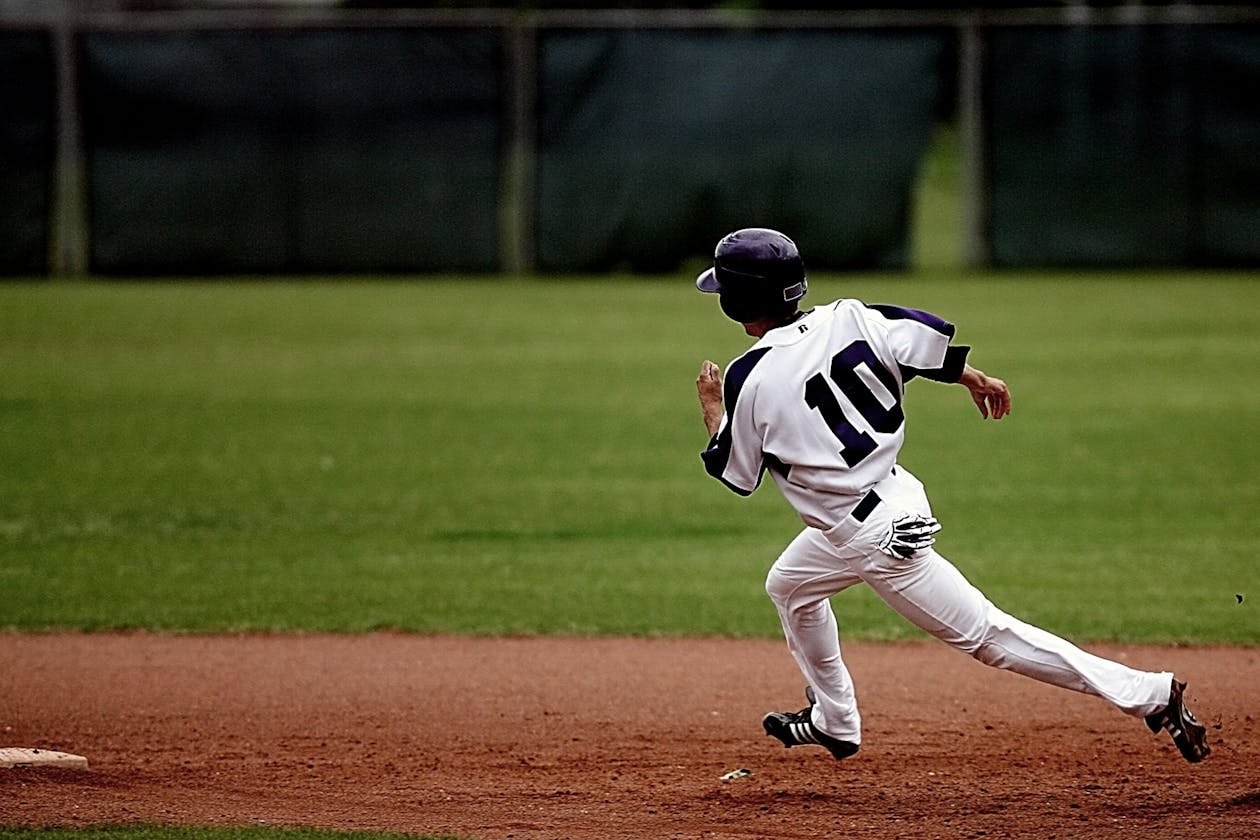
Runner on First: Complete Defensive Guide
With a runner on first base, the defense adds new responsibilities: holding the runner, turning double plays, and preventing the steal. This guide covers every position's responsibilities.
The Situation
- Runner: First base only
- Primary Goal: Get the double play (less than 2 outs)
- Secondary Goal: Prevent the steal, prevent runner from advancing to third
- Key Focus: Double play depth, hold the runner, cover second on the steal
Positioning Adjustments
Infield Depth
Less than 2 outs (double play depth):
- Middle infielders move in slightly (get the double play)
- Corners at normal depth or slightly in
Two outs (no double play):
- Normal depth
- Focus on getting the batter out
First Baseman Holding the Runner
- Position with one foot on the bag
- Be ready to receive pick-off throw
- On the pitch, release and get in fielding position
Ground Ball Responsibilities
Ground Ball to Pitcher
| Position | Responsibility |
|---|---|
| Pitcher | Field it, look at second (if you can get lead runner), throw to first if not |
| Catcher | Stay home, direct traffic |
| First Baseman | Get off the bag, get in fielding position, cover first |
| Second Baseman | Cover second for force or DP |
| Shortstop | Cover second for force or DP (standard) |
| Third Baseman | Cover third |
| Outfielders | Move in, back up |
Double Play Option: Pitcher throws to second (shortstop covering), shortstop relays to first.
Ground Ball to First Baseman
| Position | Responsibility |
|---|---|
| First Baseman | Field it, tag first if close OR throw to second for force/DP OR step on first, throw to second |
| Pitcher | Cover first base |
| Second Baseman | Cover second for force |
| Shortstop | Cover second for DP relay |
Best play: Step on first (out #1), throw to second to get the lead runner if he's too far off.
Ground Ball to Second Baseman
| Position | Responsibility |
|---|---|
| Second Baseman | Field it, flip to shortstop at second for DP |
| Shortstop | Cover second, receive flip, relay to first |
| First Baseman | Cover first for relay |
| Pitcher | Back up first |
Double Play Turn: Second baseman flips to shortstop, who pivots and throws to first.
Ground Ball to Shortstop
| Position | Responsibility |
|---|---|
| Shortstop | Field it, throw to second (2B covering) for DP |
| Second Baseman | Cover second, receive throw, relay to first |
| First Baseman | Cover first for relay |
| Pitcher | Back up first |
Double Play Turn: Shortstop throws to second baseman at the bag, who relays to first.
Ground Ball to Third Baseman
| Position | Responsibility |
|---|---|
| Third Baseman | Field it, throw to second for DP OR throw to first if no DP |
| Shortstop | Cover second for DP |
| Second Baseman | Cover second (backup) or move toward first |
| First Baseman | Cover first |
| Pitcher | Back up first |
Decision: If you can get the DP, throw to second. If not, take the sure out at first.
Fly Ball Responsibilities
Fly Ball to Left Field
| Position | Responsibility |
|---|---|
| Left Fielder | Catch it, check if runner is tagging |
| Center Fielder | Back up |
| Shortstop | Position for throw to second (cutoff) |
| Second Baseman | Cover second |
| Third Baseman | Cover third |
| Pitcher | Back up second or third |
On deep fly: Runner may tag and go to second. Left fielder throws to second.
Fly Ball to Center Field
| Position | Responsibility |
|---|---|
| Center Fielder | Catch it, check for tag |
| Both Corner Outfielders | Back up |
| Shortstop | Cutoff position toward second or third |
| Second Baseman | Cover second |
| Third Baseman | Cover third |
On deep fly: Runner may tag. Center fielder throws to second or shortstop.
Fly Ball to Right Field
| Position | Responsibility |
|---|---|
| Right Fielder | Catch it, get in position to throw to THIRD |
| Center Fielder | Back up |
| Shortstop | Cutoff position toward third |
| Second Baseman | Cover second |
| Third Baseman | Cover third |
The Right Fielder's Play: If runner tags on a fly to right, he's going to third. Right fielder must throw to third (through the cutoff).
Base Hit Responsibilities
Single to Left Field
| Position | Responsibility |
|---|---|
| Left Fielder | Charge, throw to third (cutoff at shortstop) |
| Shortstop | Cutoff between LF and third |
| Third Baseman | Cover third, ready for throw |
| Second Baseman | Cover second |
| Pitcher | Back up third |
| First Baseman | Make sure batter doesn't take second |
| Catcher | Stay home |
Goal: Prevent runner from going first to third.
Single to Center Field
| Position | Responsibility |
|---|---|
| Center Fielder | Charge, throw to cutoff |
| Shortstop | Cutoff toward third (if hit left-center) |
| Second Baseman | Cover second (if hit right-center, be cutoff) |
| Third Baseman | Cover third |
| Pitcher | Back up third |
Goal: Keep runner at second, hold batter at first.
Single to Right Field
| Position | Responsibility |
|---|---|
| Right Fielder | CHARGE HARD, throw to third (this is THE play) |
| Shortstop | Cutoff between RF and third |
| Third Baseman | Cover third |
| Second Baseman | Cover second |
| Pitcher | Back up third |
Goal: Gun down the runner going first to third. This is right field's signature play.
Steal Attempt Coverage
Who Covers Second on the Steal?
Traditional Rule:
- Right-handed batter: Shortstop covers second
- Left-handed batter: Second baseman covers second
Reason: The player NOT in the path of the likely hit covers.
Alternative: Call it based on pitcher's pick-off moves or team preference.
The Coverage
| Position | Responsibility |
|---|---|
| Catcher | Receive pitch, throw to second |
| Second Baseman OR Shortstop | Cover second, receive throw, apply tag |
| The other middle infielder | Back up second |
| Center Fielder | Back up second |
| First Baseman | Watch for batter interference |
The Tag at Second
- Straddle the bag
- Catch the throw
- Quick swipe tag (low, toward the runner)
- Show the ball to the umpire
Special Situations
Hit and Run
What it is: Runner goes, batter is supposed to make contact
Defense:
- Pitch out (if you read it)
- Or: Play it like a steal, get the out at second
- If contact is made: React to the ball
Bunt with Runner on First (Sacrifice)
Full bunt coverage (see Bunt Defense chapter):
- Corner infielders charge
- Pitcher fields if possible
- Second baseman covers first
- Shortstop covers second (get the lead runner if possible)
Double Play Mechanics
The 6-4-3 (Shortstop to Second Base to First)
- Shortstop fields
- Throws to second baseman at the bag
- Second baseman receives, pivots, throws to first
- First baseman catches, out #2
The 4-6-3 (Second Baseman to Shortstop to First)
- Second baseman fields
- Flips or throws to shortstop at the bag
- Shortstop receives, pivots, throws to first
- First baseman catches
The 5-4-3 (Third Baseman to Second to First)
- Third baseman fields
- Throws to second baseman at the bag
- Second baseman relays to first
The 3-6-3 (First Baseman to Shortstop to First)
- First baseman fields
- Throws to shortstop covering second
- Shortstop relays back to first (pitcher covering)
Common Mistakes
First Baseman
- Coming off the bag too early (runner takes big lead)
- Not covering first after double play throw to second
- Forgetting to get in fielding position after the pitch
Middle Infielders
- Both going for the bag on a steal
- Slow feeds on the double play
- Poor footwork on the turn
Third Baseman
- Throwing to first when double play was available
- Not checking the runner after fielding
Outfielders
- Not charging base hits (lets runner advance)
- Throwing to wrong base
- Missing the cutoff man
Pitcher
- Not backing up third on base hits to the outfield
- Not covering first on balls to the right side
Key Reminders
- Less than 2 outs: Think double play (get two)
- Two outs: Get the sure out at first (one is enough)
- Hold the runner (first baseman, pick-off attempts)
- Cover second on the steal (know who's covering)
- Right field base hit = throw to third (the big play)
- Back up throws (especially at third)
Runner on first adds complexity. Everyone must know their job.