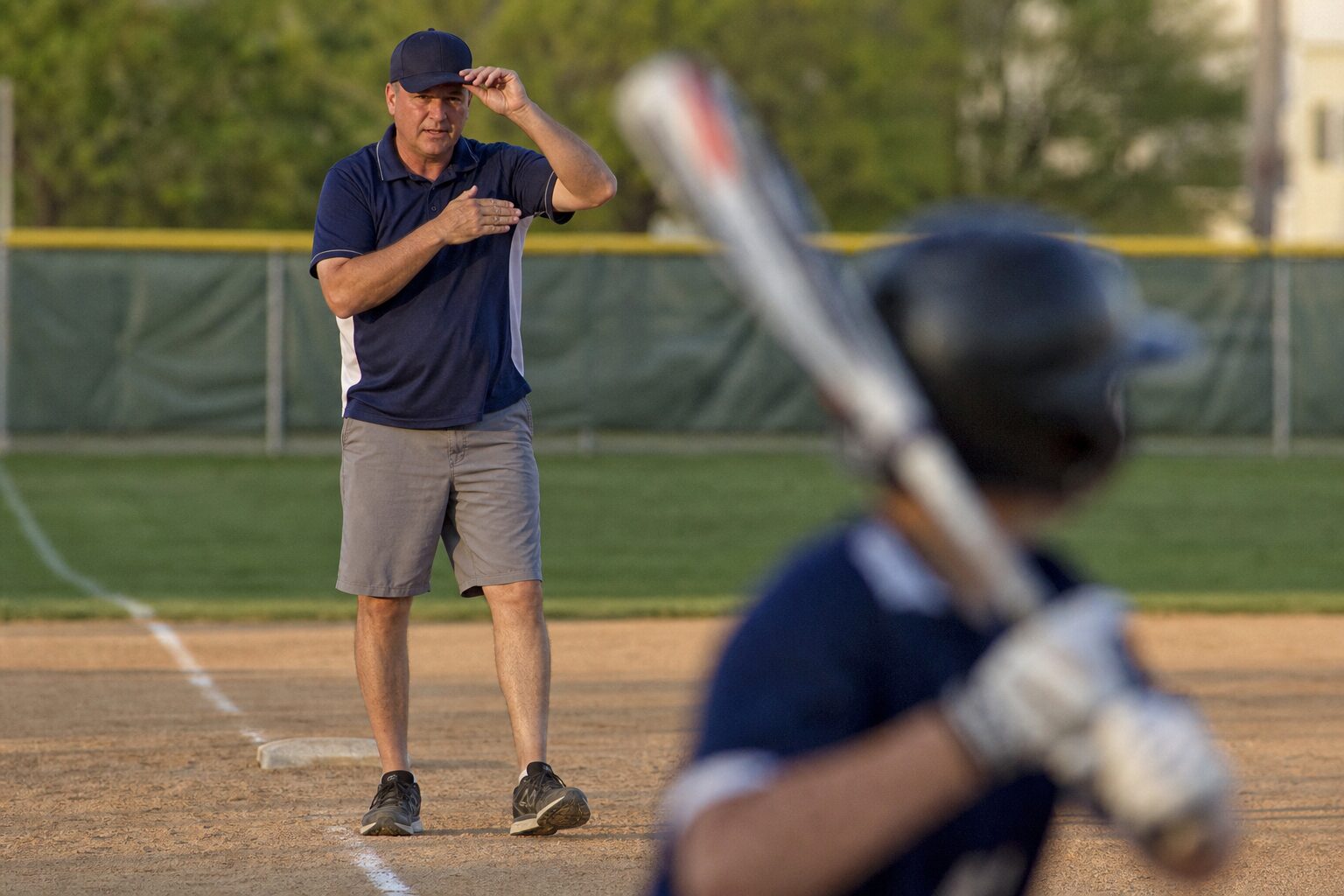
Third Base Coach Signs: A Simple Sign System for Youth Teams
Most youth teams do not need a clever sign system. They need a clear one. If players hesitate, forget, or misread the sign, the system is too complicated.
What matters most
- Start with one indicator and only 2 or 3 live calls
- Teach acknowledgement before you teach deception
- Make the system age-appropriate for baseball and softball
- Practice signs at game speed, not only on the whiteboard
What Third Base Coach Signs Need to Cover
At the youth level, most teams only need signs for:
- Steal
- Bunt
- Take
- Hit and run or slash, if your team is old enough to handle it
- Defensive coverage or pickoff timing, if your battery can execute it
If you are adding more than that, ask one question first. Does this help players play faster, or does it only make the system feel more advanced?
A Simple Third Base Coach Sign System for 10U to 12U
For most 10U to 12U teams, one indicator system is enough.
| Part | Recommendation |
|---|---|
| Indicator | Touch bill of cap |
| Steal | Touch belt |
| Bunt | Touch nose |
| Take | Touch chest |
| Everything else | Decoy |
How it works
- Coach gives a short touch sequence.
- The touch after the indicator is the real sign.
- Player gives a small acknowledgement so the coach knows the sign was received.
Example
Touch ear, touch sleeve, touch cap, touch belt.
That means steal.
Coach language that works
- "See me early."
- "Get your eyes on the sign before you step in."
- "If you do not get it, step out and reset."
Teach It in Practice First
Signs should appear in practice long before they appear in a game.
5-minute teaching progression
- Explain the indicator and the 2 or 3 live calls.
- Flash signs while players stand still and call out the answer.
- Flash signs while runners and hitters are in their normal game spots.
- Add tempo. Give the sign, demand acknowledgement, then start the rep.
- Correct the acknowledgement and timing, not just the play result.
What to look for
- Did the player look at the coach early?
- Did the player acknowledge?
- Did the player start on time?
- Did the player carry out the right action under speed?
Baseball vs Softball Notes
Even when the page is tagged both, the teaching emphasis should change by sport and level.
Baseball
- Steal and delayed-steal communication matters earlier in many baseball leagues.
- Catcher-to-pitcher sign systems become more important once runners can read signs from second.
- If you use first-and-third defenses, simplify the pre-pitch communication to one clear call.
Softball
- Slap, bunt, and short-game communication often matters more than complicated multi-sign systems.
- Coaches usually need quicker visual communication for steals, delay looks, and aggressive baserunning reads.
- Pitch calling may happen verbally or from the dugout more often at younger ages, so do not copy a baseball-only finger system unless your team actually uses it.
Shared rule for both sports
Do not teach pro-style sign volume to youth players. Teach fast recognition and confident execution.
Defensive Communication That Is Worth Keeping
For most youth teams, defensive communication should stay simple:
- Catcher and middle infielders confirm who has the bag on a steal
- Pickoff timing is set before the inning or with one clear cue
- Infielders use quiet verbal confirmation like "me" or "you"
If your team cannot consistently execute coverage communication in practice, do not hide that problem under more signs. Fix the base communication first.
Common Mistakes
Signs are too complicated
Players stop playing fast because they are decoding instead of reacting.
No acknowledgement
Coach assumes the sign was seen. Player never actually got it.
Signs are never practiced at tempo
Players understand in the huddle but freeze in the game.
Same system for every age group
An 8U or first-year 10U team does not need the same sign menu as a confident 13U team.
Baseball-only examples on a both page
If the examples only describe breaking-ball pitch calls or baseball-only timing plays, softball coaches will treat the page as not built for them.
Keep It Game Ready
Before every game, verify three things:
- Players know the live calls for that day.
- Players know how to acknowledge.
- Players know what to do if they miss the sign.
The best backup plan is simple. If a player misses the sign, reset the rep or default to no action. Confusion is worse than not putting the play on.