Top 10 Defensive Drills for Youth Baseball
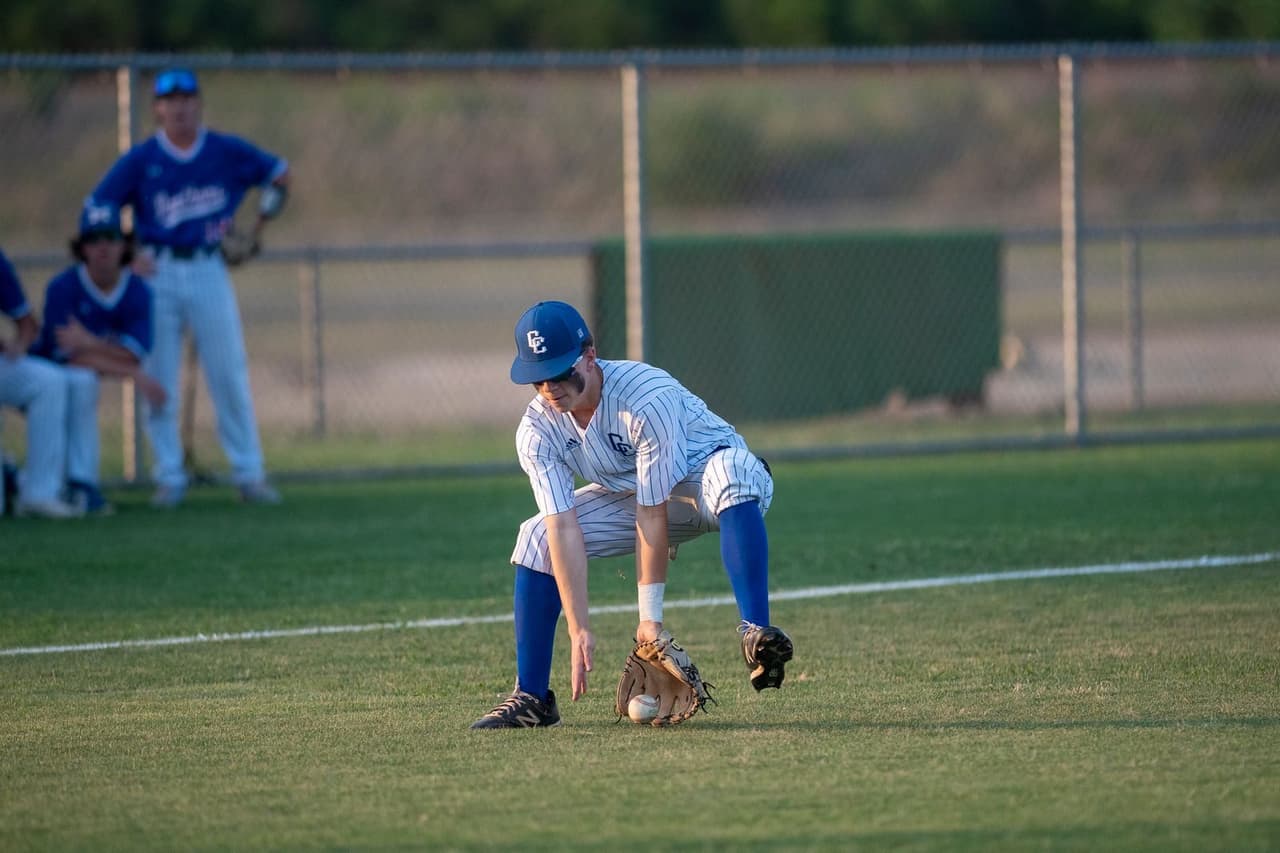
Most youth games aren't won by the team that hits the best. They're won by the team that makes fewer mistakes in the field. At the 8U, 10U, and 12U levels, a huge share of runs score on errors, not clean base hits. A missed ground ball, a rushed throw, a fly ball that drops between two kids who both called it. That's where games get decided.
So if you want to win more, and more importantly if you want your players to actually get better, defense is where you spend your reps. The good news is that fielding is teachable. Kids don't need to be gifted athletes to become solid, reliable defenders. They need clear cues, correct footwork, and a ton of repetitions in a setting where they can't hide in the outfield picking dandelions.
Below are ten defensive drills we come back to season after season. They cover the whole field, they scale up and down by age, and most of them need nothing more than a bucket of balls and a little space. Grab a few and drop them into your next practice.
4-Corner Throw
Setup: Place four players at the bases (or in a square if you've got extra kids, stack lines behind each corner). Ball starts at home and travels around the diamond.
Players throw around the horn, receiving the ball, turning glove-side, and delivering a firm, accurate throw to the next base. Once they've got it going one direction, reverse it, then have them throw across the diamond to break the pattern. This is your daily warmup that builds arm strength, footwork on the catch, and clean exchanges all at once.
Coaching cues: "Catch and turn to your glove side." "Aim for the chest, not the feet." For more on the throwing motion itself, walk your players through how to throw a baseball so the reps here reinforce good mechanics instead of grooving bad ones.
Short Hop Series
Setup: Pair players up about 15 feet apart, one ball per pair, both on a knee to start.
One player rolls or throws a short hop, the partner fields it out in front with soft hands, funneling the ball toward the belly button. Start on knees to isolate the hands, then progress to a fielding stance. The short hop is the hardest ball an infielder sees, so getting comfortable with it makes routine grounders feel easy.
Coaching cues: "Attack the hop, don't wait for it." "Give with the ball, don't stab at it."
Triangle Footwork
Setup: Roll a slow ground ball straight at a fielder from about 20 feet away. No throw yet, just the field.
Teach the player to field the ball out in front, forming a triangle with their two feet and the ball at the point. The ball should be caught in the middle, slightly to the glove side, never between the legs or off to the side. This is the position everything else builds from, so drill it until it's automatic.
Coaching cues: "Butt down, glove out front." "Ball in the triangle, funnel to the middle."

Bucket Challenge
Setup: Set an empty bucket next to a fielder. Coach hits or rolls grounders for a set time or a set number of reps.
The player fields each ball cleanly and drops it in the bucket, counting out loud. Turn it into a game: how many clean fields in 60 seconds, or first to 10 with no bobbles. The scoreboard element keeps energy high and forces kids to slow down just enough to field it right, because a bobble doesn't count.
Coaching cues: "Clean field, then it counts." "Two hands to secure, then the bucket."
Outfield Routes and Angles
Setup: Position an outfielder, then throw or hit fly balls to their left, right, and over their head. Start soft and build.
Teach the drop step and the banana route, taking an angle to get behind the ball rather than drifting straight at it. The number one outfield error at this age is running in on a ball that's actually over their head. Fix that here, in reps, before it costs you a game.
Coaching cues: "Open up with a drop step, don't backpedal." "Get behind it and come through the catch."
Cutoffs and Relays
Setup: Line up an outfielder, a cutoff infielder, and a catcher or base. Ball is hit or rolled to the outfield.
The outfielder fields and throws to the cutoff, who catches, turns glove-side, and relays home or to a base. Emphasize the cutoff man showing his hands and calling for the ball. This drill is where you teach that the fastest way to a base isn't always one giant throw, and it saves runs all season.
Coaching cues: "Cutoff, show your hands and call for it." "Hit the cutoff at the chest so he can turn and fire."
Tag Plays and Rundowns
Setup: Put a runner between two bases with a fielder at each base. Ball starts in one fielder's hand.
Work the rundown: run the runner hard back toward the base they came from, minimize throws, and apply a firm sweep tag low. On straight tag plays, teach catching the ball first, then bringing the glove down to the bag. Kids love this one because the runner gets to compete, so lean into the energy.
Coaching cues: "One throw, force him back to the last base." "Catch the ball first, then tag, low and quick."
Backhand Progression
Setup: Roll balls to a fielder's throwing-hand side so they have to reach across. Start stationary, add movement later.
Teach the backhand as a controlled reach with the glove turned over, plant on the outside foot, then throw. Break it into steps: field it and hold, then field and throw. The backhand feels awkward at first, so build it slowly and it becomes a weapon on balls in the hole.
Coaching cues: "Turn the glove over, reach across your body." "Plant the back foot, then throw."
Slow Roller Do-or-Die
Setup: Roll a soft, slow grounder that dies in front of the fielder. They charge, field barehand or with the glove, and throw on the move.
This is the swinging-bunt play that gives young infielders fits. Teach them to attack the ball, field it off the correct foot, and throw while moving forward rather than gathering and setting. Speed matters here, so time it or race them to make it competitive.
Coaching cues: "Charge it, don't wait for it to come to you." "Field off the throwing-side foot and throw on the run."
First-Step Reaction
Setup: Fielder starts in a ready stance. Coach points or hits balls in random directions with no warning.
The goal is a quick, correct first step. Point left, they cross over left. Point right, they go right. Then feed live grounders so the read becomes real. A great first step turns a lot of "just out of reach" balls into outs, and it's a skill you can build in five minutes a day.
Coaching cues: "React on the ball off the bat, not after it lands." "Crossover step, don't false-step backward."
How to Use These Drills
You don't run all ten in one practice. Pick three or four, set up stations, and rotate.
Match reps to age. For 6U to 8U, keep it short and simple: short hops, triangle footwork, and the bucket challenge in small doses, maybe 8 to 10 reps per player before rotating. For 10U to 12U, you can add the backhand progression, slow rollers, and cutoffs, and push reps to 12 to 15. Younger kids need more reps of fewer things. Older kids can handle variety.
Set up stations. Break your team into groups of three or four with a coach or parent volunteer at each spot. Small groups mean nobody stands in line for five minutes waiting for one grounder. If you're teaching where each player fits defensively, pair this work with a plan for position rotation so kids get reps at the spots they'll actually play.
Adapt to small spaces. No full field? No problem. Short hops, triangle footwork, first-step reaction, and the bucket challenge all fit in a gym, a parking lot, or a patch of grass behind the dugout. Outfield routes work with tennis balls in a tighter space if you're worried about kids or windows.
Add a constraint. The fastest way to raise the intensity is to add a clock or a score. Beat-the-clock reps, first-to-ten with no bobbles, or a station where the whole group has to make five clean plays in a row before they rotate. Competition keeps effort high without you having to nag.
If you want to stop planning practice on a napkin in the parking lot, use our practice planner to build a full session with defensive stations timed out, then pull fresh ideas from the drill library whenever your kids need something new.
FAQ
What are the best defensive drills for youth baseball?
Start with fundamentals: short hops for glove work, footwork triangles for fielding position, and four-corner throwing for arm strength and accuracy. Rotate players through small stations so everyone gets high reps instead of standing in line.
How do I make defensive drills fun for kids?
Add a score or a time constraint. Turn a fielding drill into a bucket challenge or a beat-the-clock reps game. A little competition keeps energy up and reps high without losing the coaching point.
How often should youth teams practice defense?
Include a defensive block at every practice, even if it's just 15 to 20 minutes. Consistent short reps beat one long defensive marathon, and rotating stations keeps every player active and touching the ball.
About the Author
Youth and high school baseball coaches focused on player development, fair playing time, and helping coaches run better practices.
Related Resources
Practice Drills
Tags
Ready to Generate Your Perfect Lineup?
Try our free softball and baseball lineup generator to create balanced, fair lineups in minutes.
Try Free Lineup Generator