9 Best Pitching Machines for Youth Baseball in 2026
A pitching machine is one of the most impactful investments a youth baseball coach or parent can make. It solves one of the biggest problems in youth batting practice: consistency. When a coach is throwing BP by hand, the speed, location, and accuracy of every pitch varies. Kids spend more time chasing bad pitches than developing good swing mechanics. A pitching machine delivers the same pitch, to the same spot, at the same speed, over and over again. That means more quality reps in less time.
Pitching machines also free up the coach. Instead of standing on the mound for 45 minutes throwing batting practice, the coach can position themselves behind the batter to give real-time feedback on swing mechanics, timing, and approach. For smaller coaching staffs (which describes most youth teams), that is a game changer.
The challenge is figuring out which machine is right for your situation. Prices range from under $30 for a basic toy-grade launcher to over $2,500 for a three-wheel machine that throws every pitch in the book. For most youth baseball families and teams, the sweet spot falls somewhere between $90 and $800. This guide covers the full range so you can find the right machine for your player's age, your practice setup, and your budget.
How I picked these: A pitching machine only helps if it throws a consistent, repeatable strike, so I weighted accuracy, how easy it is to feed, and how well each one handles real outdoor youth practice. I matched the picks to budget and age, from simple battery models for tee ball and coach pitch to programmable machines for travel ball.
Disclosure: This article contains affiliate links. If you make a purchase through these links, The Dugout Edge may earn a small commission at no additional cost to you. We only recommend products we believe in and use for our own teams. Thank you for supporting our site!
Part of our Complete 2026 Coaching Equipment Guide. Also see: Best Practice Nets | Best L-Screens
What to Look For in a Youth Pitching Machine
Before you buy, consider these key factors:
- Speed range. Match the machine's speed to your player's age and skill level. Ages 6 to 8 need 20 to 35 mph. Ages 9 to 12 need 30 to 50 mph. Ages 13 and up can benefit from machines that reach 60 to 75 mph. A machine with a wide speed range grows with your player over multiple seasons.
- Power source. Machines run on electricity (AC outlet), batteries, or manual spring power. Electric machines are the most powerful and consistent but require access to an outlet or a generator. Battery-powered machines offer portability at the cost of some power. Spring-loaded machines need no power at all but require manual feeding.
- Ball type compatibility. Some machines throw real baseballs, some throw only lite or dimpled balls, and some throw both. Real baseballs give the most realistic training, but lite balls are safer for younger players and allow practice in smaller spaces like backyards.
- Portability and weight. If you are loading this into your car for every practice, weight matters. Budget machines under $200 typically weigh 15 to 30 pounds. Two-wheel machines start at 50 to 75 pounds. If portability is a priority, look for machines with built-in wheels or carrying handles.
- Safety features. Look for automatic ball feeders (so no one is hand-feeding near moving parts), visible pitch indicators or beepers that warn the batter before each pitch, and stable tripod bases that will not tip over during use.
Quick Comparison
| Machine | Price | Max Speed | Ball Type | Power Source | Auto Feeder | Best For |
|---|---|---|---|---|---|---|
| Franklin Sports MLB Electronic | $34.97 | 30 mph | Plastic | AC / Batteries | Yes (6 balls) | Beginners ages 4-8 |
| SKLZ Lightning Bolt Pro | $107.98 | 30 mph | Soft Bolt Balls | AC / Batteries | Yes (26 balls) | Backyard practice ages 6-12 |
| Franklin 4-in-1 | $67.99 | 30 mph | Plastic | AC / Batteries | Yes (6 balls) | Hitting and fielding ages 5-10 |
| Louisville Slugger Blue Flame | $139.00 | 45 mph | Real baseballs | Manual (spring) | No | No-power practice, all ages |
| Heater BaseHit | $399.99 | 80 mph (lite) / 45 mph (real) | Both | AC | Yes | Rec league and machine-pitch |
| JUGS Lite-Flite | $625.00 | 85 mph (lite) | Lite-Flite balls | AC | No (hand-fed) | Quality youth training |
| Heater Deuce 75 | $799.99 | 75 mph | Real baseballs | AC | Yes (12 balls) | Breaking pitches, ages 12+ |
| Furlihong 737BH Dual-Wheel | $999.99 | 95 mph | Real baseballs | AC | No | Travel teams, serious training |
| JUGS PS50 | $1,125.00 | 50 mph | Real baseballs / softballs | AC | No | Leagues, facilities, dual-sport |
The 9 Best Pitching Machines for Youth Baseball
1. Franklin Sports MLB Electronic Pitching Machine
Our Pick: Best overall choice for most coaches
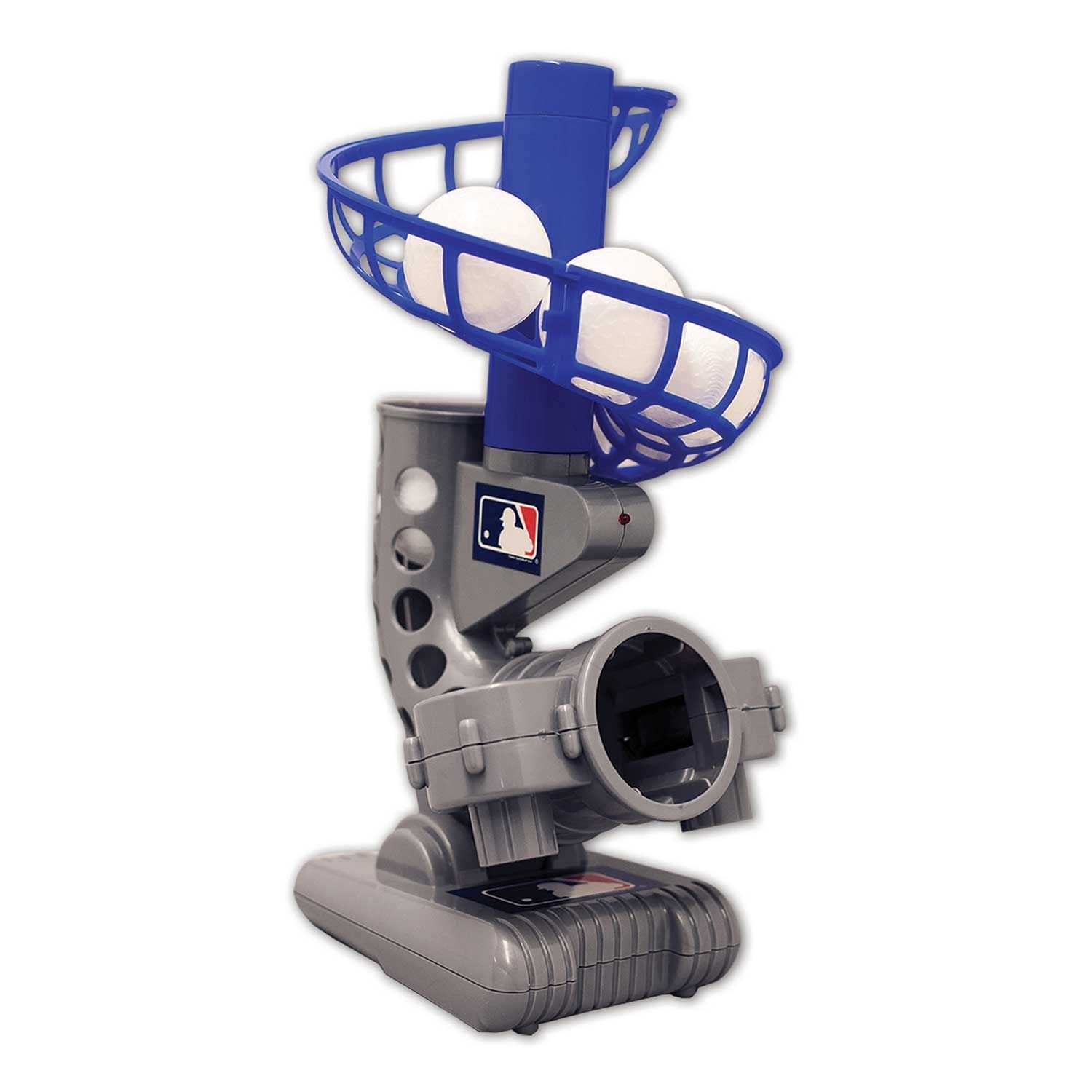
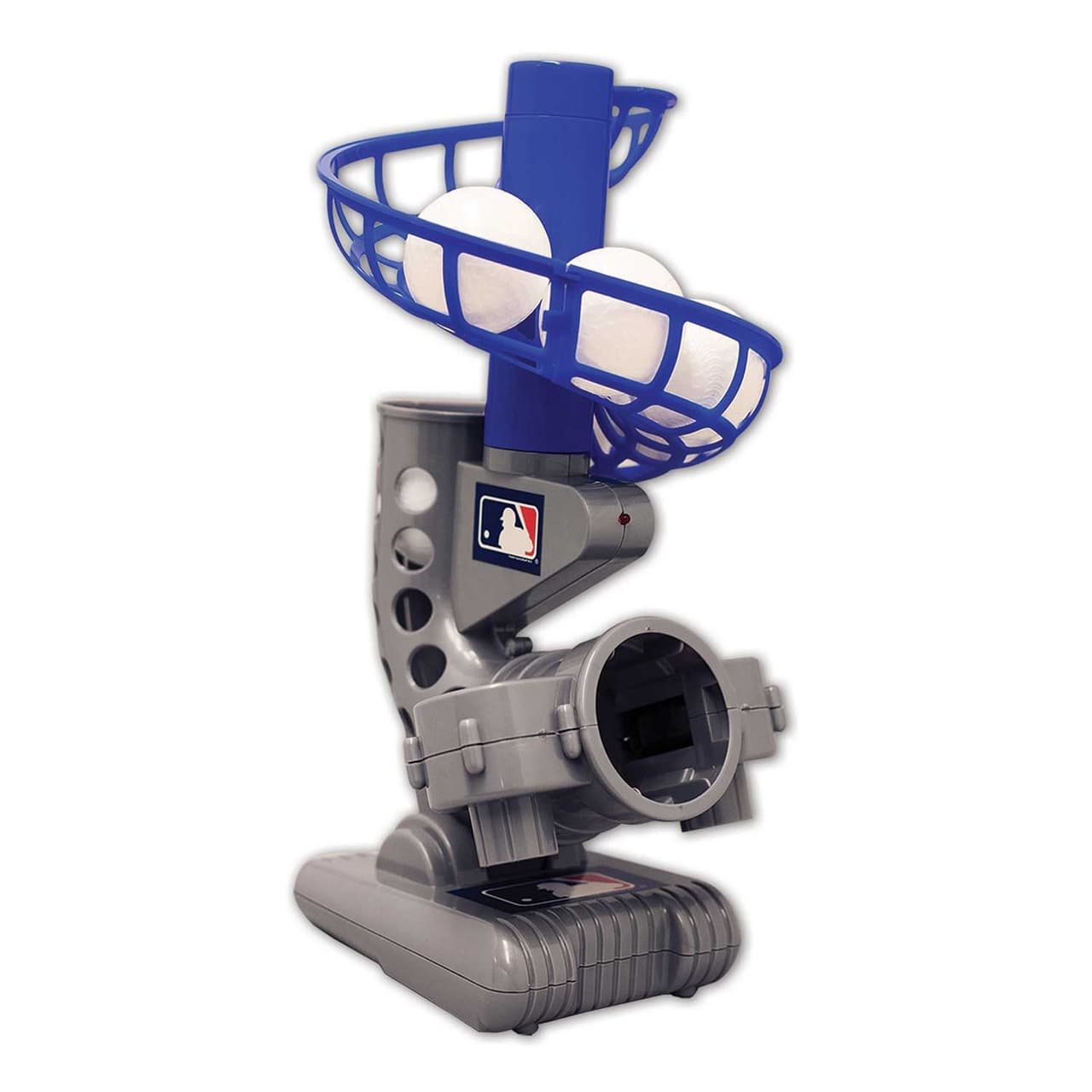
The Franklin Sports MLB Electronic Pitching Machine is the most affordable way to get a kid taking swings without a parent or coach throwing every pitch. It launches lightweight aero-strike plastic baseballs every 7 seconds at speeds up to 30 mph from distances of about 15 to 20 feet. A flashing light indicator lets the batter know when the next pitch is coming. It runs on an AC adapter or 6 C batteries, making it easy to set up anywhere. This is not a serious training tool for competitive players, but for kids ages 4 to 8 who are learning the basics of tracking a ball and making contact, it is a great entry point. The machine comes with 6 plastic baseballs. At this price, it is hard to find a better way to get a young hitter started.
Price: $34.97
2. SKLZ Lightning Bolt Pro
Best Value: Best price-to-performance ratio
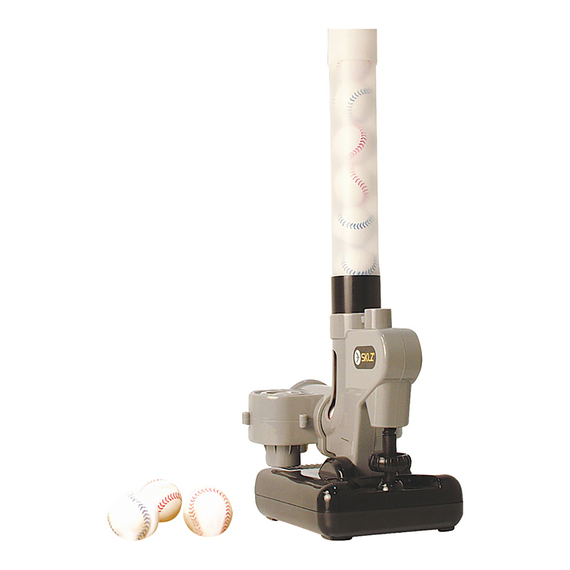
The SKLZ Lightning Bolt Pro is the go-to recommendation for parents who want a step up from toy-grade machines without spending hundreds of dollars. It automatically pitches soft Bolt Balls at up to 30 mph every 5 seconds, and the 26-ball capacity hopper means you get a long session before reloading. The balls are soft enough for indoor or backyard use, which is a huge benefit for families without access to a full-sized field for practice. It runs on an AC adapter or 6 C batteries and weighs about 4 pounds, so kids can carry it themselves. The adjustable height and angle let you work on pitches at different locations. This machine is a popular birthday and holiday gift for players ages 6 to 12, and the reviews from parents consistently praise how much their kids use it.
Price: $107.98
3. Franklin Sports MLB 4-in-1 Pitching Machine
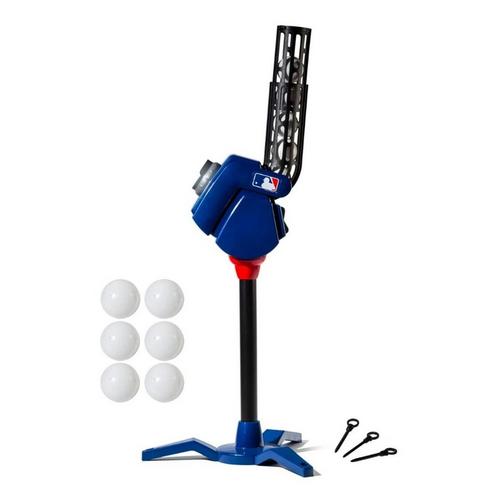
The Franklin 4-in-1 takes the basic electronic pitching machine concept and adds fielding practice to the mix. By adjusting the launch angle, you can throw fly balls, grounders, and line drives in addition to standard batting practice pitches. That makes it one of the most versatile budget training tools available. It holds 6 balls and fires a pitch every 10 seconds. Like other Franklin machines, it uses lightweight plastic balls, making it safe for backyard and indoor use. The 4-in-1 design is especially useful for coaches running small group practices because one machine can serve both hitting and fielding stations. At under $60, it punches well above its weight class for the variety of drills it enables.
Price: $67.99
4. Louisville Slugger UPM 45 Blue Flame
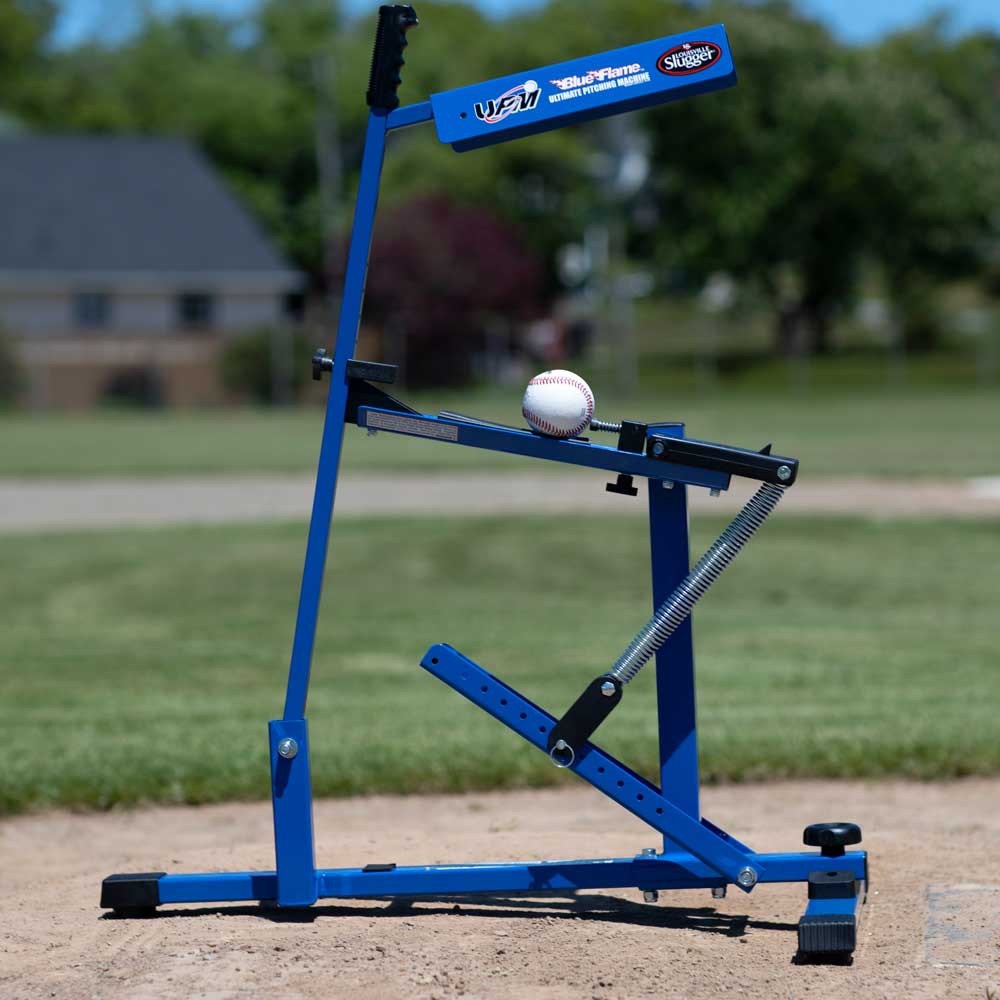
The Louisville Slugger Blue Flame is one of the most popular pitching machines in youth baseball, and for good reason. It requires zero electricity. No batteries, no extension cords, no generators. A heavy-duty spring mechanism launches real baseballs at speeds between 18 and 45 mph, and lightweight balls at up to 60 mph. You simply load a ball, step on the foot pedal, and the spring fires the pitch. The entire machine weighs about 25 pounds and folds up for easy transport. The trade-off is that someone needs to hand-feed each ball, so it is not a "set it and forget it" machine. But for teams that practice at fields without power access, or parents who want a reliable backyard machine that throws real baseballs, the Blue Flame delivers. It also works with softballs, making it a great dual-sport option.
Price: $139.00
5. Heater Sports BaseHit
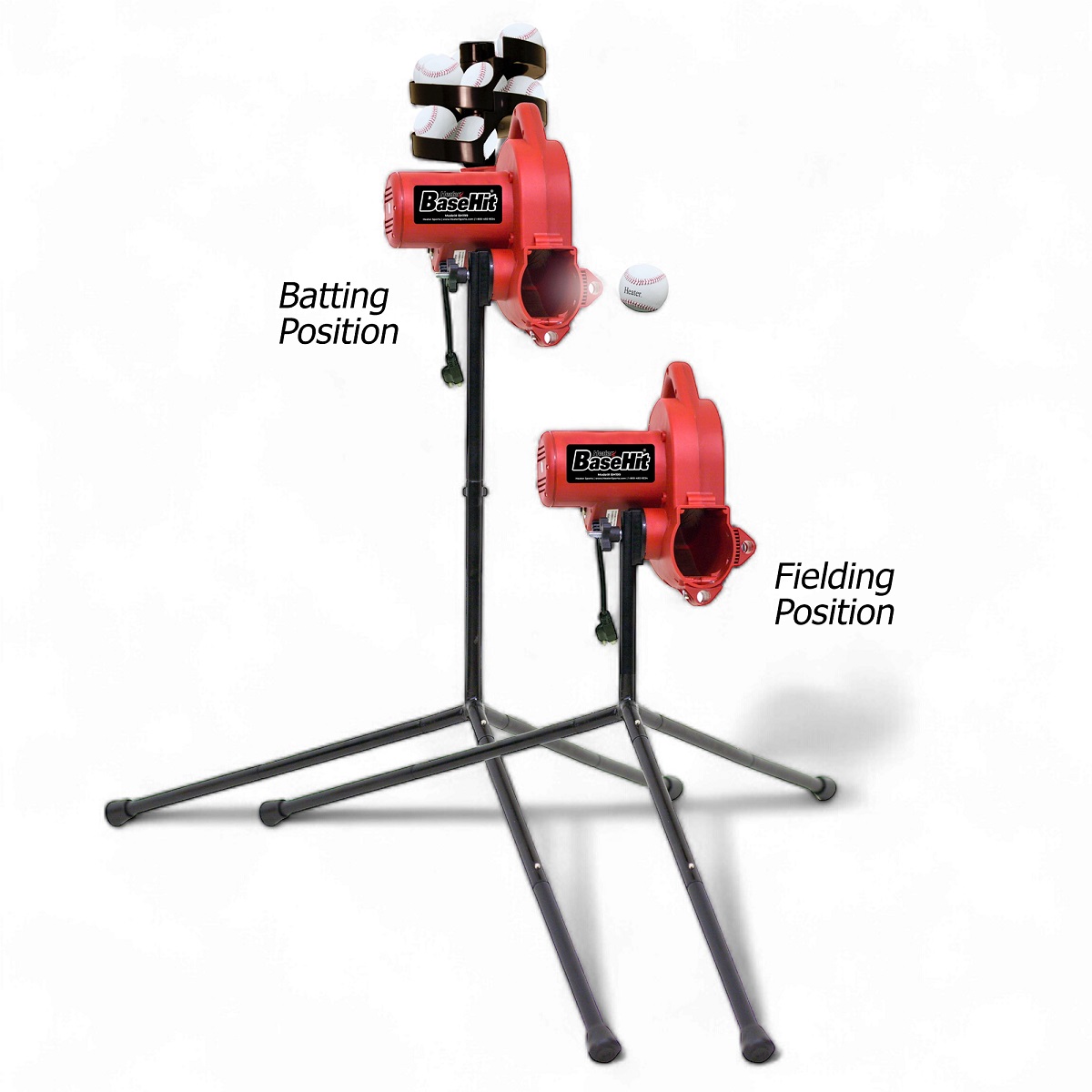
The Heater Sports BaseHit is the workhorse of youth league batting practice. It throws real baseballs at up to 45 mph and lite balls at up to 80 mph, giving you a wide training range from younger beginners all the way to experienced 12-year-olds. The included automatic ball feeder holds a full round of balls and delivers a pitch every 10 seconds, keeping practice moving without a dedicated feeder. At $400, the BaseHit is a solid investment in a real training machine that will hold up through multiple seasons of team use. It plugs into a standard outlet, weighs about 30 pounds, and is simple enough that an assistant coach can set it up in minutes. This is the machine we see most often at rec league and machine-pitch league practices, and for good reason. It delivers consistent strikes without any fuss.
Price: $399.99
6. JUGS Lite-Flite Machine
Best Value: Best price-to-performance ratio
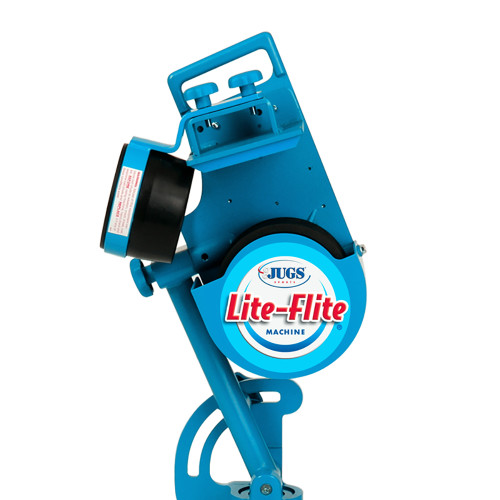
The JUGS Lite-Flite is where you cross into the world of brand-name pitching machines built to last for years. JUGS is the most recognized name in pitching machines, and the Lite-Flite is their entry-level model designed specifically for youth training. It throws Lite-Flite baseballs and softballs at realistic speeds up to 85 mph in a smaller, lighter package. The balls are softer than regulation baseballs, making this machine safer for younger players and suitable for smaller practice areas. At 35 pounds, it is portable enough for one person to carry. The machine comes with two nylon carrying bags, sample Lite-Flite balls, and a drill book. JUGS machines are known for their durability and consistent performance, and many leagues and facilities use Lite-Flite machines for years without issues. The higher price compared to Heater Sports reflects the JUGS build quality, brand reputation, and the machine's ability to simulate faster pitch speeds with the lighter balls.
Price: $625.00
7. Heater Sports Deuce 75
Best Value: Best price-to-performance ratio
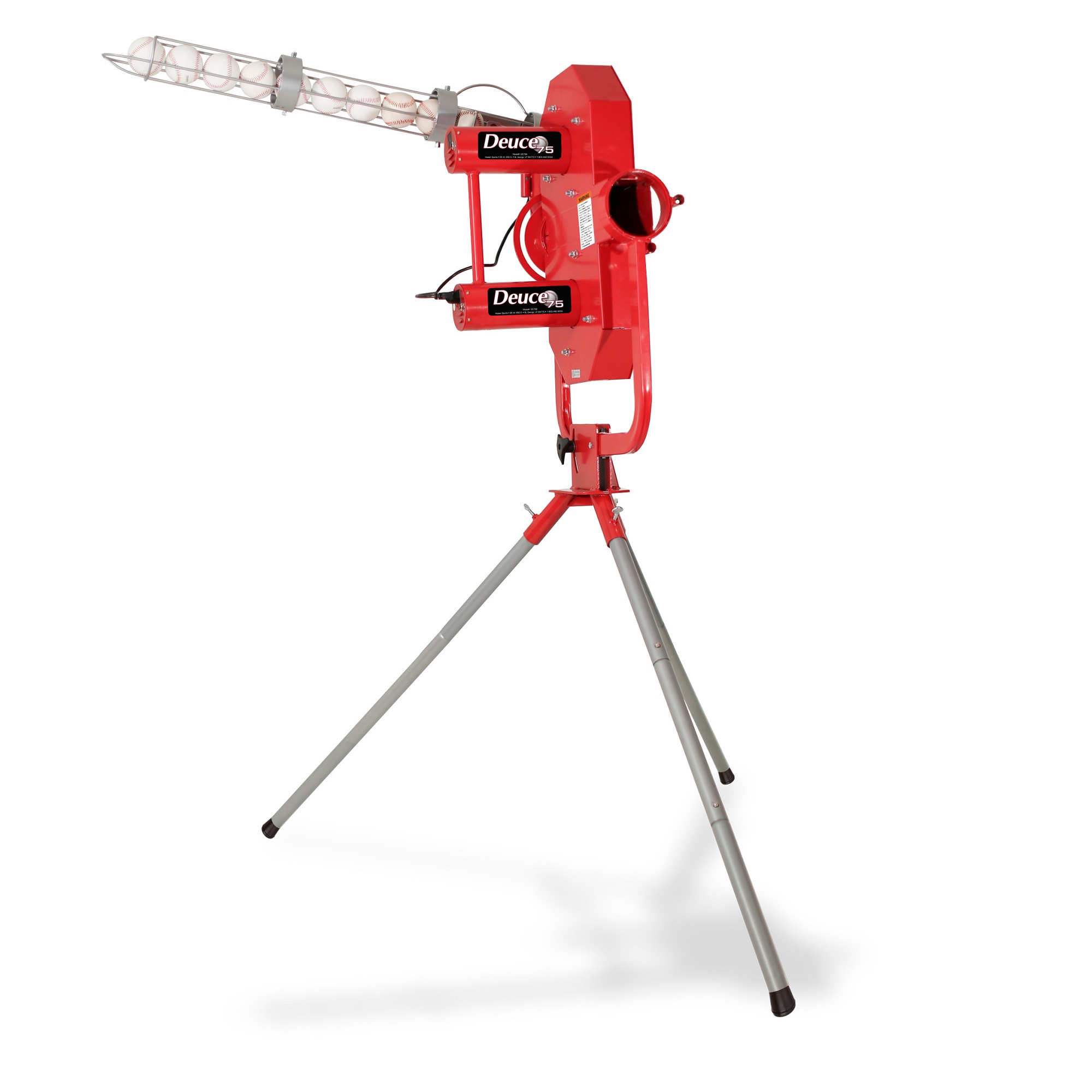
The Heater Sports Deuce 75 is the most affordable two-wheel pitching machine on the market, and that matters because two-wheel machines unlock an entirely different level of training. With independent speed controls on each wheel, the Deuce 75 can throw fastballs, curveballs, and sliders at speeds from 20 to 75 mph. That means your players can practice hitting off-speed and breaking pitches, not just straight fastballs. The included 12-ball automatic feeder delivers a pitch every 8 seconds for continuous batting practice. At 75 pounds, it is heavier than single-wheel machines, but it comes with a built-in wheel for easier transport. This machine plugs into a standard wall outlet and is a legitimate training tool for players ages 12 and up who are ready to face more advanced pitch types. For travel teams and competitive players, the Deuce 75 provides capabilities that would cost significantly more from other brands.
Price: $799.99
8. Furlihong 737BH Dual-Wheel Pitching Machine

The Furlihong 737BH is a dual-wheel pitching machine that delivers serious performance at a competitive price. With independently adjustable wheels (10 speed levels each), it can throw fastballs, curveballs, sliders, and knuckleball-style pitches at speeds up to 95 mph with real baseballs. The side-to-side and up-and-down angle adjustments let coaches simulate realistic pitch locations, giving hitters a genuine game-like training experience. It handles both regulation baseballs and PU training balls, so you can dial the intensity up or down depending on the skill level of your players.
At about $1,000, the 737BH costs $200 more than the Heater Deuce 75 but offers a higher top speed (95 mph vs 75 mph) and the ability to throw a wider variety of pitch types. Setup and breakdown are straightforward, making it practical for coaches who need to move between fields or share equipment across practice sessions. For travel teams, competitive club programs, and serious individual players ages 12 and up who need to train against advanced pitching, this machine delivers the pitch variety and velocity that prepare hitters for the next level.
Price: $999.99
9. JUGS PS50 Baseball and Softball Pitching Machine

The JUGS PS50 is the introductory-level machine from the most trusted name in pitching machines. It throws both regulation baseballs and softballs at speeds up to 50 mph, with a digital readout display that lets coaches dial in the exact speed they want. The patented "always see the ball" delivery system gives batters a clear view of each pitch as it releases, which helps younger players track the ball and develop proper timing. At 50 pounds of solid steel construction, this machine is built to handle daily use at practice facilities, league fields, and training centers without breaking down.
What makes the JUGS PS50 worth the investment is the brand's reputation for accuracy and durability. JUGS machines are the standard at collegiate and professional levels, and the PS50 brings that same engineering quality to youth programs at a more accessible price point. The quick-snap legs and grip-and-go handle make transport between fields practical, and the non-marking pneumatic tire protects gym floors for indoor use. It also throws perfect arching tosses for slowpitch softball, making it a true multi-sport machine. For leagues, facilities, and programs that need a machine built to last for years of heavy use, the PS50 carries the JUGS name for a reason.
Price: $1,125.00
Which Pitching Machine Is Right for You?
Choosing the right machine comes down to three factors: your player's age, your practice setup, and your budget.
For young beginners (ages 4 to 8) and backyard practice on a budget, start with the Franklin Sports MLB Electronic ($35) or the SKLZ Lightning Bolt Pro ($108). These machines use soft balls, need minimal space, and let kids develop hand-eye coordination safely. You are not trying to simulate game-speed pitching at this age. You are building confidence and bat-to-ball contact.
For rec league teams and machine-pitch leagues, the Heater Sports BaseHit ($400) is a solid choice: it handles real baseballs with an automatic feeder so one coach can run efficient BP for the whole team. The Louisville Slugger Blue Flame ($139) is the smart choice if you practice at a field without power access.
For travel teams and competitive players ages 12 and up, the Heater Deuce 75 ($800) and Furlihong 737BH ($1,000) open up serious training. Both are dual-wheel machines that throw breaking pitches. The Furlihong 737BH reaches up to 95 mph with real baseballs, making it one of the fastest options in this price range.
For leagues, facilities, and long-term investments, the JUGS PS50 ($1,125) carries the most trusted name in pitching machines. It throws both baseballs and softballs, features a digital speed readout, and is built for years of daily use.
Build a Practice Plan with Pitching Machine Stations
See the Full 2026 Equipment Guide
Frequently Asked Questions
What is the best pitching machine for a 10-year-old?
For most 10-year-olds, the Heater Sports BaseHit ($400) is one of the best options on the market. It throws real baseballs at speeds appropriate for that age group (30 to 45 mph) and includes an automatic ball feeder for efficient practice. If budget is tight, the Louisville Slugger Blue Flame ($139) is a solid manual option that throws real baseballs without needing electricity.
Do I need a machine that throws real baseballs?
It depends on the player's age and your practice space. For kids under 8 or for backyard practice in small yards, machines that throw lite or plastic balls are safer and more practical. For players ages 9 and up who are preparing for live game pitching, training with real baseballs gives them more realistic timing and bat feedback. Many coaches use lite-ball machines for warm-up reps and real-ball machines for game-simulation BP.
How much should I spend on a youth pitching machine?
For a basic machine that gets a young kid swinging, $30 to $110 covers the entry-level options. For a real training machine that throws baseballs with an automatic feeder, expect to spend $140 to $400. For a machine that throws breaking pitches or is built for heavy team use, plan on $650 to $800. The $1,000 and up range is typically reserved for leagues and facilities that need a machine built for daily use over many years.
Can one pitching machine work for an entire youth team?
Yes. Machines like the Heater BaseHit and JUGS PS50 are designed for team batting practice. With an automatic feeder, you can cycle through a full lineup during a single practice session. The key is managing time, so each player gets enough swings. A machine that feeds a ball every 8 to 10 seconds can deliver roughly 6 to 7 pitches per minute, which means each batter can take 15 to 20 swings in about 3 minutes. For a 12-player roster, that is about 36 to 40 minutes of machine BP.
What is the difference between a one-wheel and two-wheel pitching machine?
A one-wheel (single-wheel) machine throws fastballs in a straight line. You can adjust the speed, but the pitch is always going to be a fastball with minimal movement. A two-wheel machine uses two spinning wheels that can rotate at different speeds, which allows it to throw curveballs, sliders, and other breaking pitches. Two-wheel machines cost more and weigh more, but they provide significantly more advanced training for players who are ready to see off-speed pitches.
Do pitching machines need electricity?
Not all of them. The Louisville Slugger Blue Flame runs on a spring mechanism with no power required. The Franklin and SKLZ machines can run on batteries. However, most mid-range and higher-end machines (Heater Sports, JUGS, Furlihong) do require a standard 110V outlet. If your practice field does not have power, you will either need a portable generator, a battery-powered machine, or a manual spring machine.
About the Author
Beau Branton is the founder of Dugout Edge. He played college baseball at Stanford and professionally in the Seattle Mariners organization, coaches youth baseball, and coaches and plays co-ed softball. He picks gear the way he coaches: by what actually holds up to a season of practice and helps players get more quality reps.
Tags
Ready to Generate Your Perfect Lineup?
Try our free softball and baseball lineup generator to create balanced, fair lineups in minutes.
Try Free Lineup Generator