8 Best Baseball L-Screens and Protective Screens for Coaches in 2026
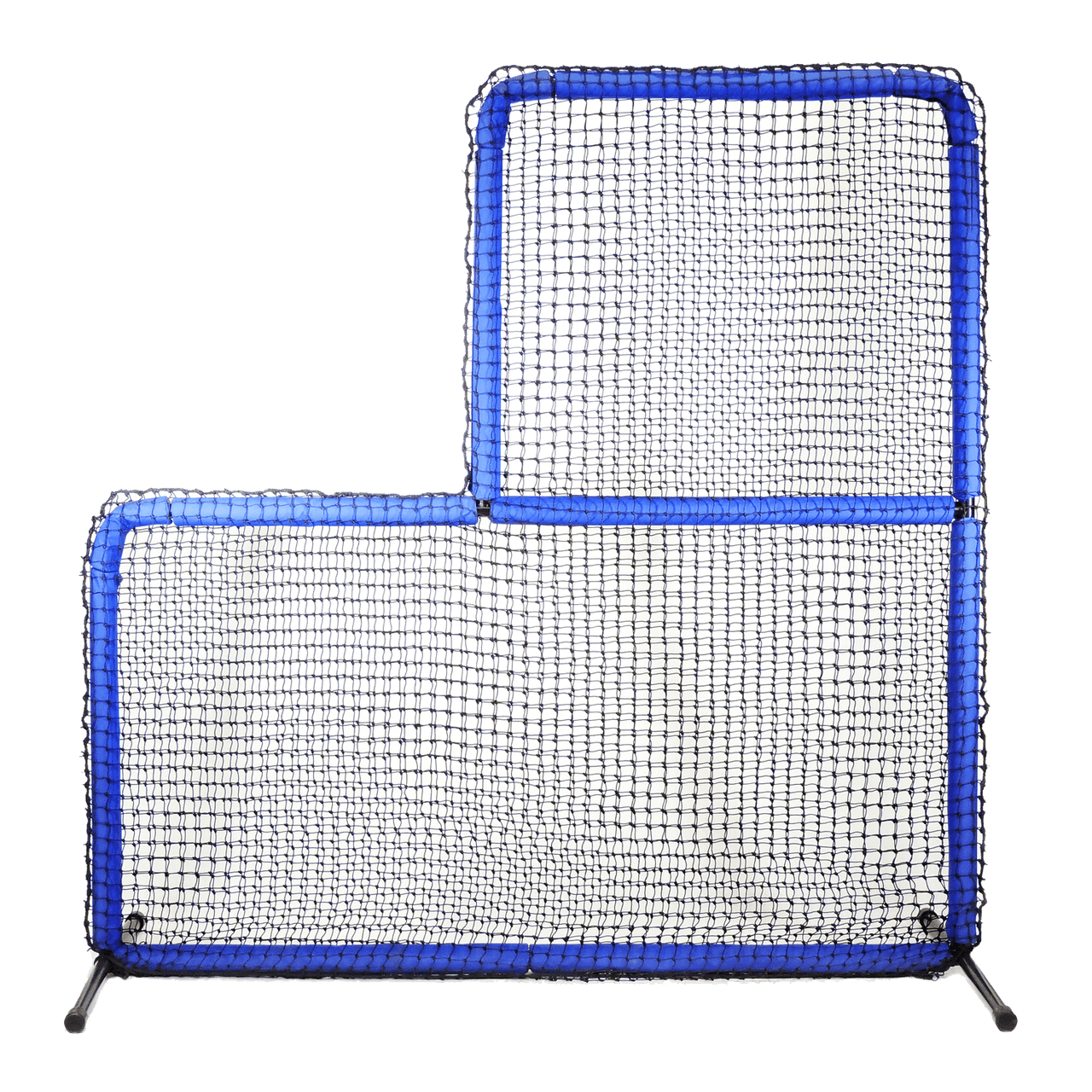
If you throw batting practice, you need a protective screen. It is that simple. Every season, coaches at every level take line drives off the shins, arms, chest, and face because they are standing 40 to 50 feet from a batter with nothing between them. At the youth level, where pitches are slower and coaches are closer, the risk is lower, but it is not zero. At the travel ball, high school, and adult levels, a hard comeback liner can cause serious injury.
An L-screen is the standard solution. The "L" shape provides a full body shield on one side while leaving an open cutout so you can stride and deliver from the other side. Good ones are built from heavy-gauge steel with commercial-grade netting that absorbs hard contact without bouncing the ball back at you. Bad ones are flimsy, tip over in a breeze, and need replacement nets after one season.
We reviewed and compared the 8 best baseball L-screens and protective screens at every price point, from budget-friendly portable options under $100 to commercial-grade screens used at college and professional facilities. Whether you coach rec ball, travel ball, high school, or softball, there is a screen on this list that fits your needs and your budget.
Disclosure: This article contains affiliate links. If you make a purchase through these links, The Dugout Edge may earn a small commission at no additional cost to you. We only recommend products we believe in and use for our own teams. Thank you for supporting our site!
Part of our Complete 2026 Coaching Equipment Guide. Also see: Best Fungo Bats | Best Practice Nets
What to Look For in an L-Screen
Before you buy, consider these key factors:
- Frame material and gauge, The frame is the skeleton of the screen. Look for powder-coated steel tubing, ideally 1.5 inches or thicker for recreational use and 2 inches for commercial or high-traffic environments. Thicker steel resists denting and bending from repeated ball contact.
- Net quality and weight, Netting is rated by a number system where higher numbers mean heavier, more durable material. A #42 net works for light use and younger players. A #60 net handles most travel ball and high school programs. A #84 or #96 net is commercial grade and built for daily use at facilities and colleges.
- Padding on the frame, Balls that hit the steel frame can dent the tubing, shred the net at contact points, and ricochet dangerously. Padded frames protect the equipment and reduce ricochet. If you throw a lot of BP, padding is worth the extra cost.
- Size and cutout dimensions, Standard L-screens are 7 feet wide by 7 feet tall with a 3-foot by 3-foot cutout. Larger screens (7.5 x 7.5 or 8 x 7) give more coverage and a taller sight line. Make sure the cutout is on the correct side for your throwing hand, or choose a screen that works for both lefties and righties.
- Portability and wheels, If you move your screen on and off the field every practice, wheels make a huge difference. Some screens fold or collapse for transport and storage. Heavier commercial screens need wheels just to be practical.
Quick Comparison
| # | Product | Price | Size | Best For |
|---|---|---|---|---|
| 1 | Better Baseball Bullet L-Screen | $449.95 | 7' x 7' | Commercial facilities, college programs |
| 2 | ACELETIQS 7x7 L-Screen with Wheels | $109.38 | 7' x 7' | Mid-range portable with built-in wheels |
| 3 | Bownet L-Screen Pro | $249.00 | 8' x 7' | Portable with extra coverage area |
| 4 | Muhl Tech Pro 7.5x7.5 | $374.00 | 7.5' x 7.5' | Best value commercial screen |
| 5 | Cimarron Sports Commercial L-Screen | $283.00 | 7' x 7' | Traditional commercial programs |
| 6 | JUGS Protector Blue Series | $1,060.95 | 7' x 7' | Elite programs with big budgets |
| 7 | GoSports 7x7 L-Screen | $79.99 | 7' x 7' | Budget youth and rec league coaches |
| 8 | VEVOR 7x7 L-Screen | $69.90 | 7' x 7' | Entry-level, backyard, light use |
The 8 Best Baseball L-Screens and Protective Screens
1. Better Baseball Bullet L-Screen
Our Pick: Best overall choice for most coaches
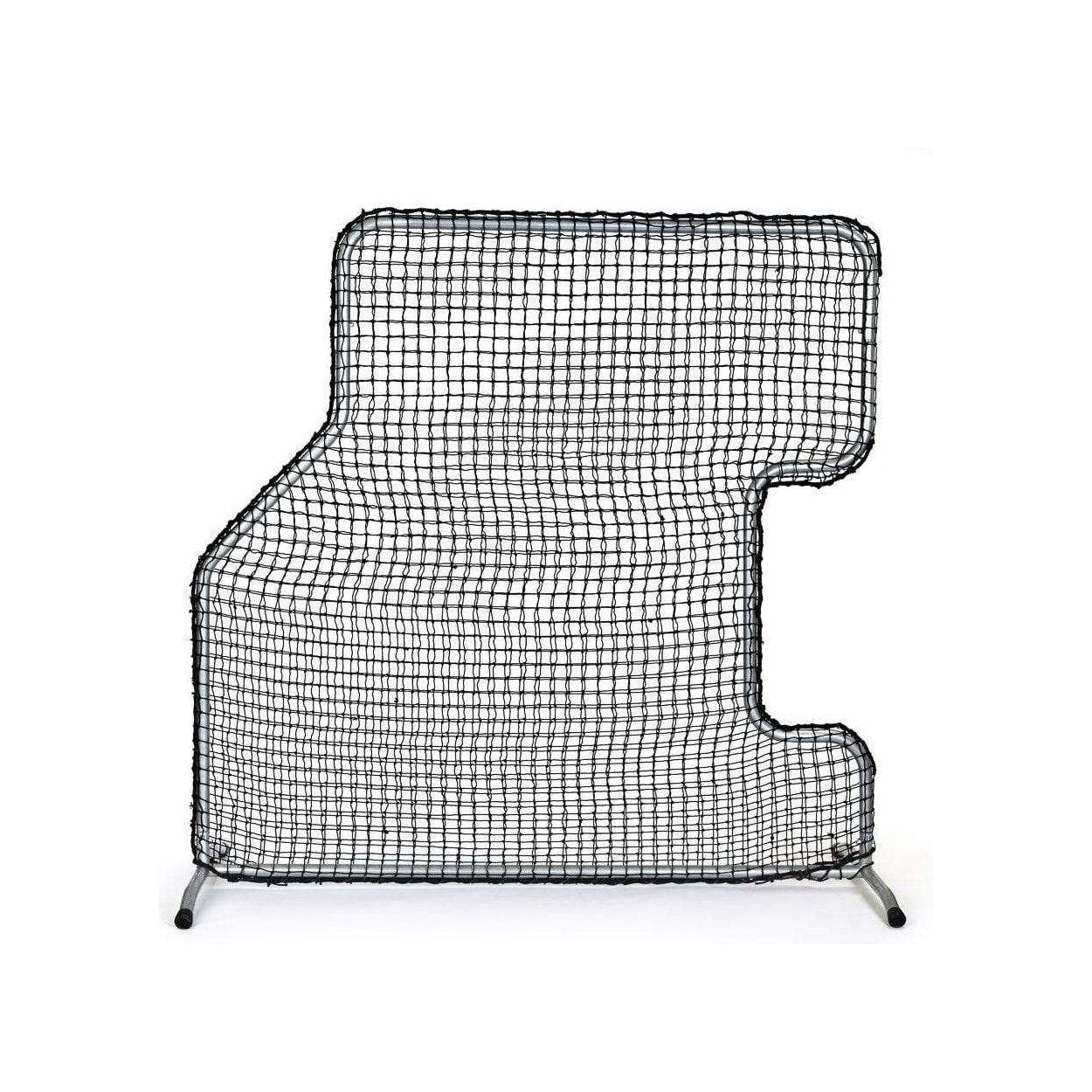
The Better Baseball Bullet L-Screen is the industry leader in commercial protective screens. It is built to survive daily abuse at hitting facilities, college programs, and travel ball organizations that run hundreds of rounds of BP every week. The frame is constructed from heavy-duty steel with full padding along every edge, which virtually eliminates ricochet and protects the frame from denting. The netting is commercial grade and designed to absorb hard contact from the strongest hitters without sagging or tearing. At $449.95, it is a serious investment, but for programs that throw BP every day, the durability pays for itself over time. Optional wheels and an overhead protector are available as add-ons. If you want the screen that college coaches trust, this is it.
Price: $449.95
2. ACELETIQS 7x7 L-Screen with Wheels
Best Value: Best price-to-performance ratio

The ACELETIQS 7x7 L-Screen is a strong mid-range option for coaches who want a real steel-frame screen with the convenience of built-in wheels. The frame is constructed from 18-gauge, 1.5-inch powder-coated steel, and the double pillowcase #42 netting is waterproof and holds up well against line drives from youth and high school hitters. The 3.5-foot by 3.5-foot cutout is slightly larger than the standard 3x3, giving you a bit more room to stride and deliver. At $109.38, it slots between the budget portable screens and the heavier commercial models, making it a smart choice for travel ball coaches and programs that need durability without the $300-plus price tag.
The wheels on the base are the standout feature here. Instead of dragging a 30-pound screen across the infield between drills, you can roll it into position in seconds. Setup uses a push-button assembly system with no tools required. ACELETIQS backs the screen with a lifetime warranty, which is uncommon at this price point. For coaches who run BP several times a week and want something sturdier than a bow-frame portable but do not need a full commercial setup, this screen hits the right balance of price, build quality, and convenience.
Price: $109.38
3. Bownet L-Screen Pro
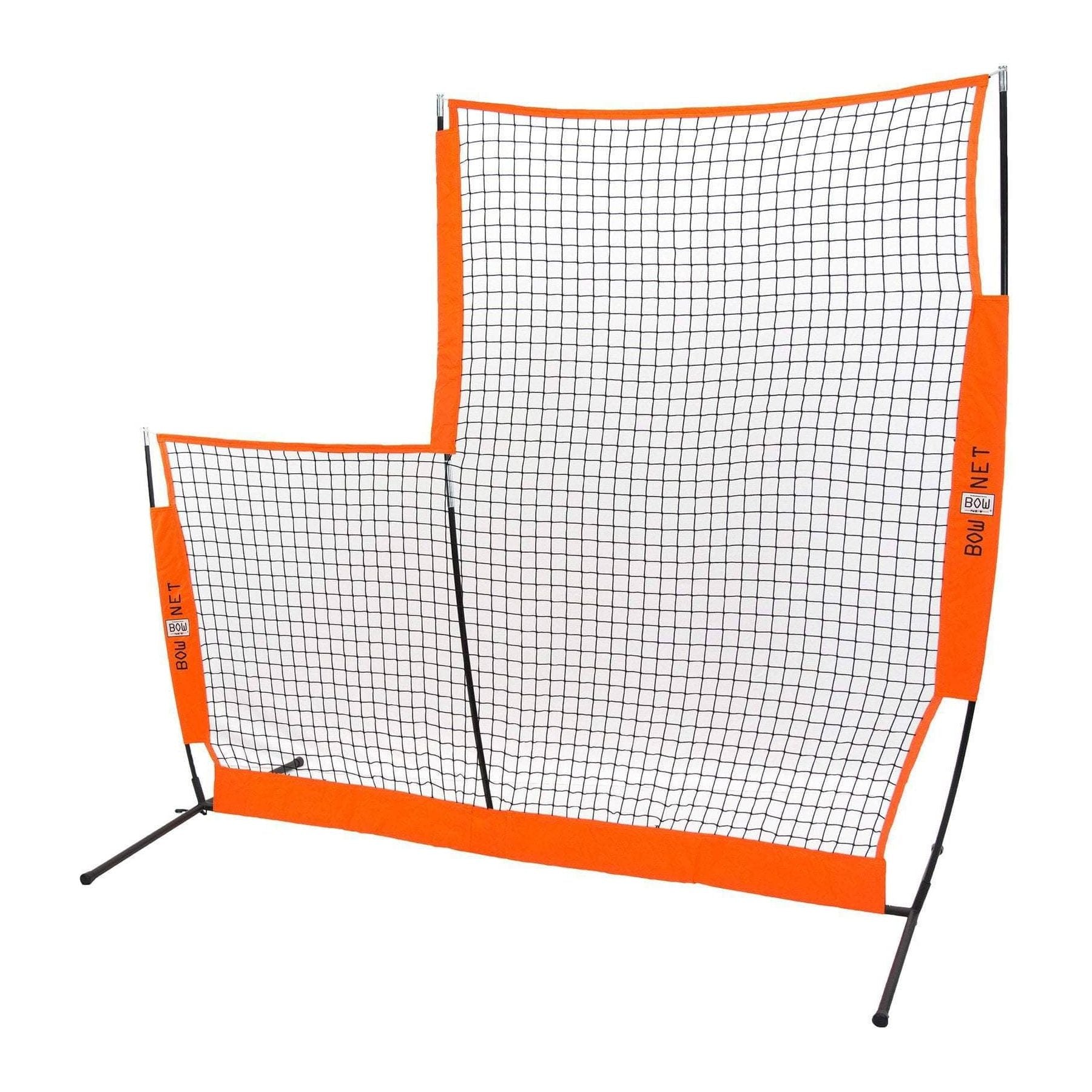
The Bownet L-Screen Pro delivers a strong combination of portability and professional-grade performance. At 8 feet wide by 7 feet tall, it is slightly larger than the standard 7x7 screen, giving you more coverage area. The frame uses thicker fiberglass support poles with a durable steel base, and the professional-grade netting can handle contact from advanced hitters. It sets up in about two minutes and weighs only 20 pounds, which is remarkably light for a screen this size. Bownet built its reputation on portable training equipment, and the L-Screen Pro reflects that expertise. At $249, it is priced competitively with the Easton Collapsible, but the larger dimensions give it an edge for coaches who want maximum coverage without the bulk of a full commercial screen.
Price: $249.00
4. Muhl Tech Pro 7.5x7.5 L-Screen
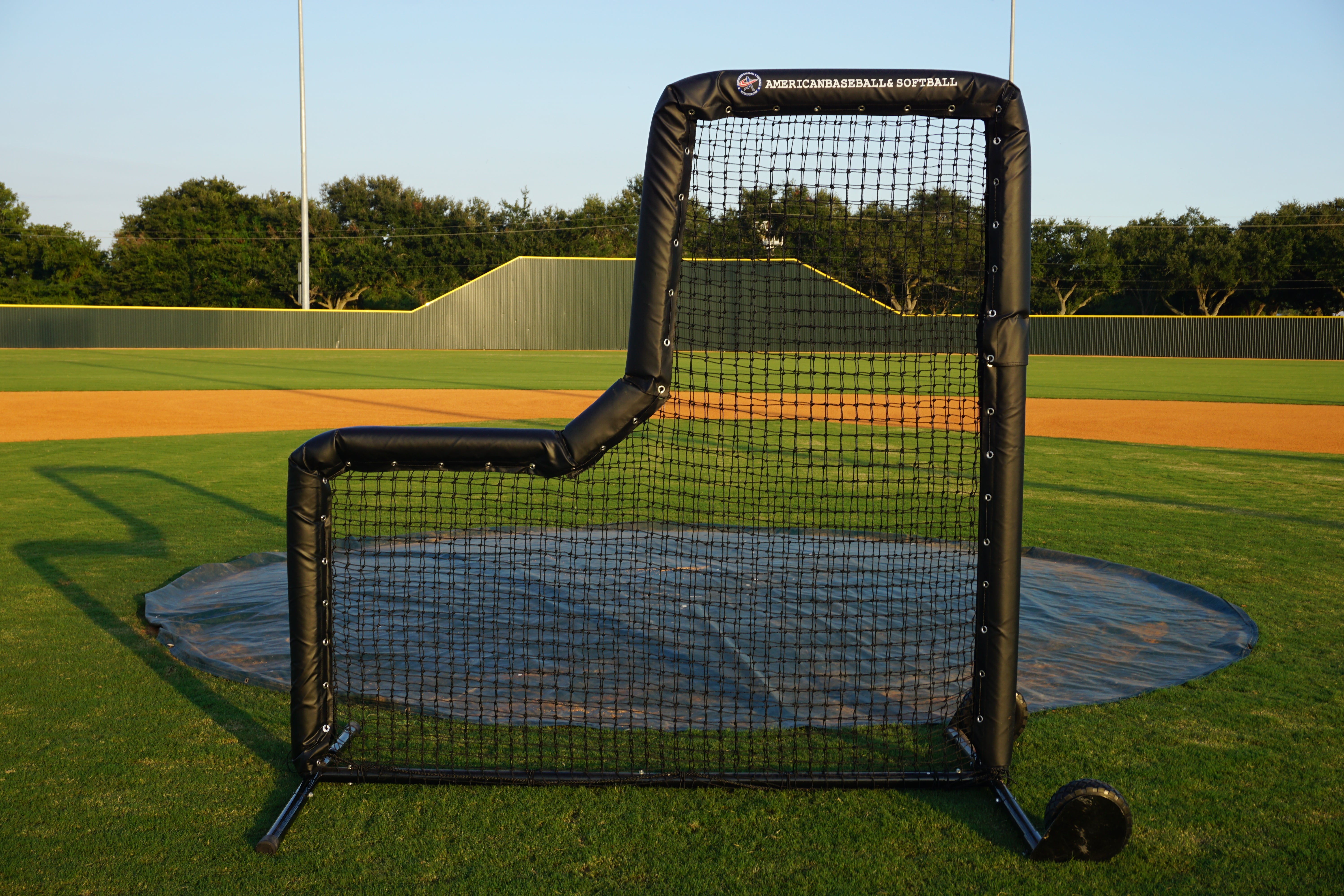
The Muhl Tech Pro is the screen that coaches consistently call the best value in the commercial L-screen category. It features a 2-inch powder-coated steel frame with full padding, a built-in hip protector, and thick #96 knotted netting. The 7.5-foot by 7.5-foot dimensions give you more coverage than a standard 7x7 screen, and the included large airless wheels make it easy to roll on and off the field. At $374, it slots between the budget portables and the premium commercial options, delivering construction quality that rivals screens costing twice as much. If you run a travel ball program, a high school team, or a facility that sees daily use, the Muhl Tech Pro is the sweet spot of durability and affordability.
Price: $374.00
5. Cimarron Sports Commercial Steel Frame L-Screen

Cimarron Sports has been manufacturing batting cages, nets, and protective screens for decades, and their commercial steel frame L-screen remains a go-to choice for programs that need reliable, heavy-duty protection. The 7x7 model features a 2-inch black powder-coated steel frame with fluted joints that slide together for a firm, stable connection. The #84 twisted knotted HDPE netting wraps fully around the frame in a pillowcase style, creating a consistent impact surface that absorbs hard contact without exposing the steel tubing underneath. The 3.5-foot by 3.5-foot cutout gives you room to stride and deliver comfortably from behind the screen.
At $283, this screen sits in the sweet spot of the commercial price range. The UV-resistant materials make it suitable for year-round outdoor use, and Cimarron offers optional wheel attachments for easy repositioning on the field. The build quality matches screens that cost $100 more, which is why Cimarron screens are found in high school programs, travel ball organizations, and training facilities across the country. If your program needs a traditional, proven commercial screen that will hold up to daily BP sessions season after season, this is a reliable pick from a trusted name.
Price: $283.00
6. JUGS Protector Blue Series L-Shaped Pitchers Screen
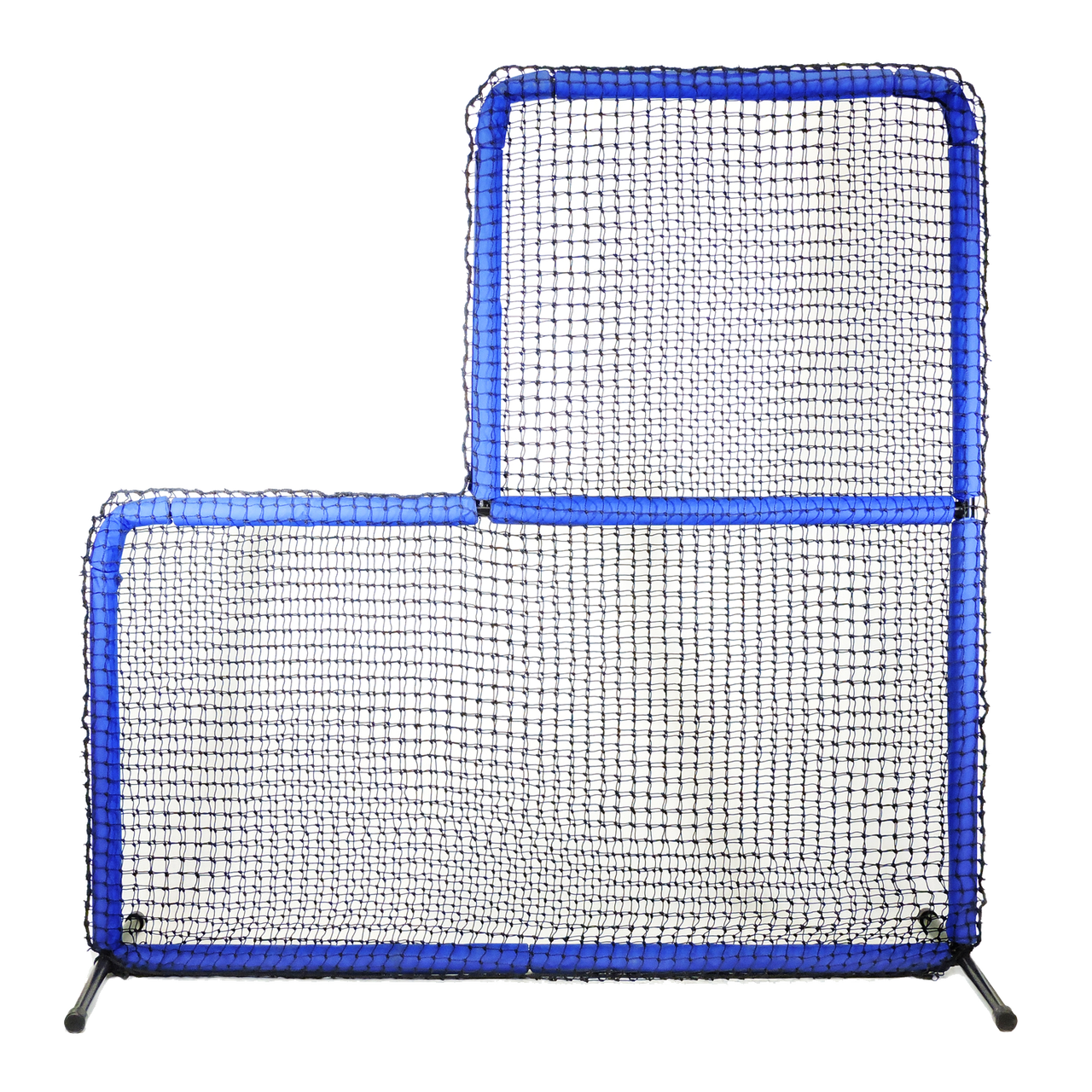
JUGS is synonymous with pitching machines, but they also make some of the toughest protective screens on the market. The Protector Blue Series L-Shaped Pitchers Screen is built for programs that demand maximum durability. The 7-foot by 7-foot screen features heavy-gauge steel construction with a 3-foot by 3-foot cutout and commercial-grade netting designed to handle constant use. At $1,060.95, this is the most expensive screen on our list by a wide margin, and it is aimed squarely at college programs, professional facilities, and elite travel organizations that need equipment that will survive years of daily BP. The replacement net alone runs over $500, which tells you how seriously JUGS builds this product. For programs with the budget, this screen will outlast anything else on this list.
Price: $1,060.95
7. GoSports 7x7 Baseball and Softball L-Screen
Best Value: Best price-to-performance ratio

The GoSports 7x7 L-Screen is the best budget option on this list. At $79.99, it costs less than a third of most mid-range screens, and it does the job for youth coaches who need basic protection during BP without spending hundreds of dollars. The screen features a reinforced bow-style frame with high-density polyester netting, and it weighs only 11 pounds, making it one of the lightest L-screens available. A carrying case is included for easy transport. Setup requires no tools and takes about five minutes. The trade-off is durability. This is not a commercial screen, and it will not hold up to daily use from strong hitters. But for rec league coaches, backyard BP sessions, and youth programs on a tight budget, the GoSports L-Screen is a smart, affordable way to stay protected. GoSports also offers a PRO version with wheels and sturdier construction for around $130.
Price: $79.99
8. VEVOR 7x7 L-Screen
Best Value: Best price-to-performance ratio
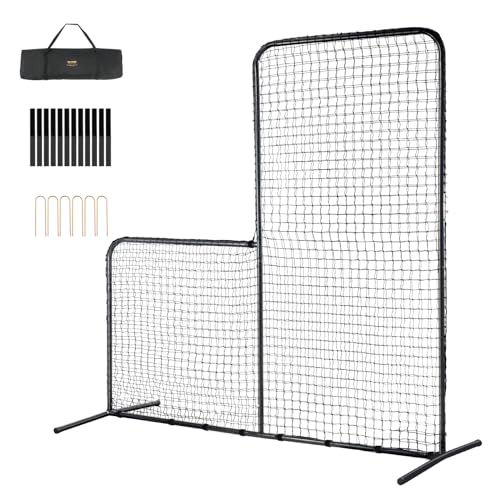
The VEVOR 7x7 L-Screen is the entry-level option for coaches who want pitcher protection without a big financial commitment. At $79.90, it costs roughly half of what most mid-range screens go for, and it does the job for youth coaches who need basic coverage during BP. The screen features a 1.25-inch diameter steel pipe frame with double-sided thickened 45-ply high-density netting and a 1.75-inch mesh size that handles ball impacts from younger hitters. The double-sided design works for both left-handed and right-handed pitchers, so you do not need to worry about cutout orientation. Ground stakes are included for stability on outdoor fields, and a 600D carry bag makes transport straightforward.
The trade-off at this price is durability over time. The frame is thinner and the netting lighter than the mid-range and commercial options on this list, so this screen is best suited for youth leagues, backyard BP sessions, and programs with lighter hitters. It will not hold up to daily use from strong high school or travel ball hitters the way a commercial screen will. But for rec league coaches on a tight budget, first-time coaches who want to see if an L-screen fits their practice routine, or parents running backyard sessions with their kids, the VEVOR is a smart and affordable starting point.
Price: $69.90
Frequently Asked Questions
What size L-screen do I need for youth baseball?
A standard 7-foot by 7-foot L-screen with a 3-foot by 3-foot cutout works for most youth programs. This size provides full body coverage for an adult coach standing on the mound while leaving enough room to stride and deliver. For younger age groups (8U through 12U), where coaches throw from a shorter distance, a 7x7 screen gives more than enough protection. If you coach older players (14U and up) or want extra coverage, consider a 7.5x7.5 or 8x7 model.
Do I need a padded L-screen?
Padding is not strictly necessary for youth and rec league use, but it extends the life of your screen significantly. Balls that hit the bare steel frame can dent the tubing, shred the net at the contact point, and ricochet unpredictably. Padded frames absorb that impact, protect the frame from damage, and reduce the chance of a ball bouncing back toward you or the batter. If you throw BP frequently or your hitters are strong enough to hit hard line drives, padding is a worthwhile upgrade.
What is the difference between an L-screen and an I-screen?
An L-screen has an L-shaped cutout in one corner, allowing the pitcher or coach to stand behind the screen and throw from the open side. It provides full body protection while keeping your throwing arm and delivery unobstructed. An I-screen is a flat, full-panel screen (typically 7 feet tall by 4 feet wide) with no cutout. I-screens are used for front-toss drills, soft-toss stations, and situations where the coach feeds balls from the side rather than from a pitching position. Most coaches need an L-screen for standard BP and may add an I-screen later for additional drill stations.
Can I use the same L-screen for baseball and softball?
Yes. Every L-screen on this list works for both baseball and softball. The protective function is the same regardless of the ball type. Softball coaches sometimes prefer a slightly wider screen since the pitching distance is shorter and the angle of return can differ, but a standard 7x7 L-screen provides excellent protection for both sports.
How long does an L-screen net last?
Net lifespan depends on the quality of the netting and how often you use it. A budget #42 net used a few times a week at the youth level may last one to two seasons before the netting starts to sag or develop holes. A commercial #84 or #96 net used daily at a hitting facility typically lasts three to five years. Most quality L-screens offer replacement nets, so you can swap the net when it wears out without replacing the entire frame. Storing the screen indoors or under a cover when not in use extends the net life significantly.
Are portable L-screens as safe as commercial ones?
Portable L-screens from brands like ACELETIQS, Bownet, and GoSports are safe for their intended use, which is youth and recreational batting practice. They absorb line drives effectively and protect the coach behind them. The difference is durability over time rather than immediate safety. A portable screen may need a net replacement sooner, and the lighter frame can shift on uneven ground if not anchored with stakes. For high school programs and above, where exit velocities are significantly higher, a commercial-grade screen with a heavier frame and thicker netting is the better choice for both safety and longevity.
Tags
Ready to Generate Your Perfect Lineup?
Try our free softball and baseball lineup generator to create balanced, fair lineups in minutes.
Try Free Lineup Generator