Planning Your First Youth Baseball Practice? Here Is What 1,100+ Real Practice Plans Look Like
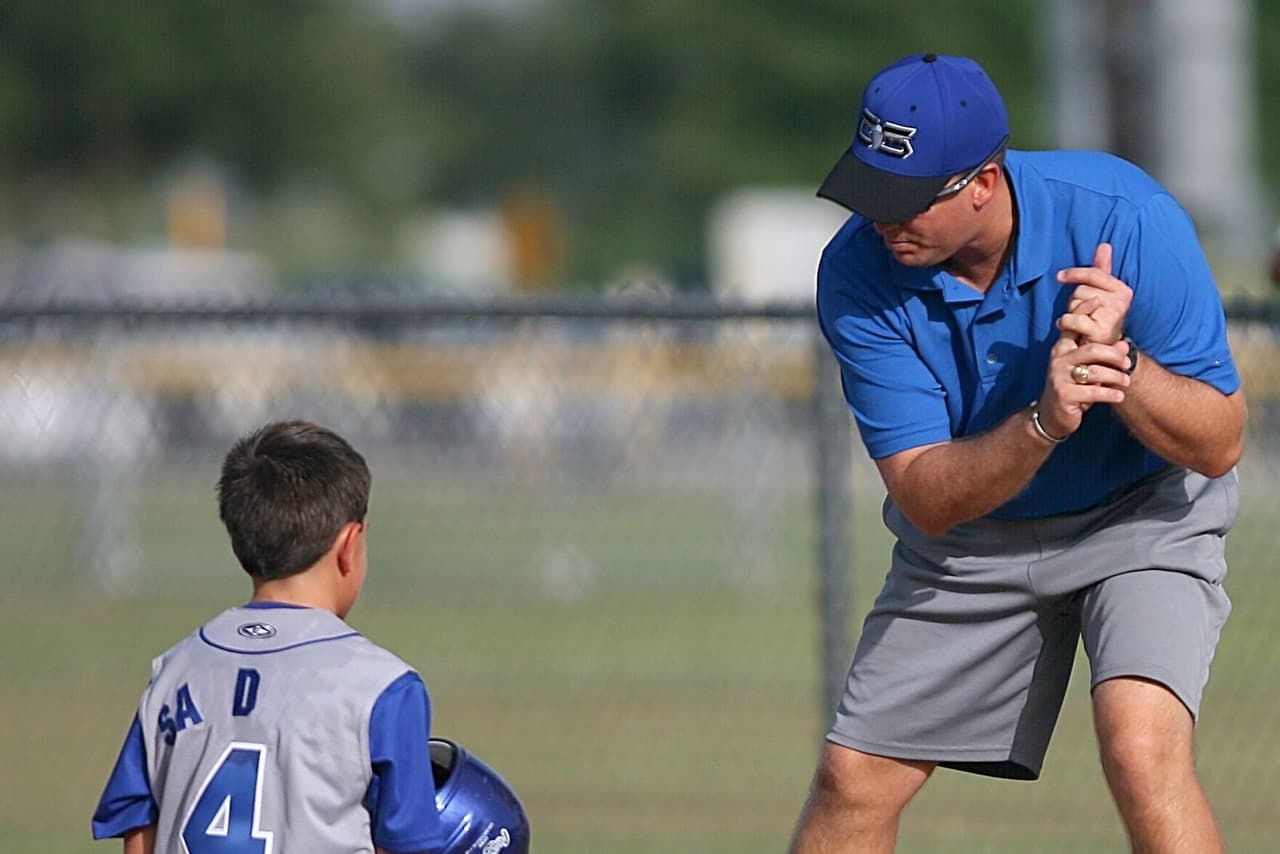
Your first practice as a youth coach is scarier than your first game. A game has rules and umpires and innings that end. Practice is just you, a bag of balls, and twelve kids looking at you, waiting to be told what to do for the next hour and a half.
How long should it run? What drills do you start with? How many things should you try to cover? Nobody hands you answers, and every coaching site has a different opinion.
We can do better than opinions. Coaches built more than 1,100 practice plans on Dugout Edge in the 2026 season, and those plans are a record of what real coaches actually schedule: every block, every drill, every minute. I analyzed all of them, aggregate and anonymous, to pull out the patterns. This is the companion piece to our study of nearly 5,000 real game lineups, and just like that one, it is written for the coach doing this for the first time.
First: Who Are These Coaches?
Mostly people exactly like you. The bulk of these plans are for ages 9-10, with healthy groups on either side from tee ball through high school. About 9 in 10 are baseball and the rest softball, and the plans skew toward rec and Little League teams, the world where the coach is a parent with a clipboard, not a paid trainer.
How Long Should a Baseball Practice Be? 90 Minutes Is the Standard.
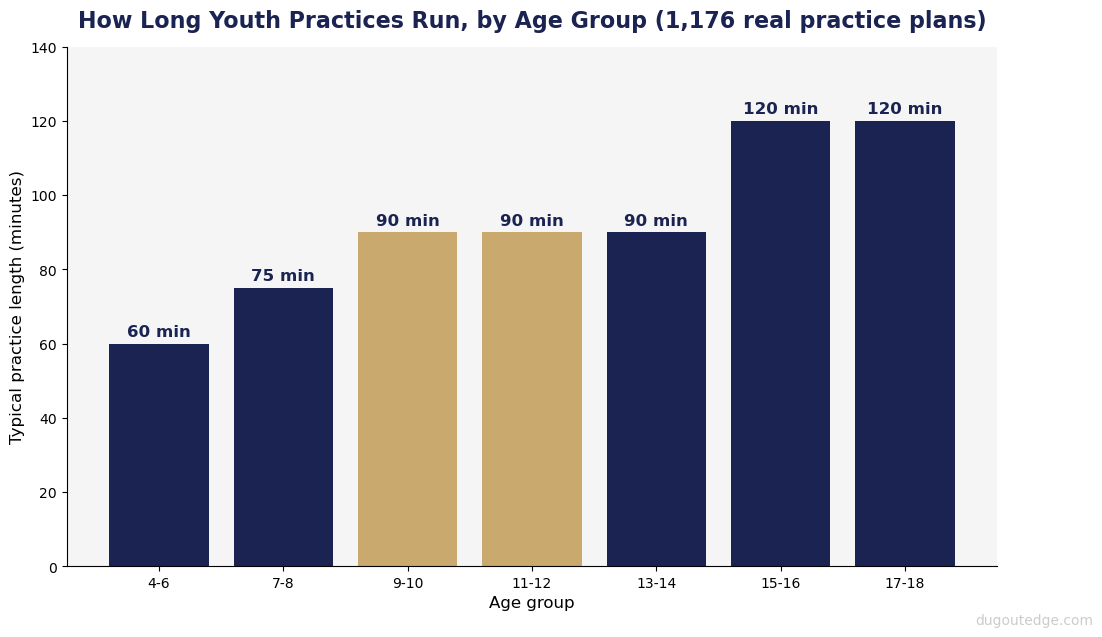
The median practice in the data is 90 minutes, and more than half of all plans land in the 75-to-90 minute range. But if you are wondering how long baseball practices actually are at each age, the more useful answer is the ladder:
| Age group | Typical practice |
|---|---|
| 4-6 (tee ball) | 60 minutes |
| 7-8 (coach pitch) | 75 minutes |
| 9-12 | 90 minutes |
| 13 and up | 120 minutes |
The pattern is simple: add about 15 minutes of practice for every step up in age. Tee-ballers are done at an hour, and honestly, so is their attention. High schoolers can use two. If you coach 9- to 12-year-olds, the standard 90 minutes is what nearly everyone runs, and you will not go wrong copying it.
How Do You Structure It? Six Blocks. Warm Up First. End With a Game.
Real practices are not a pile of drills. They have a shape, and the shape is remarkably consistent:
- About 6 blocks per practice (a block is one chunk of time: warmup, a hitting rotation, team defense, a closing game). At 90 minutes, that is roughly 15 minutes a block, which is about how long a young player's focus lasts on one activity.
- Nearly 9 out of 10 practices open with a warmup and throwing block. Not optional, apparently. Arms get loose, energy gets burned, and you get five minutes to set up the next station.
- More than half of all practices end with a game or competition. Scrimmages, knockout hitting, 21 Outs. Experienced coaches let kids leave on the fun part, which is also what gets them excited to come back.
- Inside the middle blocks, the most common pattern is stations: the roster splits into small groups that rotate, so nobody stands in line. "Station A: Tee Work" and "Station B: Front Toss" are two of the most common blocks in the entire dataset.
So a first practice you can write on an index card: warmup and throwing, two or three skill blocks (stations if you have a helper or two), and a game to finish. That is the whole formula most coaches use.
What Drills Do Coaches Actually Run? The Boring Ones. On Purpose.
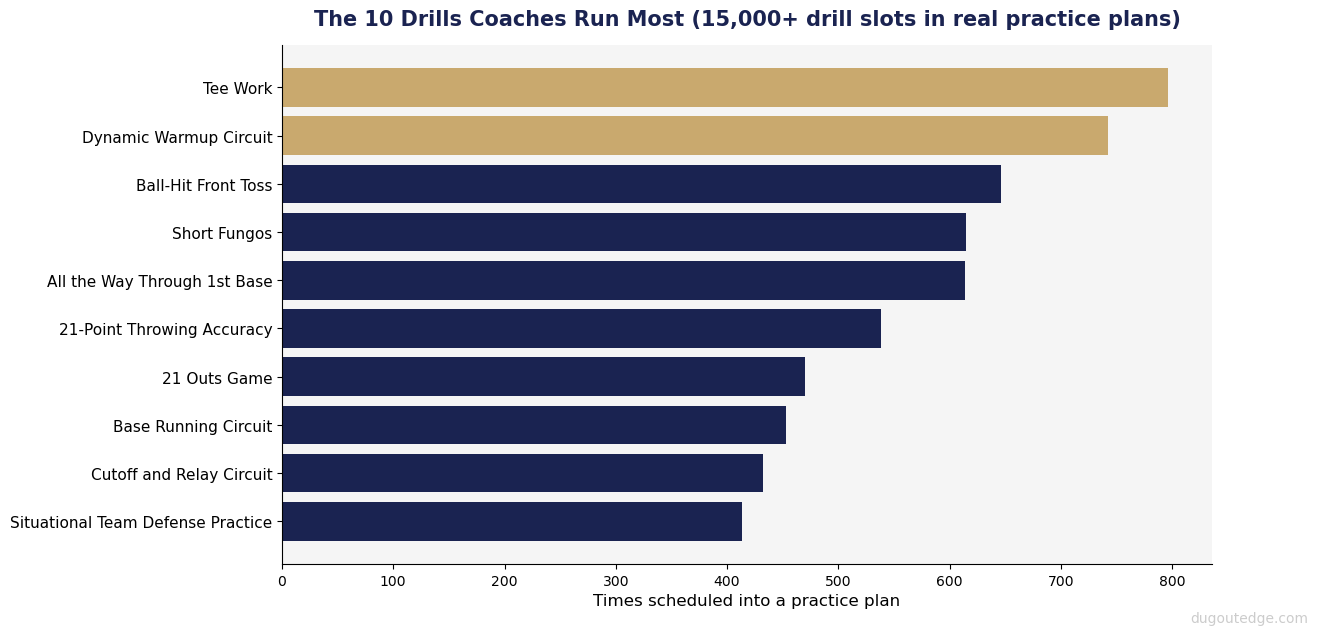
Across more than 15,000 drill slots in these plans, here are the ten baseball practice drills coaches schedule most:
| Drill | Times scheduled |
|---|---|
| Tee Work | 796 |
| Dynamic Warmup Circuit | 742 |
| Ball-Hit Front Toss | 646 |
| Short Fungos | 615 |
| All the Way Through 1st Base | 614 |
| 21-Point Throwing Accuracy | 538 |
| 21 Outs Game | 470 |
| Base Running Circuit | 453 |
| Cutoff and Relay Circuit | 432 |
| Situational Team Defense Practice | 413 |
Notice what is NOT on this list: nothing trendy, nothing that needs special equipment, nothing you could not have run in 1985. The most-scheduled drill in youth baseball is hitting off a tee. Then warmups, front toss, fungos, and running hard through first base.
That is the quiet lesson of this whole dataset. Experienced coaches do not chase exotic drills. They run the fundamentals over and over, dress some of them up as games (21 Outs is just team defense with a score attached), and save the creativity for how they organize the practice, not what fills it. Every drill on that list, with steps and coaching points, is in our free drill library.
What Skills Get the Time? Hitting Wins, but Defense and Baserunning Are Close.
Tallying the skill tags across every scheduled drill:
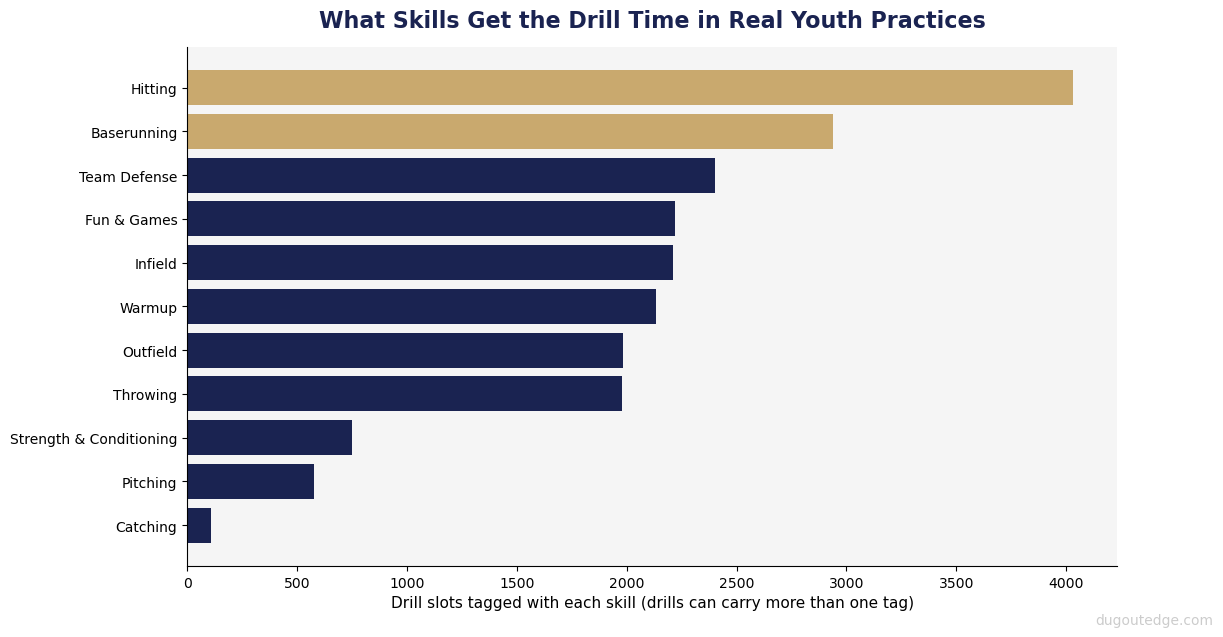
Hitting is the single biggest slice, which surprises no one who has met a nine-year-old. But add up the defensive work (team defense, infield, outfield, catching) and it clearly outweighs hitting, and baserunning is the sleeper: it is second among all individual skills. Rookie coaches almost always underestimate baserunning; experienced ones schedule it constantly, because it is the skill that shows up in every single game and doubles as conditioning.
If your plan is all bats and no bases, the field consensus says rebalance.
Do Coaches Build Practices From Scratch? No. 8 in 10 Start From a Template.
Maybe the most reassuring number in the data: 80% of these practice plans started from a template that the coach then tweaked for their team. The single most popular starting point is a plain 90-minute fundamentals practice plan for 9 and 10 year olds.
Nobody is inventing practice from a blank page, not even the veterans. They grab a proven structure, swap a drill or two, adjust the minutes, and go coach. You should do exactly the same thing: our free practice plan templates are the same ones used in this data, and the practice planner lets you customize any of them in a few minutes.
Get the 90-minute fundamentals practice plan (free PDF)
The most-used template in this data: a full 90-minute session for ages 9-12 with stations, minutes, and drills already laid out. Enter your email and the download unlocks right here.
You'll also get occasional coaching tips from Dugout Edge. Unsubscribe anytime.
Your First-Practice Checklist
The whole dataset, on an index card:
- 90 minutes for ages 9-12 (60 for tee ball, 75 for coach pitch, 120 for teens).
- Six blocks, about 15 minutes each.
- Open with warmup and throwing. Almost everyone does.
- Use stations for skill work so kids move, not wait in line.
- Run the boring drills: tee work, front toss, fungos, baserunning. They are the most-used drills in youth baseball for a reason.
- End with a game. Kids remember the last 15 minutes.
- Start from a template, not a blank page. 8 in 10 coaches do.
Turn this checklist into tonight's practice plan
The free practice planner builds the blocks, pulls the drills, and prints the schedule. Same tool behind every plan in this article.
Plan your next practice freeWhere These Numbers Come From
Everything above comes from 1,176 practice plans built on the Dugout Edge practice planner between January and July 2026, by 241 registered coaches plus hundreds of anonymous ones. All figures are aggregates: no coach, team, or player is identifiable. Two honest caveats. First, ages 9-10 dominate the sample, so the norms fit that world best. Second, since most plans start from our templates, the most-scheduled drills partly reflect what those templates feature; what the data really shows is which structures and drills coaches choose, keep, and rerun, which for a new coach is exactly the endorsement that matters.
Data: aggregate anonymized practice plan data from the Dugout Edge practice planner, January through July 2026. 1,176 plans, 15,112 scheduled drill slots. Analysis run July 22, 2026.
About the Author
Former Stanford baseball player and professional in the Seattle Mariners organization. Founder of Dugout Edge and an active youth baseball and co-ed softball coach.
Tags
Build Your Practice Plan Now
Use the Dugout Edge Practice Planner to build a time-blocked practice with drills, concurrent stations, and a printable PDF — in about 5 minutes.
Open the Practice Planner