Softball Depth Chart: How to Build One for Your Team
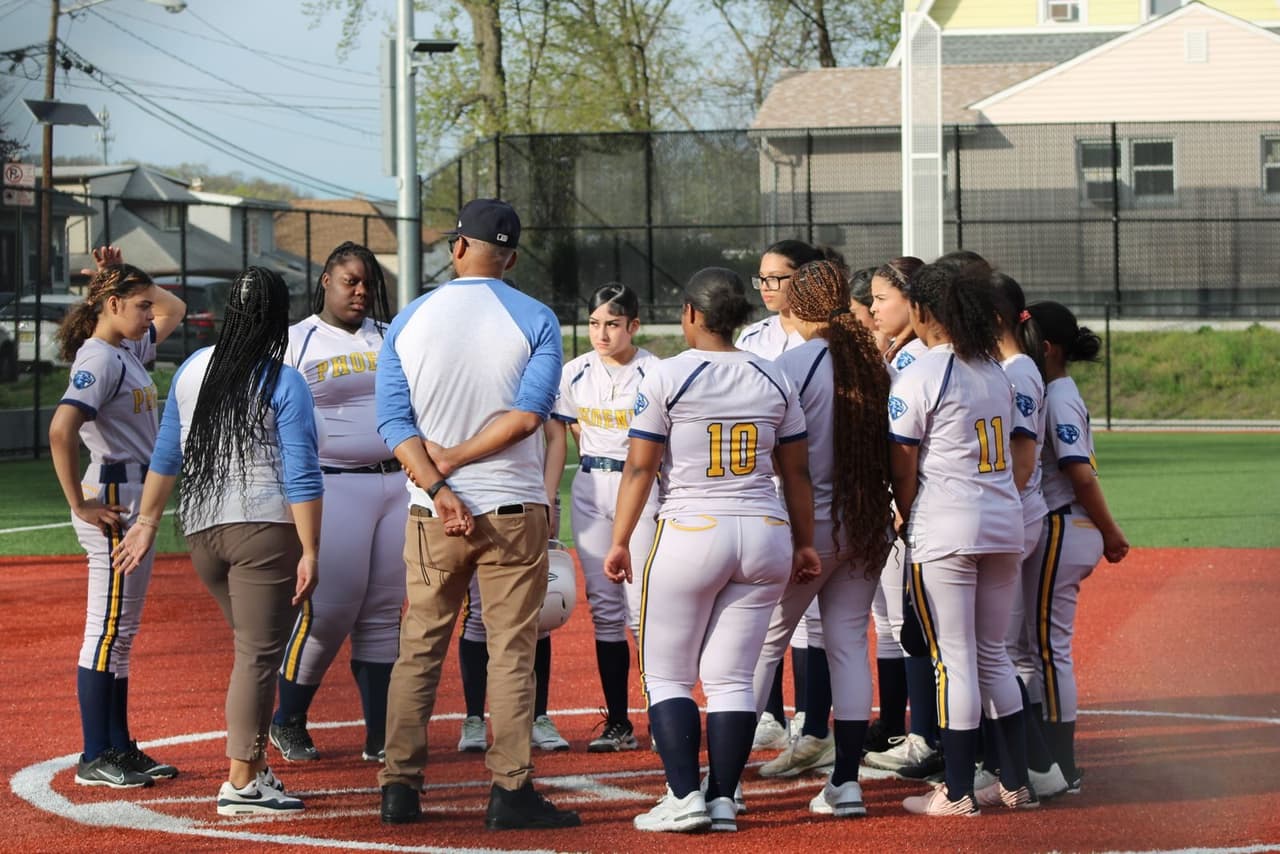
Every softball coach eventually has the same Saturday morning. Your starting pitcher is sick, your catcher is at her brother's tournament, and the first game is at 8:00. A depth chart turns that into a lineup change instead of a crisis, as long as you wrote it and gave those players reps before the morning you needed it.
This guide covers how to build one for a fastpitch team, with a full worked example for a 12-player 12U roster. If you coach baseball too, our baseball depth chart guide walks through the same process for a 10U team, and the blank printable for either sport is in our depth chart templates.
Quick answer: A softball depth chart lists each of the nine defensive positions with a primary, secondary and developing player. Fill it in this order: pitchers, catchers, shortstop and center field, then the corners and middle, then the outfield. Put every player at two or three spots, keep your pitchers and catchers on separate lines, and rewrite it at every natural break in the season.
The nine softball defensive positions, through a depth lens
Fastpitch plays nine in the field, numbered 1 through 9 the same way baseball scores them. Our softball positions guide explains what each one does and the softball field diagram shows where they stand. For a depth chart, the question is different: how many players do you need ready at each spot, and what makes that spot hard to fill?
| Position | Number | How much depth it needs |
|---|---|---|
| Pitcher | 1 | The most. Three or more who throw strikes, plus a developing arm |
| Catcher | 2 | Two ready, a third learning. The most physically demanding job on the field |
| First base | 3 | Two ready. Needs your surest hands on thrown balls, and plays in for bunts |
| Second base | 4 | Two ready. Covers first on bunts and slaps, so feet and awareness matter |
| Third base | 5 | Two ready. At 12U she is close to the hitter and reacting fast |
| Shortstop | 6 | Two ready. Your best combination of glove, arm and range |
| Left field | 7 | Two ready. Often the busiest outfield spot against pull hitters |
| Center field | 8 | Two ready. Your fastest outfielder who reads the ball off the bat |
| Right field | 9 | Two ready. Backs up first on every throw, so it is never a spot to hide |
In slowpitch, many leagues add a tenth fielder, usually a short fielder in shallow center or a fourth outfielder. The rest of this guide is about fastpitch.
Step 1: Pitchers first
Softball pitching is underhand from a flat circle, not a mound, and at 12U the circle is 40 feet from home plate. Pitchers at this age usually carry far more innings than baseball pitchers do. That does not mean one arm can carry a team. Rules on pitcher workload vary much more in softball than in baseball: some leagues count pitches, some cap innings per game or per week, and many travel tournaments set no limit at all. Where there is no rule, the limit is your judgment.
Build the pitching line around strikes, not speed. Most 12U travel coaches want at least three players who can throw strikes; rec teams need at least two and should be developing a third. For development ideas, see our fastpitch pitcher development guide.
Every pitcher also needs a second position for when she is not in the circle. Write that line down too.
Step 2: Catchers, and keep the battery separate
Catcher is the position that burns out fastest, especially on tournament weekends in full gear. Two ready catchers is the minimum for any team that plays tournaments. Start a third on reps early, ideally someone who wants to be back there.
Two habits make catcher depth work:
- Keep your top pitchers and top catchers on different lines. If your best pitcher is also your best catcher, you lose one of them every time she is needed for the other.
- Plan for courtesy runners. Many youth softball rules allow a courtesy runner for the pitcher and catcher, which keeps them fresher. It is not a substitution, but who is eligible to run differs by rulebook, so know your league's rule before the game, not when your catcher singles.
Step 3: The middle, then the corners, then the outfield
With the battery set, fill shortstop and center field with your most complete players, then second base and first base, then third, then the corners of the outfield.
The corners play differently than in baseball. Bases stay 60 feet at every level of fastpitch, and with the circle at 40 feet at 12U, your first and third basemen are much closer to the hitter than baseball corners are. Third base in particular needs a player who reacts well and stays in front of a hard hit ball. First base needs a player who catches everything and is willing to charge a bunt.
Where slappers fit
A slapper is a hitter, usually from the left side, who takes a running start in the box and puts the ball on the ground or over a drawn-in infield to use her speed. At 12U you will see a few, more often in travel ball than in rec. They matter to your depth chart in two ways.
Defending them. When a slapper comes up, your corners come in, your middle infielders have to cover bases quickly, and your catcher and pitcher need to field anything short. That means your second-line players at first, second and third need to know those responsibilities too, not just your starters.
Your own slappers. Slappers are usually among your fastest players, which often makes them strong outfielders, especially in center. If you are developing a slapper, her defensive line is probably in the outfield or at second base, where speed and range carry. As with any hitting approach, slapping suits some players and not others. It is one option for a fast player who is not driving the ball yet, not a box to put every left-handed hitter in.
How the DP/FLEX changes the chart
The DP/FLEX is the biggest structural difference between a softball and a baseball depth chart. In the version used by USA Softball and in high school play, you can list a FLEX, a player who plays defense but does not bat, and a DP (designated player), who bats in that spot in the order. The DP does not have to play the field, but can.
For depth, that means you can start a glove-first player without costing your lineup a strong hitter.
Be careful with the details. How the DP and FLEX can swap roles, and how that interacts with re-entry, is written differently by USA Softball, USSSA, high school associations and local rec leagues. Read your association's rule before your first game.
Also check whether it applies at all. Many 10U and 12U rec leagues use a continuous batting order, where every rostered player bats whether or not she is in the field. In that format there is no DP or FLEX to plan around, and the fair playing time question moves entirely to defense.
One coaching note: at 12U, a player listed as a FLEX is a player who is not getting at-bats. Use it with a reason, tell the player what the reason is, and do not let the same kid sit at the plate all season.
Worked example: a 12-player 12U depth chart
Here is a realistic 12-player 12U fastpitch roster, built in the order above. Names are placeholders.
| Position | Primary | Secondary | Developing |
|---|---|---|---|
| Pitcher (1) | Kenzie | Riley | Maya, Chloe |
| Catcher (2) | Jada | Paige | Lila |
| First base (3) | Brooke | Riley | Harper |
| Second base (4) | Emma | Delaney | Brooke |
| Third base (5) | Delaney | Paige | Maya |
| Shortstop (6) | Chloe | Emma | Kenzie |
| Left field (7) | Harper | Brooke | Jada |
| Center field (8) | Avery | Lila | Harper |
| Right field (9) | Lila | Maya | Avery |
How it was built:
- Four pitchers on the line. Kenzie and Riley carry the innings. Maya and Chloe throw strikes in practice and get a few innings in low-pressure games, so there is a third arm by the time the tournament season starts.
- The battery never overlaps. Jada and Paige catch and neither pitches. A long day behind the plate never costs you a pitcher.
- Pitchers have a home in the field. Riley plays first when she is not pitching. Kenzie is working at shortstop. Chloe, the primary shortstop, is also a developing pitcher, and when she pitches Emma slides over from second.
- Avery is the slapper. She is the fastest player on the team, so she is the primary center fielder, with a developing line in right.
- Every player is on the chart two or three times. Nobody is only a bench player, and nobody is only a right fielder. Lila is the primary in right, secondary in center and learning to catch.
- If the league uses DP/FLEX, one option is to list Jada as the FLEX at catcher on a day she is struggling at the plate, with Paige as the DP batting in her spot. That keeps the best defensive catcher behind the plate without losing a hitter, and it should be a day-to-day choice, not a season label.
To turn the chart into game-day rotations, the free lineup generator supports softball and takes position preferences for each player: list the primary and secondary spots as positions she can play and mark anything else to avoid, and it builds each game's inning-by-inning fielding rotation from that pool with playing time balanced. For the batting side, our softball lineup card templates include DP/FLEX and continuous batting order formats, and the softball lineup generator guide covers building the batting order.
Keep it current
A depth chart from tryouts is rarely right by the third week. Look at the chart after the first two weeks of practice, at midseason, and before every tournament. Fall ball is the best time for a bigger reshuffle: try a new pitcher, put an outfielder behind the plate, move a slapper to second. The games matter less, so it is the cheapest place to build depth. If you are evaluating new players, our softball tryout guide covers what to watch for.
On sharing: most coaches keep the ranked chart to themselves and tell each player and family the two or three positions she is working at and what would move her up. That is the useful part of the chart without turning it into a scoreboard.
The takeaway
Fill the circle first with more arms than you think you need, keep the battery on separate lines, then build up the middle, the corners and the outfield with two or three players at every spot. Know your league's DP/FLEX and batting order rules before you plan around them. Rewrite the chart at every break, and when it is time to build a game, print the free depth chart template or load the roster into the lineup generator and let it rotate everyone fairly from the positions you chose.
About the Author
Youth and high school baseball and softball coaches focused on player development, fair playing time, and helping coaches run better games.
Tags
Ready to Generate Your Perfect Lineup?
Try our free softball and baseball lineup generator to create balanced, fair lineups in minutes.
Try Free Lineup Generator