Sign Stealing in Baseball: What's Legal and How to Protect Your Signs
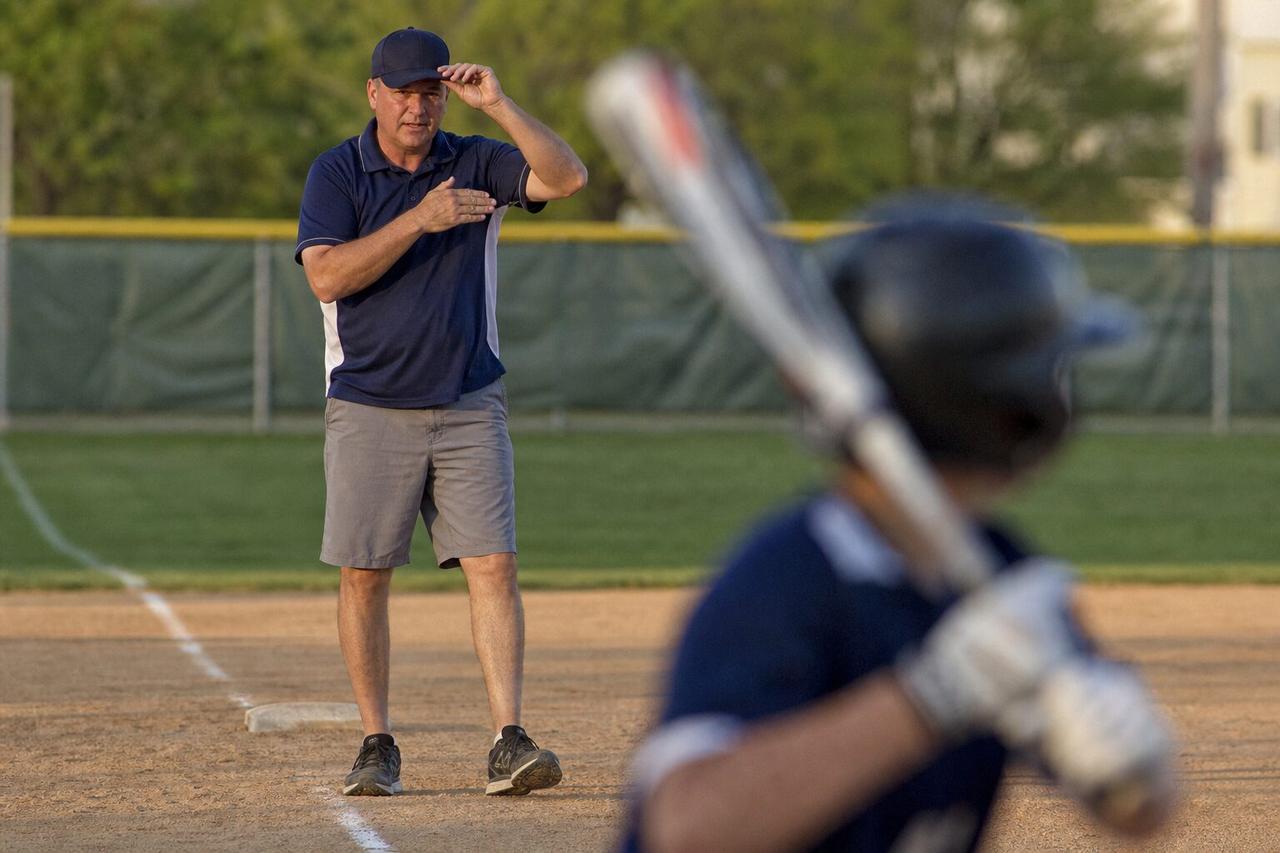
Sign stealing means reading the other team's signals. There are two kinds. A runner on second reads the catcher's fingers and learns the pitch. A coach or player reads the third base coach and learns the play: the steal, the bunt, the hit and run.
Most people searching for this want one answer first. Is it illegal?
Is stealing signs illegal?
Reading signs with your own eyes is legal in Major League Baseball. Commissioner Rob Manfred said it plainly in his January 2020 ruling on the Houston Astros: trying to decode an opposing catcher's signs "is not a violation of any Major League Baseball Rule or Regulation."
Using electronics is what breaks the rules. MLB's regulations say electronic equipment may never be used to steal signs. In 2017 the Astros used a camera feed from center field to decode catchers' signs and relayed them to hitters by banging on a trash can. That is why they were punished. The decoding was legal. The camera made it illegal.
The rules below the big leagues follow the same idea, with one big exception for Little League tournaments.
| Level | Reading signs by eye | Electronics and outside help |
|---|---|---|
| MLB | Legal | Banned. No electronic equipment may be used to steal signs. |
| NCAA baseball and softball | Legal | Banned. Information gathered in the stands may not be passed to the field. |
| High school (NFHS) | No rule against it that we found | Players may use electronic devices only for one-way pitch calling from the coach. |
| Little League tournaments | Stealing and relaying signs to tell the batter the pitch or location is unsportsmanlike | Banned, apart from one-way pitch calling to the catcher |
In Little League tournament play, a team caught relaying signs to the batter gets a warning. Anyone responsible for a second offense is ejected. These rules were current in November 2026. Check your league's own rulebook and ask your umpire before the season if you are unsure.
When sign stealing starts to matter
At the youth level, sign stealing is rare. In Little League Majors and below, runners cannot leave the base until the pitch reaches the batter. Most pitchers throw one or two pitches. A 9U coach watching the other dugout has better things to do.
That changes as players get older. In high school and travel ball, runners lead off, pitchers mix three or four pitches, and coaches scout. A runner on second who sees the catcher's fingers can tip the batter to a changeup. A coach who has seen your third base coach for two games may know your steal sign.
So match your signs to your level. Keep them simple for young players, because a missed sign costs more than a stolen one. Add protection as the other team starts paying attention.
Six ways to protect your signs
1. Use an indicator or a hot sign, with decoys
With one touch for one play, anyone who watches a few innings learns your signs. An indicator fixes that. The indicator tells your players the next touch is live, and every touch before it is a decoy. A hot sign goes one step further: after the hot sign, the first play the coach touches is the sign, with decoys in between.
Try reading a hot sign yourself.
Read the coach
1 of 3After the hot sign, the first play you see is the sign.
 Hot signBill of the cap
 TakeSwipe across the chest
 Sacrifice buntBelt buckle
 StealLeft ear
- Fake buntTouch the belt twice
 Wipe offBrush the forearm
 0 of 7
What's the call?
2. Keep a wipe off
The wipe off cancels every sign before it. A brush of the forearm or a swipe of the chest works. If you put a play on and the situation changes, wipe it off and start again. A wipe off also lets you give a fake play that the other team sees and your players ignore.
3. Give a full set of signs on every pitch
If the coach gives signs only when a play is on, the other team just watches for movement. Run through signs before every pitch, even when nothing is on. Keep the same pace every time.
4. Change the indicator when you suspect it is known
Pick a backup indicator before the season and teach it at practice. If the other team seems to know your plays, switch to it between innings. Your players should hear the change from you in the dugout, out of sight of the other team.
5. Give your catcher a sequence with a runner on second
Once a runner reaches second, the catcher's single finger sign is easy to read. Switch to a sequence: several signs in a row, with a rule for which one is live. "Outs plus one" is a common rule: with one out, the second sign is the pitch. The catcher signs guide explains each sequence.
6. Print a new wristband card every game
A wristband number tells the other team nothing, as long as the numbers change. Give each pitch or play several numbers and print a fresh card for every game. The wristband signs generator builds cards with 30 or more numbers for each call. Where your league allows it, a one-way electronic system protects the coach's call to the catcher. Our guide to pitch calling systems covers which leagues allow which devices.
Teach your whole dugout to read your signs
The best protection is a team that knows its own signs cold. Every player on the bench should know the indicator and the plays, and they should follow along on every pitch. A dugout that reads each sign together catches mistakes before a runner takes off on the wrong pitch. It also keeps the bench in the game.
Practice signs the way you practice anything else. Spend five minutes at practice with the coach giving signs and players calling out the play. Use your real signs in scrimmages. Before a game, quiz small groups on the indicator and the live signs.
What to run at your next practice
Put a runner on second during a live scrimmage and tell them to read the catcher. After each pitch, ask the runner what was coming. Then switch the catcher to "outs plus one" and run it again. Your catcher learns why sequences exist, and your runner learns to watch. Build your own set and print a sheet for the dugout with the baseball signs builder.
Tags
Build Your Team's Signs
Pick a sign system, set each play to a touch, and print a sign sheet with the coach doing every touch.
Open the Signs Builder