Pitch Calling Systems for Baseball and Softball: Signs, Wristbands or PitchCom
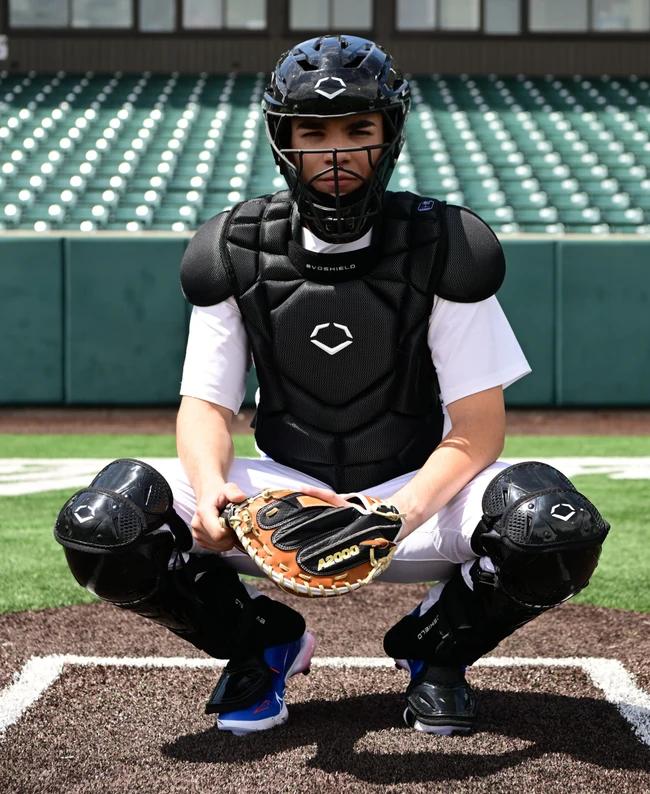
If you never played or coached baseball, pitch calling can look like a secret language. The catcher wiggles fingers, the coach touches his face, and the pitcher nods. Here is what is actually happening, what to call at each age, and four ways to get the call where it needs to go.
How a pitch gets called
Every pitch starts with a decision: which pitch, and where. Someone makes that decision. Then the pitcher and the catcher both need to know it before the pitch is thrown. The pitcher has to know what to throw. The catcher has to know what is coming, so they can catch it.
The pitcher and catcher talk with finger signs. The catcher crouches and puts fingers down between the legs, out of sight of the batter: one finger for a fastball, two for a curveball, three for a changeup. Where the catcher sets up, inside or outside, shows the location.
So a pitch call has two parts:
- Who decides. The coach, or the pitcher and catcher themselves.
- How the call gets to the battery. That is the pitch calling system, and it is what the rest of this article covers.
What to call at each age
What you call depends on what your pitchers can throw.
| Age | What gets called |
|---|---|
| 6 to 8 | Nothing. Pitchers throw fastballs, and the only job is throwing strikes. |
| 7 to 9 | Location starts to matter: in, out, up and down. |
| 9 to 10 | Many pitchers add a changeup. |
| 11 to 12 | In competitive baseball, curveballs and off-speed pitches show up, with locations like low and away, inside, up and in, and in the dirt. |
| 13 and up | A pitch and a location on almost every pitch. |
When kids start pitching. Most kids start pitching between 7 and 9. In Little League, local leagues can split the Minor League into coach pitch, machine pitch and player pitch, for example coach pitch for the younger players and player pitch at 9 and 10, and the Major Division covers ages 9 to 12. Travel organizations such as USSSA run kid pitch as early as 7U and 8U. Check your own league, because the split is a local choice.
Who should call the pitches
You can't go wrong with the coach calling pitches. At younger ages it lets the kids focus on throwing strikes and catching the ball. College and pro teams have coaches calling pitches too.
A battery you trust can call its own game. If you have a pitcher and a catcher who are interested, let them handle it. That works especially well if you are flexible about what to throw, or you are still learning what works in each count. Feeling in control is a big part of the fun of playing, and calling a game is part of the fun of catching.
The right choice depends on your level, your players and plenty of other factors. When in doubt, the coach calls it.
Option 1: The coach signals
The coach gives the call from the dugout. First decide who gets the signal:
- The catcher only. The coach signals the catcher, and the catcher relays the call to the pitcher with finger signs.
- The pitcher and the catcher together. Both look at the coach on every pitch.
Signaling the catcher only is usually the better choice. The pitcher can focus on pitching and leave the thinking to the catcher. The catcher's finger signs are hidden from the batter and the other team's coaches, so the call reaches the pitcher privately.
How the coach signals is up to you. It can be touches on the face or body. It can be a number the coach holds up with the fingers. It can even be where the coach looks or stands. Be creative. The one rule is that it has to be a system: the other dugout watches the coach, so the signal has to look different from the call. A coach who touches the nose before every fastball gives the pitch away by the third inning.
Most coaches add decoys. With an indicator, a touch such as the bill of the cap says the next touch is the call, and everything before it is a decoy. With a touch number, the team agrees which touch counts: the first, second, third or last.
If you want ideas, the baseball signs builder has ready pitch call sheets for the coach to the catcher, with an indicator or a touch number, and prints a cheat sheet with a coach showing every touch.
Why teams use it: the coach makes the call, it costs nothing, and the catcher relays it with simple finger signs.
What to watch: the other dugout learns any signal that never changes. Use decoys and change your system between games.
Option 2: Wristband numbers
The catcher, and often the pitcher, wears a wristband with a card inside. The coach calls out or signals a number. The catcher or pitcher looks it up on the card.
Why teams use it: the pitcher and catcher read the call off the card, so they have fewer signs to memorize. To the other team, a number is just a number, and one number carries the whole call. Wristbands are common in fastpitch softball and growing in high school and college baseball.
What to watch: a card protects you only while it stays fresh. If 23 always means an outside fastball, the other dugout learns it by the fourth inning. Give every pitch and spot several numbers, so the coach calls the same pitch with a different number each time. Print a new card for every game. The wristband signs generator builds pitch calling cards with 30 or more numbers for each call.
High school rules cover the wristband itself. In NFHS baseball it has to be one solid color, worn on the wrist or forearm, and a pitcher wears it on the glove arm. NFHS softball also puts the pitcher's wristband on the non-pitching arm and bans wearing the card on the belt.
Option 3: Electronic pitch calling (PitchCom and others)
Electronic pitch calling is the most expensive option, and only some leagues allow it.
How PitchCom works
The person calling the pitch presses a button on a small transmitter. Each button stands for a pitch or a location. A receiver plays the call as a recorded voice inside the pitcher's cap or the catcher's helmet, or shows it on a watch-style display. Only the players wearing receivers get the call.
Major League Baseball made PitchCom optional in 2022. In MLB the catcher wears the keypad on the forearm, and since 2023 the pitcher may send the call too. Up to five defensive players can wear receivers, so the middle infielders know what is coming.
Youth and high school rules work differently. The coach in the dugout sends the call, and the catcher receives it.
Which leagues allow electronic pitch calling
Every rule below allows one-way devices only. A device that lets the catcher talk back is illegal in high school even when it is muted. These rules were current in November 2026, and they change most years.
| League | Who can receive the call | Since |
|---|---|---|
| Little League baseball and softball | The catcher, from a coach in the dugout, on defense | 2025 |
| High school baseball (NFHS) | The catcher; the pitcher and/or catcher from 2027 | 2024 |
| High school softball (NFHS) | The catcher; the pitcher is added for 2027 | 2025 |
| NCAA softball | Sent from the dugout or coaches' boxes; earpiece audio for the catcher only, display receivers for other players | 2023-24 |
| NCAA baseball | Sent from the dugout, the coaches' boxes or a player; earpiece audio for the catcher only; Division I on defense only from 2027 | 2025 |
| USSSA baseball | All players | 2025 by-laws |
| Perfect Game | Follows the NCAA rule | 2026 rules |
| PONY | Not allowed | 2026 rules |
| Babe Ruth and Cal Ripken | Not allowed | 2026 equipment guide |
Check your league's current rulebook before you buy anything. Tournaments often publish their own rules, and those can differ from the league you play in all season.
In Little League, and in high school through 2026, only the catcher receives the call. The catcher still signs the pitcher with fingers, so the coach-to-catcher half of the call is the part the device protects.
What electronic pitch calling costs
Expect to spend hundreds of dollars at the low end. Game Day Signals, one of the hardware makers, lists a player unit at $239 and a coach unit at $249 on its site. PitchCom and CoachComm sell complete kits through their own sites and dealers. Phone and smartwatch apps exist as well. Many rules ban phones and smart watches that can send messages, so check the app's hardware against your rulebook.
Is it worth it for a youth team?
At 12U and under, most teams get what they need from coach signs or a wristband card. Electronic calling earns its cost in high school and college, where every pitch has a location and opponents do watch.
Option 4: The players call it
The coach steps out of the loop. The catcher calls each pitch with finger signs, and the pitcher can shake it off by shaking the head until the pitch they want comes up.
Why teams use it: it is free and fast, and it is how catchers and pitchers learn the game. A catcher who calls a good game is a real weapon at any level.
What to watch: with a runner on second, the runner looks straight in at the catcher's fingers. Catchers switch to a sequence: several signs in a row, with a rule for which one is live, such as "outs plus one." The catcher signs guide covers each sequence.
Side by side
| System | Cost | Who remembers the signs | How hard to steal | Best fit |
|---|---|---|---|---|
| Coach signals | Free | Coach and catcher | Hard with decoys and a system | Every age |
| Wristband numbers | Wristbands and printing | The card | Hard, when the card changes every game | 11U and up; fastpitch teams |
| Electronic one-way device | Hundreds of dollars and up | The device | Hardest for the coach's half of the call | High school, college, travel where legal |
| Players call it | Free | Catcher and pitcher | Easy to read from second without a sequence | A pitcher and catcher you trust, at any age |
How to pick your system
- 6U to 8U: keep it simple. Pitchers throw fastballs, so the call is "throw strikes."
- 8U to 10U: the coach calls location, and later the changeup, by signaling the catcher.
- 11U to 14U: the coach signals the catcher with a system, or calls numbers off a wristband card. A pitcher and catcher you trust can call their own game.
- High school: a wristband card, or an electronic system where your rules allow it. Change the card every game. Keep a catcher sequence ready for a runner on second.
- Fastpitch at any age: a wristband card is the usual starting point, because one number carries the pitch and the location.
What to run at your next practice
Throw a 20-pitch bullpen in game conditions. The coach calls pitches with your game system, the catcher relays them, and a player stands on second base and tries to read them. Count how many the runner gets right. If the runner reads more than two or three, change the system before your next game.
Then hand the calls to the catcher for the next 20 pitches. Afterward, ask the catcher why they called each pitch in a two-strike count. That conversation teaches more about pitching than any chart.
Related Resources
Related Terms
Tags
Make Your Wristband Signs
Build a wristband card for pitch calls or batting signs, sized to your wristband, and print one for every player.
Open the Wristband Generator