Dugout Organization Hacks for Youth Baseball and Softball Coaches in 2026
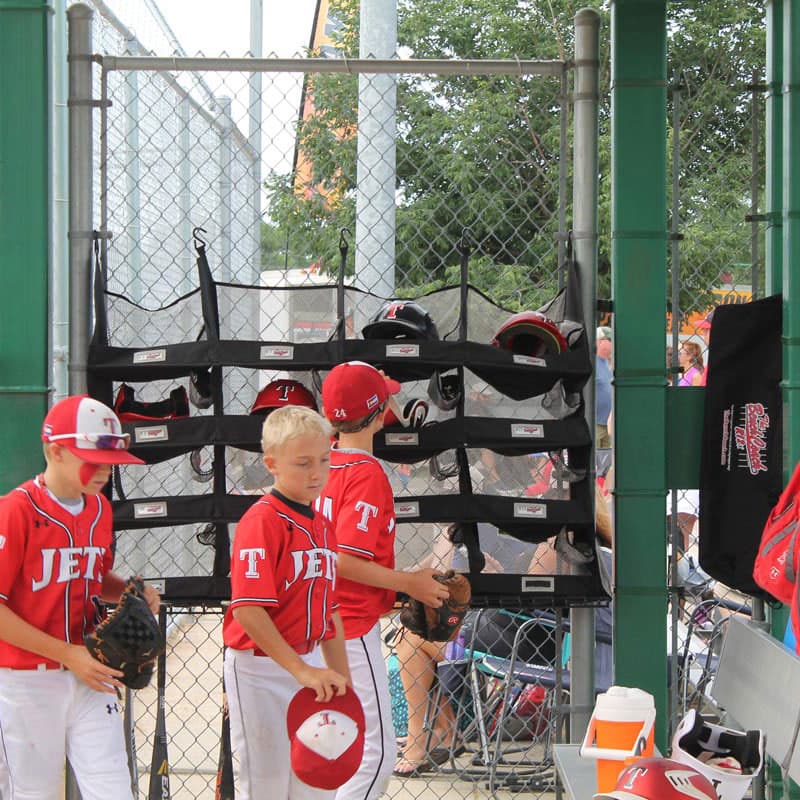
You know the scene. It is the bottom of the third and your next batter is supposed to be in the on-deck circle, but instead he is digging through a pile of helmets looking for his. Oh, and he can't find his left batting glove. The player batting draws a walk.
One of the most overlooked issues about coaching a youth baseball or softball game is staying organized in the dugout. Players don't only need to know where they're playing and when, but they need to have their equipment. They need their glove and cap on defense, and their bat, helmet and batting gloves when it's their turn to bat. Nowadays, you mix in shades, an evoshield leg guard, an evoshield elbow guard, and a sliding mitt. Welp, good luck.
We have all been there. And here is the thing: a chaotic dugout is not just annoying. It slows down the game, creates safety hazards, and sends a message to your players that "close enough" is good enough. The good news? There are some ways to fix it. A few simple habits, a little bit of structure, and maybe a piece or two of inexpensive gear can turn your dugout from a disaster zone into a well-oiled machine. If you are new to coaching and already feeling overwhelmed, start here - getting your dugout under control is one of the easiest wins you can grab early in the season.
5 Keys to a Well-Organized Dugout
Before we get into the full breakdown, here are the five things that make the biggest difference:
Use your batting order as the dugout blueprint. Players sit, store gear, and stage in batting order. It creates a natural flow so the next hitter always knows where to go and what to grab. This single habit eliminates 90% of the chaos.
Generate and post your lineup where everyone can see it. Print it, tape it to the fence, and stop answering "who's up?" every inning. Our free lineup generator builds a printable lineup card in under a minute.
Practice your dugout routine at practice, not just games. If players only see the system on game day, it never sticks. Use your practice plan to build in a five-minute dugout setup drill, simulate the batting order, have players find their spots, and run through the on-deck staging area. The reps carry over to games.
Invest in a dugout organizer or fence hooks. You do not need to spend a fortune. Even a $15 set of fence hooks gives every player a designated gear spot and gets equipment off the ground. See our full list of the best dugout organizers for youth baseball and softball for options at every price point.
Teach the "off the field, into the spot" rule from day one. When a player comes off the field, gear goes immediately to their designated spot. Not on the bench, not on the ground. Make it non-negotiable and praise the kids who do it right. This is the habit that prevents mid-game entropy.
Now let's dig into why this matters, the full pre-game setup routine, all 10 tips in detail, and some budget-friendly DIY hacks.
Why Dugout Organization Actually Matters
Some baseball or softball coaches hear "dugout organization" and think it is about being uptight. It is not. It is about running a better game day experience for everyone - you, your players, and the parents watching from the bleachers.
It Keeps the Game Moving
Nothing kills the pace of a youth baseball game like dead time between at-bats. When your next hitter has to search for a helmet, find a bat, and figure out whose batting gloves are whose, you are burning two or three minutes between every half-inning. Multiply that over six innings, and you have added twenty minutes to a game that umpires and parents already wish would move faster. Let's face it, between kids throwing strikes and the dozen errors a game, nobody really wants a longer t-ball game.
It Keeps Kids Safe
Equipment in the dugout is a real hazard. A kid running back into the dugout after excitedly scoring a run can easily roll an ankle stepping on a bat laying on concrete. Loose helmets become tripping hazards. Equipment bags dumped in walkways block the path to and from the field. Youth sports injuries are not always dramatic plays at home plate, sometimes they are a twisted knee because someone left their gear in the wrong spot. An organized dugout dramatically reduces these preventable injuries.
It Teaches Responsibility
Youth sports are about more than winning games. They are about building habits that carry over into the rest of a kid's life. When a player learns to put their helmet back in the same spot every single time, they are learning ownership, accountability, and attention to detail. These are the same habits that will serve them in school, in jobs, and in every team environment they will ever be part of. It sounds small, but it compounds over a season.
It Makes You a Better Coach
When your dugout is a mess, you spend mental energy managing chaos instead of managing the game. You are looking for the lineup card instead of watching the pitcher's arm slot. You are breaking up a helmet argument instead of calling a defensive shift. An organized dugout frees you up to actually coach, to watch the game, make adjustments, talk to players about their approach, and be present in the moments that matter.
Finally, a clean dugout signals competence. Parents notice. Umpires notice. Other coaches notice. It may seem superficial, but an organized dugout tells everyone that you take this seriously, that you have a plan, and that you are running a program, not just showing up and winging it.
How To Setup the Dugout Before a Game to Stay Organized
The single best thing you can do for dugout organization is to establish a consistent pre-game setup routine. Do the same thing every game, and it becomes automatic for everyone.
Get There Early
Arrive at least 15 to 20 minutes before your players so you can set up the dugout before anyone else gets there. If players arrive to an already-organized dugout, they follow the system. If they arrive to an empty dugout with no structure, they dump their bags wherever they want and the chaos begins immediately. You are setting the tone before the first kid walks through the gate.
Organize by Batting Order
The simplest and most effective organizational system is to arrange everything by batting order. Player one's gear goes at the far end of the bench, player two's gear is next, and so on down the line. This creates a natural flow: the next hitter always knows exactly where to go because they are sitting next to the player currently at bat. No confusion, no "who's up?" questions every half-inning.
If there isn't space to put everyone's stuff, the best investment you can make is a Dugout Organizer. You can buy cheap ones for less than $50 on Amazon or go for a real good one for a couple hundred.
Check out our 10 Favorite Dugout Organizers for Baseball and Softball in this guide.
Post Your Lineup Where Everyone Can See It
Print your lineup card and tape it to the dugout wall or fence where every player and coach can reference it. No more kids asking you who bats next, they can look it up themselves. If you do not already have a fast way to generate and print lineups, our free lineup generator lets you build one in under a minute and print it right from your phone.
Set Up Your Gear Stations
Before players arrive, set up your bat rack or fence hooks, designate where helmets go, and pick a consistent spot for the team water cooler or individual water bottles. A good dugout organizer can make this setup take two minutes instead of ten. Identify the "ready deck" area near the dugout exit where the on-deck and in-the-hole hitters will stage.
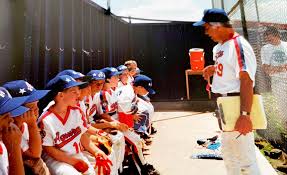
Consistency Is King
The most important part of this routine is doing it the same way every single game. When players know what to expect, they self-organize. By mid-season, your kids will walk in, find their spot, drop their gear in the right place, and be ready to warm up without you saying a word. That is the goal.
10 Dugout Organization Hacks That Actually Work
1. Use Your Batting Order as the Organizational Blueprint
This is the foundation of everything else. Your batting order is not just a list of who hits when, it is your entire dugout layout. Players sit in batting order. Their gear is stored in batting order. The flow of traffic in and out of the dugout follows the batting order. When a kid asks "am I up soon?" the answer is always "look to your left, if that person is batting, you are on deck."
This system eliminates confusion and creates a rhythm that carries through the whole game. After a few games of reinforcing it, your players will internalize it. They will walk into the dugout and instinctively go to the right spot. It is the single most impactful organizational decision you can make, and it costs nothing.
2. Assign a Helmet and Bat Spot for Every Player
Every player should have a designated spot for their helmet and bat. This could be a hook on the fence, a numbered slot in a bat rack, or a specific section of the bench. The key is that every player knows exactly where their gear goes, and that spot belongs to them for the duration of the game.
When gear has a home, it stops wandering. You will never again hear "Coach, I can't find my helmet" because the helmet is always in the same place. Dugout organizers with individual compartments make this incredibly simple, each player gets their own hook or slot, and the system runs itself.
3. Create a "Ready Deck" Area
Designate a specific area near the dugout exit as the "ready deck." The on-deck hitter stands here with their helmet on and bat in hand. The in-the-hole hitter is next to them, getting their gear together. This staging area keeps the game moving because there is zero delay between at-bats. The moment one at-bat ends, the next hitter is already walking to the plate.

Teach your players that when the batter two spots ahead of them steps into the box, it is time to move to the ready deck. This simple rule keeps the pipeline flowing without you having to remind anyone. It also gives hitters a moment to mentally prepare, to think about the pitcher, the count situation, and their approach, instead of scrambling to find equipment.
4. Teach the "Off the Field, Into the Spot" Rule
Make this a non-negotiable team rule from game one: when you come off the field, your gear goes immediately to your designated spot. Not on the bench. Not on the ground. Not on top of someone else's stuff. Your spot, every time.
This is the habit that prevents the mid-game entropy that turns organized dugouts into chaos. Without this rule, gear migrates. A helmet gets set down "just for a second" on the wrong section of bench, a bat gets leaned against the fence in the walkway, and within two innings you are back to square one. Enforce this early, praise kids who do it consistently, and it becomes second nature fast.
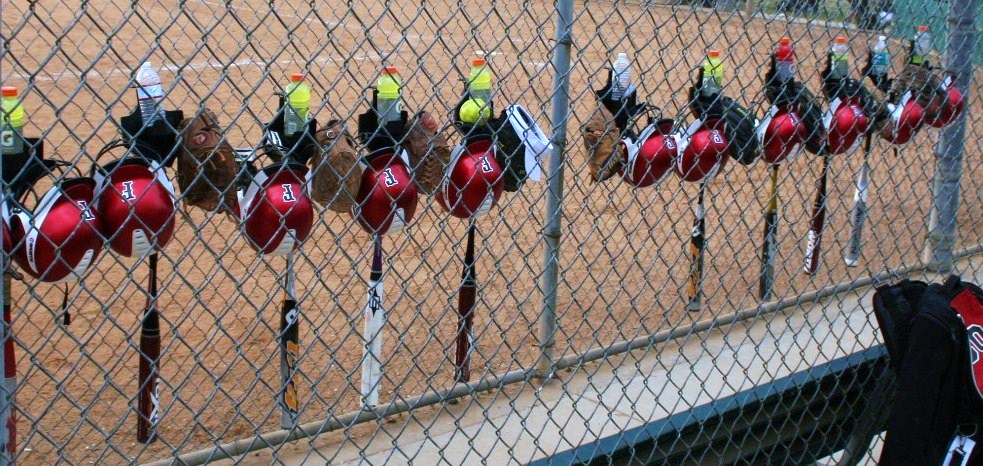
5. Use Fence Hooks for Everything
If your dugout has a chain-link fence, and most youth fields do, you are sitting on a goldmine of vertical storage. Fence hooks can hold helmets, gloves, batting gloves, jackets, and even equipment bags. Hanging gear on the fence gets it off the bench, off the ground, and up where everyone can see it.
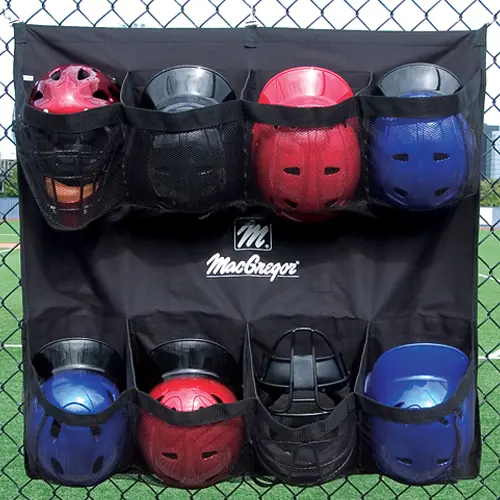
Fence hooks and gear hangers are dirt cheap, most options run under fifteen dollars for a set, and they transform a dugout. You can assign each player a hook or a section of fence, and suddenly your bench is clear for sitting and your floor is clear for walking. This is one of the highest-impact, lowest-cost upgrades you can make.
6. Keep Bats Off the Ground
This one is about safety first and equipment care second. Aluminum and composite bats rolling around on a concrete dugout floor are genuine trip hazards, especially for kids who are excited, distracted, or running in and out of the dugout during the game. A player stepping on a bat and going down is a completely preventable injury.
Beyond safety, bats that roll around on concrete get scratched, dented, and damaged. Composite bats especially can develop cracks from repeated impacts on hard surfaces. Use a bat rack, fence hooks, or even a bucket to keep bats upright and off the floor. If you do not have a dedicated bat rack, leaning bats in a corner with the barrels up works in a pinch, just make sure they are out of the foot traffic zone.
7. Label Everything
This is the simplest tip on the list and one of the most effective. Put the player's name or jersey number on their helmet, bat, glove, and equipment bag. Use stickers, athletic tape with a Sharpie, or just write directly on the gear with permanent marker. When every piece of equipment is clearly labeled, the question "whose is this?" disappears from your vocabulary entirely.
Labeling also dramatically reduces the amount of gear left behind after games. When a helmet has a name on it, someone can grab it, shout "Hey, number seven left their helmet," and it gets returned immediately. Unlabeled gear sits in a lost-and-found bin for weeks. Send a message to parents at the start of the season: label everything your kid brings to the field.
8. Designate a Coach's Station
You need a spot too. Pick one specific location in the dugout, the same spot every game, for your scorebook, lineup card, pen, phone, and anything else you reference during the game. When you know exactly where your stuff is, you are not scrambling during critical moments. You are not patting your pockets for a pen while the umpire waits for your lineup card.
Keep your coaching station near the dugout exit so you can see both the field and the bench without turning your back on either. A small clipboard or binder keeps your papers organized and prevents wind from scattering your lineup across the dugout. Some coaches like to keep a small dry-erase board at their station for making notes or adjustments mid-game.
9. First Aid Kit, Always the Same Place
Your first aid kit should be visible, accessible, and in the exact same spot every single game. Do not bury it in an equipment bag. Do not toss it in a different corner each week. Every coach, every assistant, and every team parent should know exactly where the first aid kit lives without having to ask.
Stock it with the basics: band-aids, athletic tape, instant cold packs, antiseptic wipes, gauze, and any player-specific items like inhalers or EpiPens that parents have provided. Check it before each game and restock as needed. In the moment when a kid takes a bad hop to the face and you need gauze right now, you will be very glad it is exactly where you expect it to be. For recommendations on first aid kits and other dugout essentials, check out our product roundup.
10. Post-Game Sweep with "Dugout Captains"
Before your team leaves the dugout after every game, assign two players as "Dugout Captains" for a final sweep. Their job is simple: walk the entire dugout and make sure nothing is left behind. No gear, no trash, no water bottles. The dugout should look the same as it did before you arrived, or better.
Rotate the Dugout Captain role each game so every player gets a turn. Make it a point of pride, not a punishment. These are the players responsible for making sure the team leaves the dugout right. It teaches accountability, it prevents lost equipment, and it shows respect for the facility and the next team that will use it. You would be surprised how seriously kids take it when you frame it as a leadership role instead of cleanup duty.
DIY Dugout Hacks on a Budget
Not every team has the budget for fancy dugout organizers. That is totally fine. Some of the best dugout setups we have seen were built with stuff from the dollar store and a little creativity. Here are some budget-friendly hacks that get the job done.
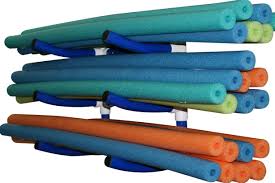
Pool Noodle Bat Holder
This is a classic. Buy a pool noodle for a dollar, cut it into sections, and zip-tie or wire-tie the sections to the chain-link fence with the hole facing up. Slide bat handles down into the pool noodle sections and you have a makeshift bat rack that holds six or eight bats securely against the fence. Total cost: about two dollars.
Over-the-Door Shoe Organizer
Hang a clear plastic shoe organizer on the fence using zip ties or S-hooks. Each pocket becomes a compartment for batting gloves, sunglasses, sunscreen, snacks, or small personal items. Players can see exactly what is in each pocket, and it keeps all the little stuff off the bench. You can label each pocket with a player's name using a piece of tape.
Dollar Store Bins and Buckets
Small plastic bins or buckets from the dollar store work great for grouping gear. One bin for team helmets, one for catcher's gear, one for the first aid kit and scorebook. Stack them neatly in one corner of the dugout and suddenly everything has a home. Total investment: five to ten dollars.
Carabiner Clips for Helmets
Pick up a pack of large carabiner clips from the hardware store for a few bucks. Clip them onto the fence and hang helmets from the face guard or chin strap. Each player gets a carabiner, each carabiner gets a section of fence, and helmets stay off the ground and organized.
Bungee Cord Bat Rack
Run a bungee cord horizontally through the fence at about waist height, then slide bat barrels behind the cord. The tension holds the bats against the fence and keeps them upright and organized. Two bungee cords and thirty seconds of setup gives you a functional bat rack for under five dollars.
Milk Crates for Helmet Storage
Stack two or three milk crates in the corner of the dugout. Helmets nest inside perfectly, and the crates stack when you need to transport them. They are durable, free if you can find them, and they keep helmets corralled instead of scattered.
Clipboard Lineup Station
Tape your printed lineup card to a clipboard and hang it on the fence with a carabiner or a piece of wire at eye level. Add a pen on a string so it is always there. Now every player and parent can check the batting order without interrupting you. It is low-tech, it is effective, and it takes the "who's up?" question out of your life.
If you would rather skip the DIY route and get something purpose-built, check out our roundup of the best dugout organizers for youth baseball and softball, some options are under fifteen dollars and save you the arts-and-crafts project.
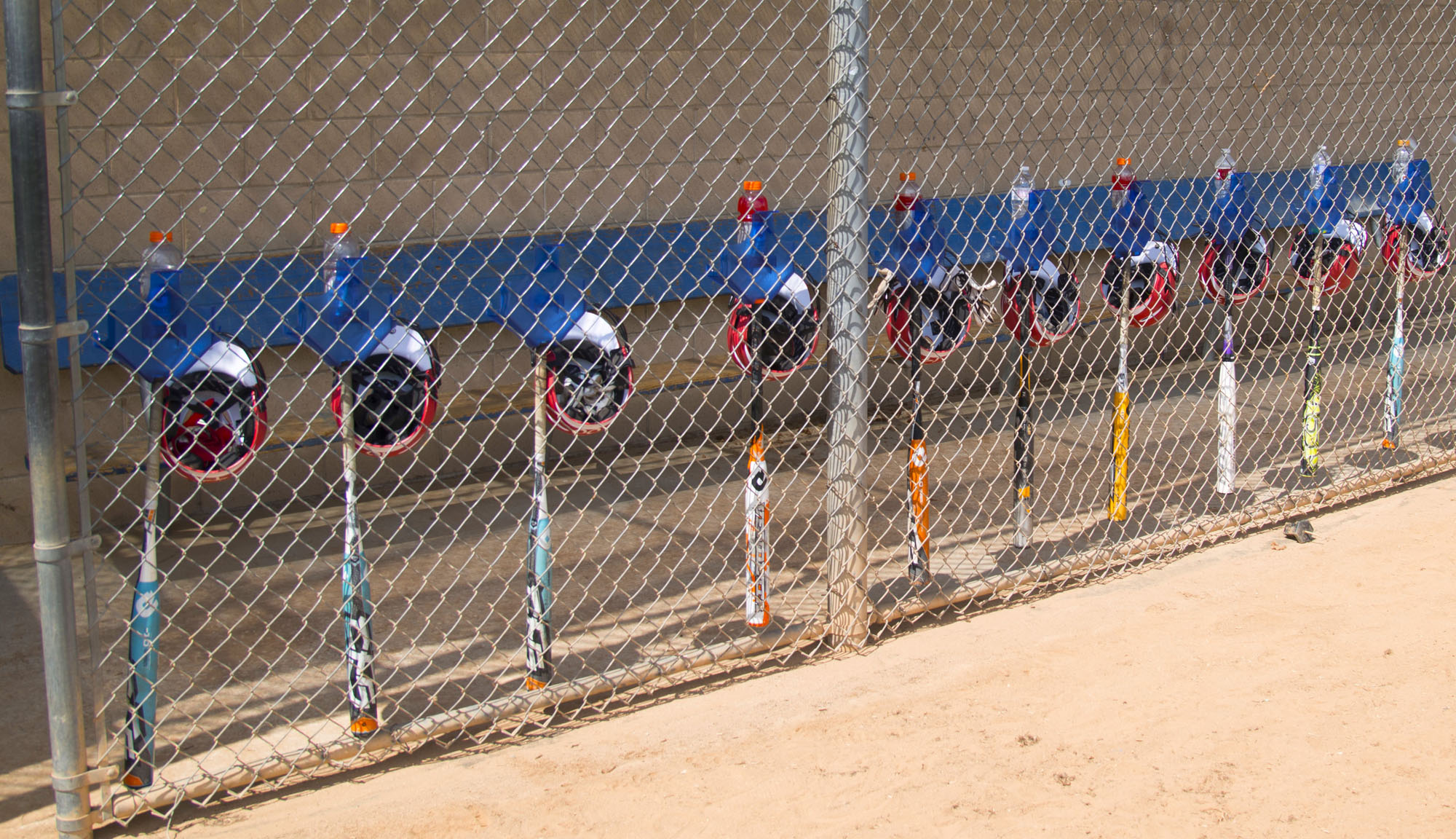
Make Setup a Team Drill
Practice makes perfect. You practice your defense so that you're prepared for the game, so why not practice staying organized? Simulate games to practice staying organized in the dugout. Seriously! It might sound silly, but practicing really helps with kids. Time your setup. Challenge your team to go from empty dugout to fully organized in under three minutes. Make it a competition. Kids love a stopwatch challenge, and turning dugout setup into a game means it gets done fast, done right, and done without complaining. For more ideas on structuring your practices and game days efficiently, see our complete guide to running a youth baseball practice.
Frequently Asked Questions
How do you organize a youth baseball dugout?
The most effective way to organize a youth baseball dugout is to arrange everything by batting order. Assign each player a specific spot on the bench or along the fence that corresponds to their position in the lineup. Set up a bat rack or fence hooks for bat storage, designate a staging area near the exit for on-deck and in-the-hole hitters, and establish a consistent spot for the first aid kit, water bottles, and coaching materials. Arrive early enough to set up before players arrive so they walk into an organized space from the start.
What is the best way to arrange gear in a baseball dugout?
The best approach is to give every piece of equipment a designated home. Helmets go on fence hooks or in a helmet bin, bats go on a rack or in fence-mounted holders, and personal bags go under the bench in batting order. Keep the bench surface clear for sitting and the floor clear for walking. Vertical storage using the chain-link fence is your best friend, hang as much as possible to maximize floor and bench space. A purpose-built dugout organizer that hangs on the fence can hold helmets, bats, and gear for the entire team in one compact unit.
How do you keep bats organized in the dugout?
Use a bat rack, fence hooks, or a DIY solution like pool noodle holders or bungee cords on the fence. The most important rule is to keep bats off the ground at all times, they are trip hazards on concrete and can be damaged by rolling around. Each player should have a designated bat slot, and the team rule should be that bats go back to their slot immediately after every at-bat. Whether you invest in a proper bat rack or make one yourself, having a system beats having bats scattered across the dugout floor.
What do coaches need in the dugout?
At minimum, coaches need a lineup card (posted where players can see it), a scorebook or scoring app, a pen, a first aid kit, and a phone for emergencies. Beyond the basics, many coaches also keep a dry-erase board for in-game notes, a clipboard for tracking pitch counts, extra baseballs, sunscreen, and a copy of the league rules. Designate a specific "coach's station" in the dugout and keep all of your materials in that same spot every game. You should not have to search for anything during a game.
How do you set up a dugout for a tournament?
Tournament dugout setup needs to be fast and portable since you may set up and tear down multiple times in one day. Use a hanging dugout organizer that attaches to the fence in seconds and packs flat for transport. Pre-pack a "dugout kit" bag with everything you need: organizer, hooks, clipboard, lineup cards, first aid kit, dry-erase board, and trash bags. Assign a parent volunteer to arrive at each field early and set up the dugout before players arrive. Practice your setup routine until the team can go from empty dugout to game-ready in under three minutes.
Are dugout organizers worth it?
Yes, especially if you coach multiple games per week or play in tournaments. A good dugout organizer eliminates most of the chaos that makes game days stressful. It gives every piece of equipment a designated spot, keeps the dugout floor clear and safe, and saves several minutes of setup time each game. Many options cost under thirty dollars and last for years. For teams that play twenty or more games a season, the per-game cost works out to less than a dollar. That is a small price for a dramatically better dugout experience.
Tags
Ready to Generate Your Perfect Lineup?
Try our free softball and baseball lineup generator to create balanced, fair lineups in minutes.
Try Free Lineup Generator