Baseball Bat Size Chart: How to Size a Bat by Age, Height, and Weight
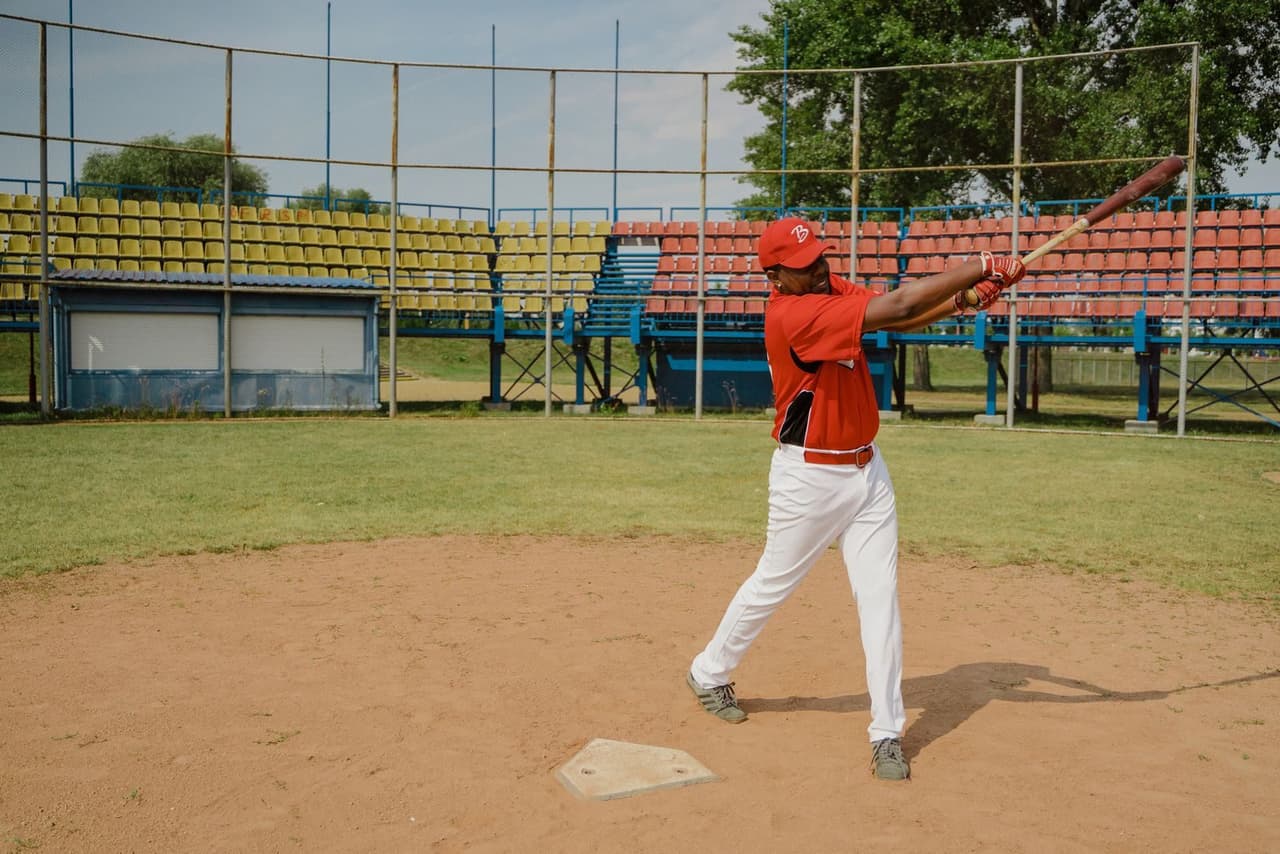
Watch a 9-year-old drag a 30-inch bat through the zone a half-second late, roll over on it, and pull a weak grounder to short. Nine times out of ten the swing is not the problem. The bat is too much for them, and no amount of coaching fixes a bat that does not fit. A bat that fits does the opposite. It lets a player swing fast, cover the plate, and actually enjoy hitting.
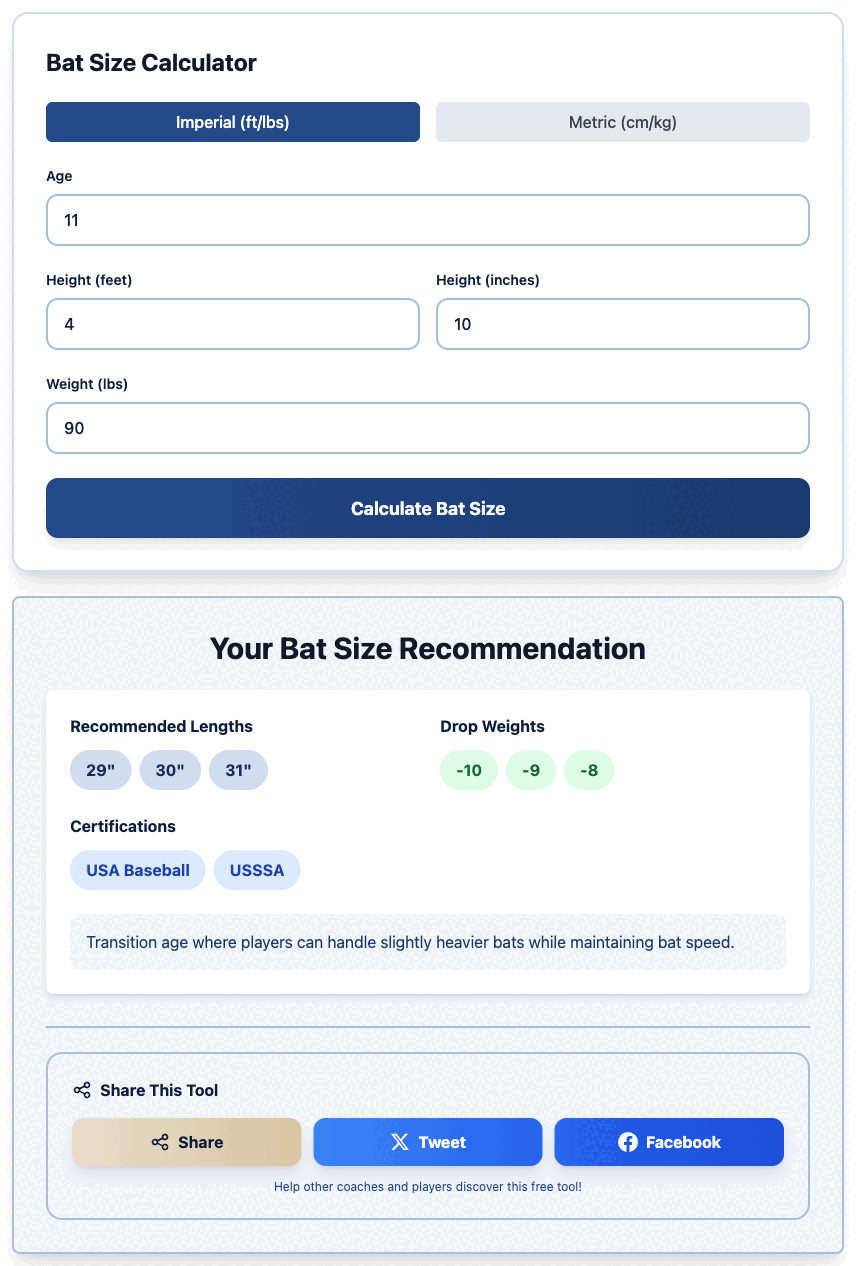
This guide gives you a full baseball bat size chart by age, height, and weight, two quick ways to check the fit at home, and a clear explanation of drop weight and certifications so you know you are buying the right bat. If you would rather skip the charts, our free bat size calculator does the math for you in a few seconds.
Quick answer: Size a bat in two steps. Get the length from height (a 4-foot player is usually around a 27- to 28-inch bat; a 5-foot player around 29 to 30 inches; a 6-foot player around 32 to 33 inches). Then pick the drop weight from age and strength: -10 to -13 for ages 5 to 9, -8 to -10 for ages 10 to 12, -5 to -8 for ages 13 to 14, and -3 for high school. Confirm the fit with the hip test below.
The Two Numbers That Matter
Every bat comes down to two measurements, and it helps to keep them separate in your head.
Length is how long the bat is, in inches, from knob to barrel end. Length controls plate coverage and the size of a player's swing arc. Too short and they cannot reach the outside corner. Too long and they cannot get the barrel around in time.
Drop weight is the bat's length in inches minus its weight in ounces, written as a negative number. A 30-inch bat that weighs 20 ounces is a -10. A 32-inch bat that weighs 29 ounces is a -3. The bigger the number, the lighter the bat. Higher drops (-10, -12) are lighter and easier to swing fast. Lower drops (-3, -5) are heavier and take more strength.
You get length mostly from height. You get drop weight mostly from age and strength. Handle them in that order and bat shopping stops being confusing.
How to Measure at Home in 30 Seconds
Before you trust any chart, do these two checks with a bat in hand. They take longer to read about than to do.
The hip test. Stand the bat upright on the ground next to your player, barrel down, knob up. The knob should reach somewhere between the top of their hip bone and the middle of their thigh. If it reaches past their belt toward their waist, the bat is too long.
The arm-reach test. Have your player stand tall and place the knob of the bat against the center of their chest, pointing the barrel straight out to the side. If they can comfortably reach out and grab the barrel end with their fingertips, the length is about right. If they cannot reach it, the bat is too long.
If a bat passes both tests and matches the chart below, you have your length. Now you just need the right drop.
Baseball Bat Size Charts by Age, Height, and Weight
Find your player's height on the left, then move across to their weight range. Each cell shows a recommended length and drop weight.
Ages 5-7 (Tee Ball / Coach Pitch)
| Height | 36-45 lbs | 46-55 lbs | 56-65 lbs | 66-75 lbs |
|---|---|---|---|---|
| 3'5" - 3'8" | 24" / -12 | 25" / -12 | 25" / -11 | 26" / -11 |
| 3'9" - 4'0" | 25" / -12 | 26" / -12 | 26" / -11 | 27" / -11 |
| 4'1" - 4'4" | 26" / -12 | 27" / -11 | 27" / -10 | 28" / -10 |
Ages 8-9 (Rookie / Minor League)
| Height | 50-59 lbs | 60-69 lbs | 70-79 lbs | 80-89 lbs | 90-99 lbs |
|---|---|---|---|---|---|
| 4'0" - 4'3" | 26" / -11 | 27" / -11 | 27" / -10 | 28" / -10 | 28" / -10 |
| 4'4" - 4'6" | 27" / -11 | 27" / -10 | 28" / -10 | 28" / -10 | 29" / -10 |
| 4'7" - 4'9" | 27" / -10 | 28" / -10 | 28" / -10 | 29" / -10 | 29" / -9 |
Ages 10-11 (Majors / Kid Pitch)
| Height | 60-69 lbs | 70-79 lbs | 80-89 lbs | 90-99 lbs | 100+ lbs |
|---|---|---|---|---|---|
| 4'6" - 4'8" | 27" / -10 | 28" / -10 | 28" / -10 | 29" / -10 | 29" / -9 |
| 4'9" - 5'0" | 28" / -10 | 29" / -10 | 29" / -9 | 30" / -9 | 30" / -8 |
| 5'1" - 5'3" | 29" / -10 | 29" / -9 | 30" / -9 | 30" / -8 | 31" / -8 |
Ages 12-14 (Travel / Middle School)
| Height | 80-99 lbs | 100-119 lbs | 120-139 lbs | 140+ lbs |
|---|---|---|---|---|
| 4'10" - 5'2" | 29" / -10 | 30" / -8 | 30" / -5 | 31" / -5 |
| 5'3" - 5'6" | 30" / -8 | 31" / -8 | 31" / -5 | 32" / -5 |
| 5'7"+ | 31" / -8 | 31" / -5 | 32" / -5 | 32" / -3 |
Ages 15+ (High School / BBCOR)
| Height | 120-139 lbs | 140-159 lbs | 160-179 lbs | 180+ lbs |
|---|---|---|---|---|
| 5'5" - 5'8" | 31" / -3 | 31" / -3 | 32" / -3 | 32" / -3 |
| 5'9" - 6'0" | 32" / -3 | 32" / -3 | 33" / -3 | 33" / -3 |
| 6'1"+ | 33" / -3 | 33" / -3 | 34" / -3 | 34" / -3 |
A heads-up for high school families: the -3 in that last chart is about to get some company. Starting in 2028, high school players will be able to choose a -4, -5, or -6 as well. We break down exactly what that means in our guide to the new high school bat rules, and our bat drop advisor helps high schoolers figure out which drop to test.
Drop Weight by Age
If you only remember one thing, remember that drop weight should get lower (heavier bat) as a player gets older and stronger. Here is the general progression:
- Ages 5-9: -10 to -13. Keep it light so they can swing fast and learn good mechanics.
- Ages 10-12: -8 to -10. Players can handle a bit more mass without losing bat speed.
- Ages 13-14: -5 to -8. The transition years, where stronger players start moving toward heavier bats.
- Ages 15+ (high school): -3 today, with -4, -5, and -6 options arriving in 2028.
The single biggest mistake parents make is sizing up too early, either in length or by going too heavy on the drop, so a child can "grow into" the bat. Do not do it. A bat that is too much for a player right now slows their swing and teaches bad habits. Buy for the hitter you have today and re-check every season.
A Quick Word on Certifications
Length and drop only matter if the bat is legal for your league. The stamp on the bat has to match what your league requires:
- USA Baseball: Required for most rec leagues, including Little League, Cal Ripken/Babe Ruth, and Pony. If you are unsure, this is almost always the right answer for players under 14.
- USSSA: Required for most travel ball and USSSA tournaments. These bats have more pop and are usually not legal in rec leagues.
- BBCOR: Required for high school and college. All BBCOR bats are a -3 and perform like wood.
Softball uses a completely separate certification system, so if you are shopping for a softball player, do not use this chart. Head to our softball bat size calculator instead.
Put It Together
Sizing a bat is not complicated once you separate the two numbers. Get length from height and confirm it with the hip and arm-reach tests. Get drop weight from age and strength, leaning lighter for developing hitters so they can swing fast. Match the certification to your league. And re-measure every season, because kids grow faster than bats wear out.
When you are ready, let the bat size calculator do the lookup for you, and once you have the right bat, work on the swing itself with the right batting tee and a plan to build exit velocity.
FAQ
Q: What size bat should a 9-year-old use? A: Most 9-year-olds fit a 27- to 29-inch bat with a -10 or -11 drop, depending on height and weight. A smaller 9-year-old around 4 feet tall is usually on a 27-inch, while a taller, heavier one lands closer to 29 inches. Check the Ages 8-9 chart above and confirm with the hip test.
Q: My player is between two lengths on the chart. Which do I pick? A: Go with the shorter one. A slightly shorter bat is easier to control and keeps bat speed up, and control beats reach for almost every youth hitter. You can always move up next season.
Q: How often should I re-check bat size? A: Every season, and any time a player has a growth spurt. A bat that fit last spring can be too short by fall.
Q: Is a heavier bat better for power? A: Only if the player can still swing it fast. Bat speed drives exit velocity more than bat weight for most hitters. The best bat is the heaviest one a player can swing efficiently without slowing down or losing contact.
About the Author
Youth and high school baseball coaches focused on player development, fair playing time, and helping coaches and parents make better decisions.
Related Resources
Related Terms
Tags
Find the Right Bat Drop
Use our free High School Bat Drop Advisor to get a starting drop from height and weight, then a tee-and-velocity field test to settle it.
Try the Bat Drop Advisor