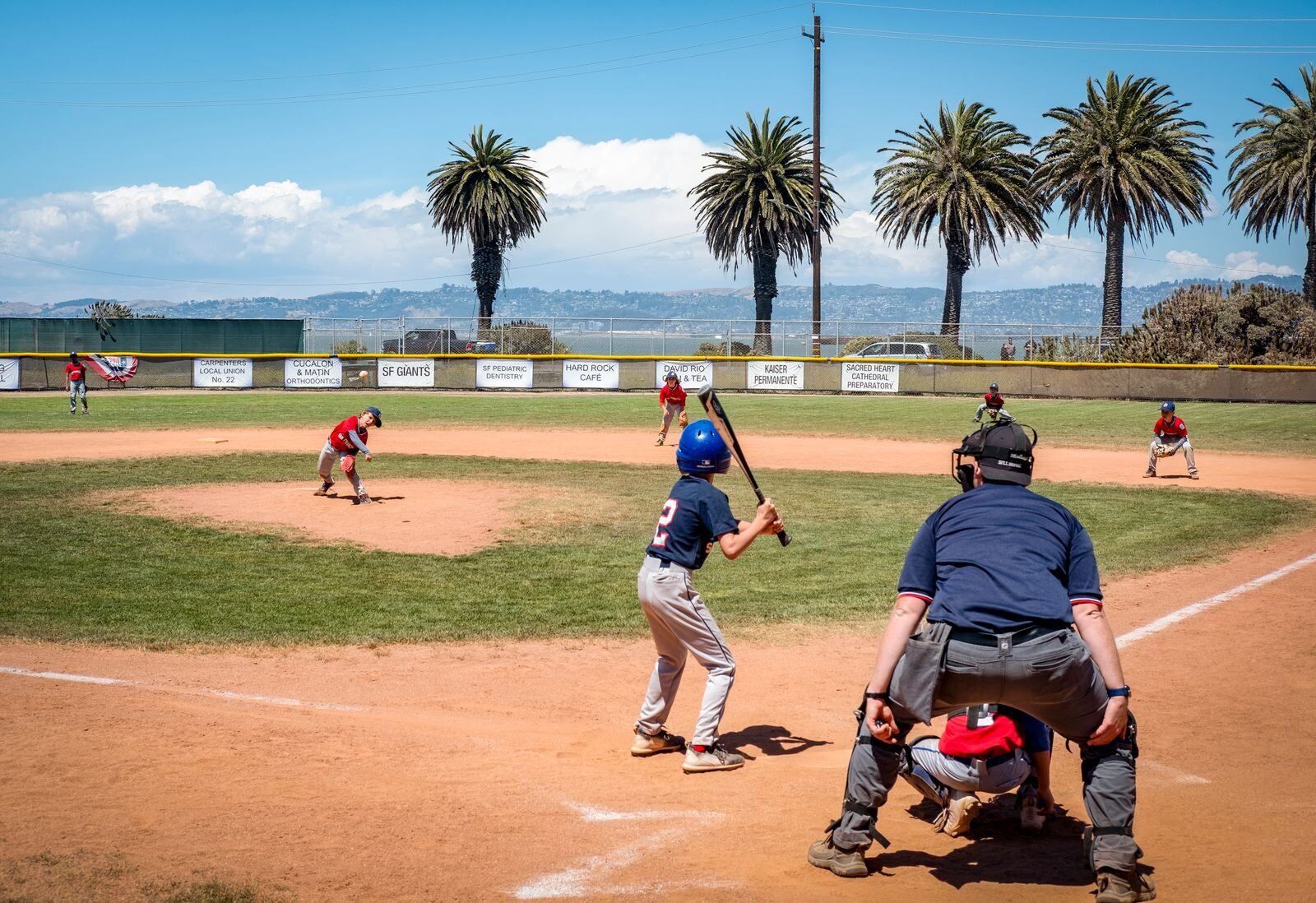
Baserunning with Bases Loaded
Bases loaded. Maximum pressure on the defense. But every runner is forced, which creates baserunning challenges. This guide covers what each runner needs to know.
The Situation Overview
- Runners: First, second, and third
- Force Plays: At EVERY base including home
- Key Reality: Every runner MUST advance on ground balls
- Scoring Opportunity: Any hit likely scores at least one
Runner on Third: The Scoring Run
Your Primary Job
Score without making an out at home.
Taking Your Lead
- Normal lead in foul territory
- Less aggressive than with no force at home
- The catcher can throw home for a force out
Ground Ball Reads
With less than 2 outs, you're going on EVERY ground ball.
| Ball Hit To | Your Decision |
|---|---|
| Any infielder | GO HOME |
| Pitcher | GO HOME |
| Outfield | Score easily |
The Force at Home:
- Defense may try to throw home for the force
- Run hard, beat the throw
- Slide if necessary
When to Hold
Hard Comebacker to Pitcher:
- Pitcher fields and throws home immediately
- You might be out
- But you MUST go (force play)
The Reality: With less than 2 outs, if they throw home, they're giving up outs elsewhere. Run!
Fly Balls
Deep Fly Ball:
- Tag up at third
- Score after the catch
- Easy run on anything deep
Medium/Shallow Fly Ball:
- Still tag up
- Might score if runner behind you is also tagging
Infield Fly Rule (Important!):
- If infield fly is called, you're NOT forced
- You don't have to run on a dropped infield fly
- Tag up on a caught infield fly to score
Runner on Second: The Lead Runner
Your Primary Job
Advance to third (or score) without creating confusion.
Ground Ball Reads
You're forced. You MUST go to third on ground balls.
| Ball Hit To | Your Decision |
|---|---|
| Third base | GO to third (they'll likely throw home) |
| Shortstop | GO to third |
| Second base | GO to third |
| First base | GO to third |
| Pitcher | GO to third |
Fly Balls
Deep Fly Ball:
- Tag up at second
- Advance to third after catch
- Runner on third will score
The Chain Reaction:
- If runner on third tags and scores, you tag and go to third
- If runner on third holds, you might hold too
Watch the Runner on Third
- They set the pace
- If they stop, you might need to stop
- Don't run up on them
Runner on First: The Trail Runner
Your Primary Job
Advance to second without creating a double play.
Ground Ball Reads
You're forced. You MUST go to second on ground balls.
| Ball Hit To | Your Decision |
|---|---|
| Any infielder | GO to second |
| Pitcher | GO to second |
| Ground ball anywhere | GO to second |
Breaking Up the Double Play
If Ball Is Hit to:
- Second baseman or shortstop: Run hard to second
- First baseman: You might be forced at second
- Slide hard, make them earn the DP
Fly Balls
Tag up on deep fly balls:
- You can advance to second if outfielder has to throw home
- Chain reaction: 3rd goes home, 2nd goes to 3rd, you go to 2nd
Watch the Runners Ahead
- Don't pass anyone
- If they stop, you stop
- Follow the chain
Infield Fly Rule: Critical Knowledge
What Is It?
With runners on first and second (or bases loaded), less than 2 outs, if a fair fly ball can be caught by an infielder with ordinary effort, the umpire can call an infield fly and the batter is out. It is not automatic: the umpire has to call it. The ball stays live.
Why It Matters
Without the Rule:
- Infielder could drop the ball on purpose
- Force out all runners who stayed on base
- Easy double or triple play
With the Rule:
- Batter is out whether ball is caught or dropped
- Runners are NOT forced
- If it's caught, they can tag up and advance, but don't have to run
- If it's dropped, they can advance at their own risk without tagging
What Runners Should Do
If Infield Fly is Called:
- You don't have to run on a drop (you're not forced), but you can try to advance at your own risk
- Tag up if the ball is caught
- Advance after the catch if you want
Listen for the Umpire:
- Umpire will call "INFIELD FLY, BATTER IS OUT"
- You'll hear it
- React accordingly
Special Situations
Wild Pitch or Passed Ball
Everyone Advances:
- Runner on third: SCORE
- Runner on second: Go to third
- Runner on first: Go to second
React Quickly: Ball gets away, everyone moves up
Squeeze Play (Bases Loaded)
If Bunt Is Called:
- Runner on third: Go on pitcher's motion (suicide squeeze)
- Runners on second and first: Go when bunt is down
- Everyone advances one base
Grand Slam or Extra-Base Hit
Everyone Scores:
- Doesn't happen often, but when it does...
- Run the bases, touch every bag
- Don't celebrate too early
Walk or Hit by Pitch
Only You Move (Runner on Third):
- You're forced home by the walk
- Jog home, score
- Other runners advance one base
Common Mistakes to Avoid
Running on Infield Fly
The Problem: Ball pops up, infield fly is called, you run anyway
Why It's Bad: You get thrown out at home
The Fix: LISTEN for "infield fly" call. If called, tag up.
Not Running on Ground Ball
The Problem: You see the throw going home, you stop
Why It's Bad: You're now stuck between bases
The Fix: You're forced. RUN no matter what.
Passing Runners Ahead
The Problem: You run faster than runner in front of you
Why It's Bad: You're out
The Fix: Watch the runners ahead, stay behind them
Assuming the Run Will Score
The Problem: You jog because you think it's a sure run
Why It's Bad: Defense makes a play, you're out
The Fix: Run hard until you touch home plate
Situational Quick Reference
All Runners
| Situation | Runner on 3B | Runner on 2B | Runner on 1B |
|---|---|---|---|
| Ground ball | SCORE | Go to 3B | Go to 2B |
| Deep fly | Tag and score | Tag, go to 3B | Tag, go to 2B |
| Infield fly | TAG UP | Stay | Stay |
| Wild pitch | SCORE | Go to 3B | Go to 2B |
| Walk | SCORE | Go to 3B | Go to 2B |
Key Reminders
Runner on Third
- Score on ground balls - You're forced, go
- Listen for infield fly - Changes everything
- Tag on fly balls - Score after catch
- Run hard - Beat the throw home
Runner on Second
- Go to third on ground balls - You're forced
- Follow the runner on third - They set the pace
- Tag on fly balls - Chain reaction
Runner on First
- Go to second on ground balls - Break up the DP
- Don't pass anyone - Stay behind
- Tag on deep flies - Everyone advances
Bases loaded is the most exciting situation in baseball. Don't make an out that kills the rally.