Softball Bunt Coverage and Slap Defense: Who Charges, Who Covers, and How to Read a Slapper
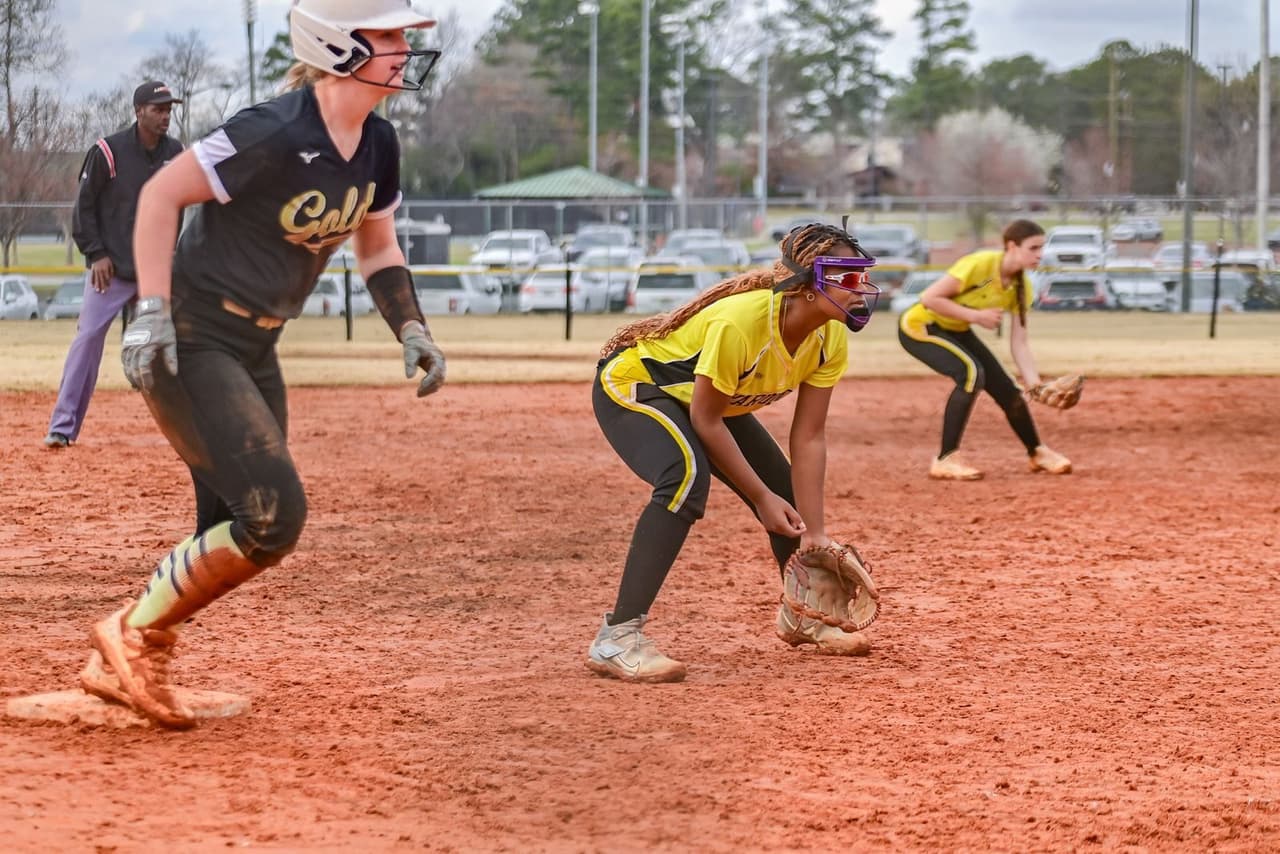
In baseball, a bunt is a slow play. In fastpitch softball, it is the fastest play in the game. The bases are 60 feet at every level, the pitcher finishes her delivery close to the plate, and a good bunter can be halfway to first before your third baseman has the ball in her glove. Add a left-handed slapper running through the box, and you have a defense that has to make up its mind in about the time it takes to blink.
This guide covers softball bunt coverage (who charges, who covers each base), how to set up a slap defense, and how to read a slapper before the ball is on the ground. For the full position-by-position bunt defense reference, including squeezes and drag bunts, see our bunt defense handbook guide. This article covers what is different about softball.
Quick answer: In softball bunt coverage, the first and third basemen play in front of their bags and charge on the pitch, the pitcher fields the middle, the catcher fields in front of the plate and calls the base, the second baseman covers first, and the shortstop covers second (or third, when there is a runner on second and the third baseman charges). Against a slapper, pull the shortstop in too, read her feet and hands, and field every slap on the move.
Why softball bunt defense is different
Get the distances right before you plan anything.
| Level | Bases | Pitching distance |
|---|---|---|
| 10U fastpitch | 60 ft | 35 ft |
| 12U fastpitch | 60 ft | 40 ft |
| 14U and up, including high school | 60 ft | 43 ft |
The bases never move. The pitching distance does, and at every level the pitcher throws from a flat circle much closer to the plate than a baseball pitcher. That changes bunt defense in three ways:
- The corners start in. On a 90 foot baseball field, a third baseman can start near the bag and still get to a bunt. On a 60 foot field, the batter gets to first too fast for that. Most fastpitch corners play several steps in front of their bags any time a bunt or slap is possible.
- The pitcher is part of the infield. She finishes her motion a few big steps from the plate, so anything bunted back at her is her ball.
- Runners go on the release. In fastpitch, runners can leave the base when the pitcher releases the ball, so a runner on first is often moving as the bunt goes down. Check your league's rules, because some younger rec divisions restrict stealing.
Basic softball bunt coverage
Here is one common set of responsibilities for the two bunt situations you will see most. There are other good systems. Pick one, name it, and practice it until nobody has to think.
| Position | Runner on first | Runner on second (or first and second) |
|---|---|---|
| Pitcher | Fields the middle, anything back at her | Fields the middle, anything back at her |
| Catcher | Fields bunts in front of the plate, calls the base | Fields bunts in front of the plate, calls the base |
| First baseman | Plays in, charges, fields the first base side | Plays in, charges, fields the first base side |
| Second baseman | Covers first | Covers first |
| Shortstop | Covers second | Covers third when the third baseman charges |
| Third baseman | Plays in, charges, fields the third base side | Plays in, charges, fields the third base side |
| Left fielder | Moves in toward third, backs up third | Backs up third |
| Center fielder | Backs up second | Moves in to cover second |
| Right fielder | Backs up first | Backs up first |
Who covers third with a runner on first
This is the hole teams forget. With a runner on first, both corners charge and the shortstop covers second, so nobody is at third. A fast runner who sees the ball go to first will keep running. Decide in practice who owns third on that play. Many teams give it to the catcher once the throw goes to first, some to the pitcher, and the left fielder backs it up either way. What matters is that the answer is the same every time.
Who covers second with runners on first and second
When the shortstop rotates to third, second base is empty. That is the softball version of the baseball wheel play, and the fix is the same: the center fielder comes in to cover second. If your shortstop cannot get to third in time from where she plays, keep it simple: the third baseman reads the bunt, the pitcher takes anything she can reach, and the throw goes to first.
Take the out
The catcher calls the base, and the default call is first. A bunt fielded on the run at 12U with a throw to second or third is a coin flip, and a missed force usually means two runners in scoring position and nobody out. Go for the lead runner only when the fielder is already facing that base with the ball in her glove.
Slap defense
A slapper is a left-handed batter who starts deep in the box and runs through it toward the pitcher as the pitch comes, making contact on the move. Many slappers are natural right-handers who learned to hit from the left side for the head start to first. You will see a few at 12U travel ball and more at 14U and high school.
A slapper has four main options:
- Soft slap: chops the ball down so it bounces high on the left side, usually toward short or third. By the time it comes down, she is nearly at first.
- Hard slap: drives the ball on the ground through or past the charging infielders.
- Bunt or drag bunt: runs through while bunting, usually down the third base line.
- Swing away: plants and takes a full swing, which punishes an infield that has moved too far in.
How to set up against a slapper
One common alignment, adjusted for how good the slapper is:
- Third baseman: in, but not all the way. She needs to be close enough to field the bunt and far enough back to react to a hard slap at her.
- First baseman: in to take the bunt on the right side.
- Shortstop: moves in, often to the front edge of the dirt, because the soft slap to the left side is the most common play and she has to charge it. This is the biggest change from a normal alignment.
- Second baseman: ready to break to first, since the first baseman is coming in.
- Pitcher: finishes her delivery ready to field, because a hard slap right back at her is common.
- Outfield: some coaches pull the left and center fielders in several steps, since most slappers do not drive the ball deep. Against a slapper who can swing away, keep them honest.
Every slap to the left side is a race. The throw from shortstop is the longest in the infield, so fielders have to field the ball moving toward it and throw in one motion. That is a skill that takes reps, and 10U infielders will not have it yet. That is fine. At 10U, most slappers are still learning too.
Reading a slapper
The defense cannot wait until contact, and it cannot guess early either. Here is what to watch. Treat each one as a clue, not a guarantee, because good slappers work on hiding exactly these things.
- Her feet. A slapper running through usually crosses her back foot over in front of her front foot, toward the pitcher. If she plants and stays back instead, the full swing is coming.
- Her hands. On a slap, the hands stay back and the bat stays up until late. On a bunt, the bat comes out flat over the plate, often early.
- Where she starts in the box. Many slappers start deep and move up. A batter who starts forward and squares early is usually bunting.
- The count and the score. A slapper ahead in the count is more likely to swing away. With two strikes, a bunt foul is an out, so the bunt is less likely.
Teach your infielders to say what they see. A third baseman who yells "slap" or "bunt" as the batter moves gets the whole infield on the same read.
What to run at each level
10U: Keep bunt coverage simple. Corners in, second baseman to first, throw to first. Bunts work at this age because the ball is hard to field cleanly, not because the defense is out of position. Spend your time on fielding a rolling ball and making a firm throw to first.
12U: Add the runner on second coverage, with the shortstop rotating to third, and start teaching the slap reads, because slappers show up in travel ball at this age.
14U and high school: Run the full slap defense, adjust by hitter, and expect good teams to test your coverage with bunts, slaps, and runners moving on the release.
How to practice it
Softball bunt coverage is a whole-team play, so it needs its own block. Put it in the practice planner with a live bunter and runners, and add a slapper, or a coach running through the box, once the basic coverage is clean. Our softball practice plans include situational defense by age, and the softball drill library has more infield work. For the hitter's side of the bunt, see bunting for a hit.
It also helps to know who is playing the corners and short before the game starts. If you rotate positions for playing time, look at your fielding plan from the lineup generator and know which innings your best bunt fielders are at third and first, and which innings they are not. The softball positions guide covers what each spot asks of a player.
The takeaway
Softball bunt defense is decided by distance. With 60 foot bases, the corners start in, the second baseman covers first, someone has to own third, and the default throw goes to first. Slap defense adds one more piece: bring the shortstop in and read the slapper's feet and hands. Choose one system, name every responsibility, and practice it until your players do not have to think about where to go.
About the Author
Youth and high school baseball and softball coaches focused on player development, fair playing time, and helping coaches run better games.
Tags
Ready to Generate Your Perfect Lineup?
Try our free softball and baseball lineup generator to create balanced, fair lineups in minutes.
Try Free Lineup Generator