Pitch Count Rules by Age: Little League, USSSA & Travel Ball Limits
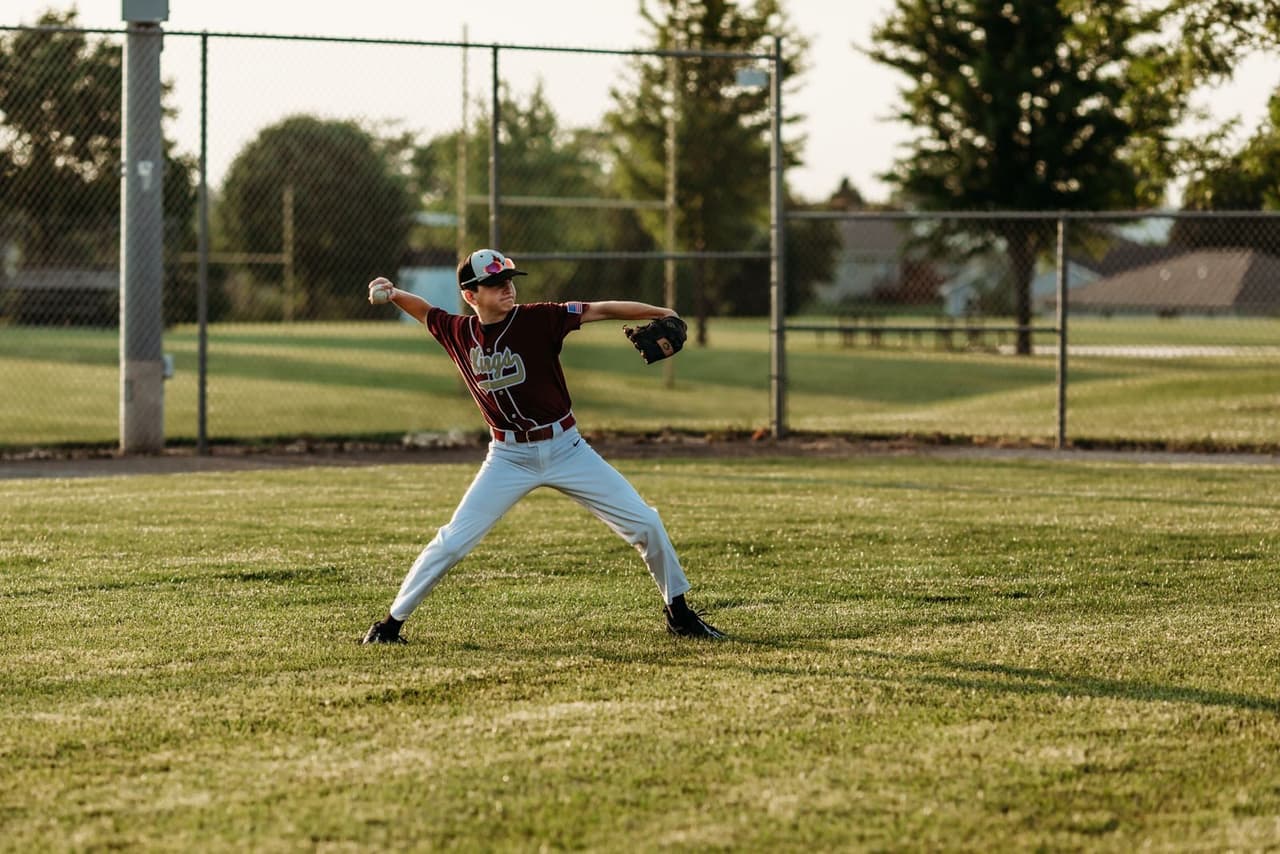
If you just volunteered to coach and someone mentioned "pitch counts," here is what you need to know. A pitch count is simply the number of pitches a player throws in a game. Most youth organizations cap how much a kid can throw in a day and require rest before they pitch again, all of it meant to protect growing arms from overuse.
What trips people up is that they do not all count the same way. Little League and most high school associations count pitches. USSSA counts innings. Plenty of travel tournaments count nothing at all. So "what is the limit" has a different answer depending on whose game you are standing in.
This guide puts each organization's actual rule in one place, in its own units, so you always have the answer when a parent asks "can my kid pitch today?"
Little League Baseball Pitch Count Rules
Little League has the most clearly defined pitch count rules in youth baseball. These limits are mandatory for all Little League divisions and are strictly enforced during tournament play.
Daily Maximum Pitch Counts
| League Age | Daily Max |
|---|---|
| 6-8 | 50 pitches |
| 9-10 | 75 pitches |
| 11-12 | 85 pitches |
| 13-16 | 95 pitches |
Little League baseball stops at 13-16. There is no 17-18 division: Little League restructured its teenage divisions after 2016 and Senior League (13-16) is now the oldest. If you have seen a 105-pitch limit attached to Little League, that number comes from Pitch Smart, which is a different set of guidelines covering ages 17-18. The one exception is the Challenger Division, which does carry a 17-and-older band at 105.
Required Rest Days (Ages 14 and Under)
| Pitches Thrown | Rest Days Required |
|---|---|
| 66+ | 4 calendar days |
| 51-65 | 3 calendar days |
| 36-50 | 2 calendar days |
| 21-35 | 1 calendar day |
| 1-20 | 0 calendar days |
Required Rest Days (League Age 15-16)
| Pitches Thrown | Rest Days Required |
|---|---|
| 76+ | 4 calendar days |
| 61-75 | 3 calendar days |
| 46-60 | 2 calendar days |
| 31-45 | 1 calendar day |
| 1-30 | 0 calendar days |
For players aged 17-18, who are past Little League baseball entirely, Pitch Smart is the standard most often applied. It allows up to 105 pitches a day, and its rest schedule differs from the chart above: 4 days at 81-105 pitches, 3 days at 61-80, 2 days at 46-60, 1 day at 31-45, and none at 30 or fewer.
Key Little League Pitching Rules
- A pitcher who reaches the daily limit during an at-bat may finish that batter. Specifically, they may continue until that batter reaches base, is put out, the third out ends the half-inning, or the pitcher is removed.
- Pitch count is based on the pitcher's league age, not their calendar age.
- Under no circumstance may a player pitch on three consecutive days, no matter how few pitches were thrown.
- In Minor League, Little League (Majors) and Intermediate (50-70), a player may not pitch in more than one game in a day at all. There is no pitch threshold that unlocks a second appearance. Junior and Senior League do allow two games in a day, and there the cutoff is 31 or more pitches in the first game. A 12-year-old playing up in Junior or Senior League may never pitch twice in a day.
- Each league must designate the scorekeeper or another game official as the official pitch count recorder. That is one recorder per game appointed by the league, not one per team.
- The manager must remove the pitcher once the limit is reached (after completing the current batter).
A separate rule catches a lot of coaches out: if a player has caught three or fewer innings and then throws 21 or more pitches, they cannot go back behind the plate that day. The 21-pitch number belongs to that catcher rule, not to anything about second games.
USSSA Baseball Pitching Rules
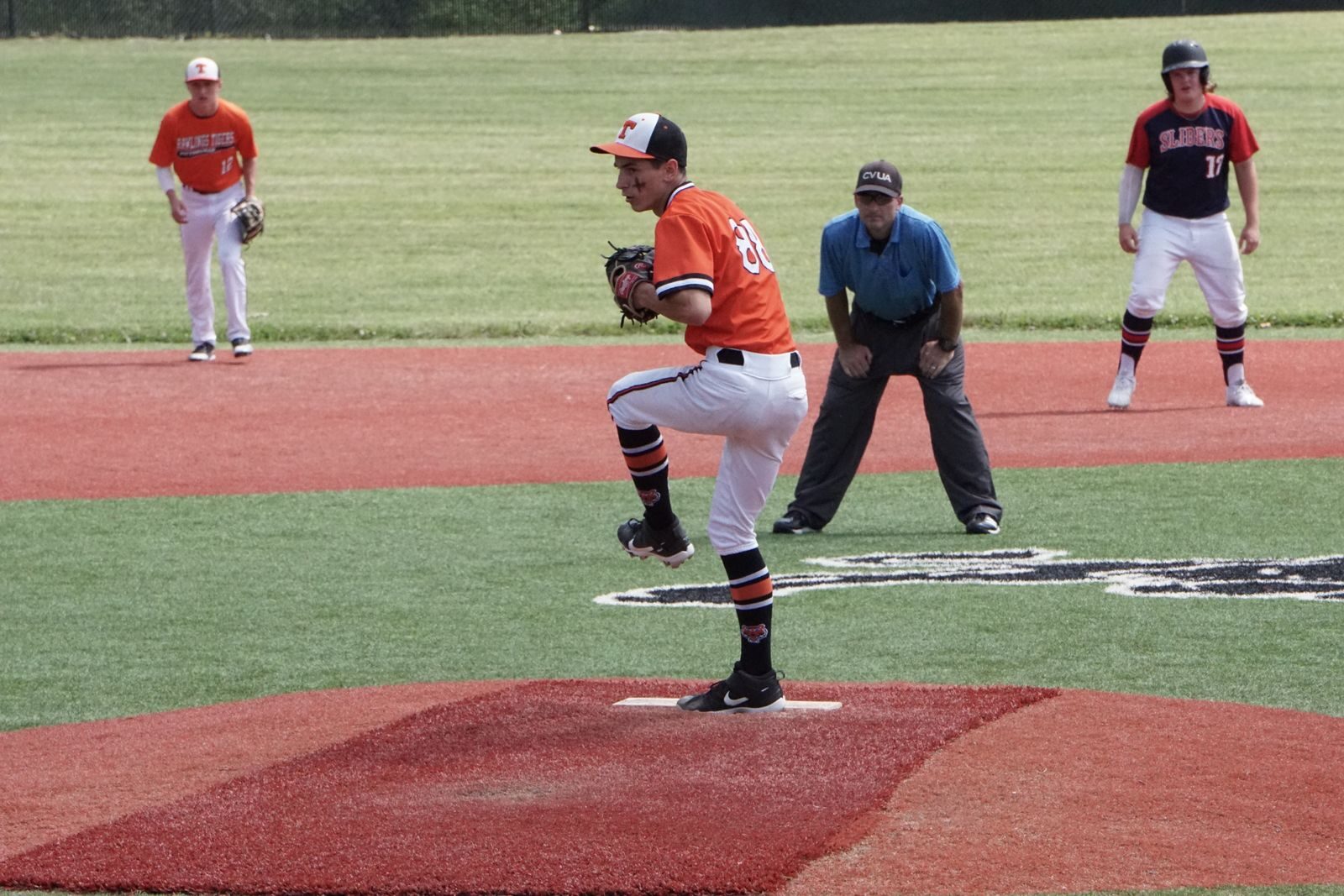
This is the section most often gotten wrong online, including by pages that simply copy the Little League chart across. USSSA does not limit pitchers by pitch count. It limits them by innings.
The 2026 USSSA National By-Laws (Rule 7.05.B) work like this:
| Division | Max to pitch again the next day | One-day max | Three-day max |
|---|---|---|---|
| 7U-12U | 3 innings | 6 innings | 8 innings |
| 13U-14U | 3 innings | 7 innings | 8 innings |
| 15U-18U (Scholastic) | No limit | No limit | No limit |
Mandatory rest under those by-laws:
- Pitch more than 3 innings in a day, rest the next day.
- Pitch 8 innings across two consecutive days, rest the next day.
- Pitch on three consecutive days, rest the next day, regardless of how few innings.
One out counts as one third of an inning, so a pitcher who records a single out in an inning has used a third of one, not a whole one.
Pitch counts appear exactly once in the by-laws: Rule 7.05.B.9 says pitch counts may be used in Major Events with the approval of the Association's EVP of Baseball Operations. They are the exception, not the standard. The by-laws do not adopt Pitch Smart or USA Baseball pitching guidance.
Note also that USSSA state associations, including Florida, California, Georgia and Ohio, publish their own local pitching rules that can override the national by-laws. Check your state's page as well as the tournament packet.
Travel Ball and Tournament Pitch Counts
Travel ball pitch count rules vary widely depending on the sanctioning body and individual tournament directors. There is no single standard.
Here is what you will typically encounter:
- Pitch Smart guidelines: Some tournaments adopt the USA Baseball Pitch Smart limits, which run to 105 pitches a day at ages 17-18. This is becoming more common.
- Inning limits: Many tournaments use inning limits instead of pitch counts. Common limits include a maximum of 3 innings per game or 6 innings per day.
- Organization-specific rules: Perfect Game, USSSA, Nations Baseball, and other organizations each have their own policies. These can differ from event to event.
- No formal limits: Some tournaments, particularly smaller local events, do not enforce any pitch count rules at all.
If a tournament does not enforce pitch counts, you still should. The arm does not know the difference between a sanctioned tournament and a weekend showcase. The physical stress on the elbow and shoulder is the same regardless of whether anyone is keeping count. Keep your own pitch count tracker running for every game.
High School Pitch Count Rules
High school pitching rules vary by state. Many state high school athletic associations have adopted pitch count limits, but some still rely on inning limits alone.
General Framework
- Most states that enforce pitch counts follow guidelines close to the Pitch Smart recommendations.
- Common high school daily limits fall between 105 and 110 pitches per day.
- State rest schedules do not mirror the Little League chart. New Jersey, for example, allows 110 pitches for varsity with four days of rest at 91-110, and adds a 150-pitch cap across any five days. Georgia allows 110 for varsity and 90 for sub-varsity, with a maximum of three rest days rather than four. The bands differ state to state, so read your own.
- Some states mandate pitch count tracking software or official scorekeepers.
Check your specific state's high school athletic association website for the exact rules that apply to your program. NFHS rule 6-1-6 requires every member state association to have a pitching restriction policy based on pitch counts, but it deliberately leaves the numbers to each state, so there is no single national high school limit.
Why Pitch Counts Matter
The science behind pitch count limits is well established.
- UCL injuries in youth players have increased significantly over the past two decades. Tommy John surgery, once rare in players under 18, is now performed thousands of times per year on high school and youth athletes.
- Young arms are still developing. Growth plates in the elbow and shoulder do not fully close until the late teens or early twenties. Overuse during this period can cause permanent damage.
- Fatigue is the number one risk factor for pitching injuries. Studies consistently show that as a pitcher accumulates pitches within a game, the mechanics break down and stress on the arm increases.
- More pitches equals more stress equals higher injury risk. This is not a matter of opinion. It is a measurable biomechanical fact.
- Rest days are just as important as daily limits. A pitcher who throws 60 pitches on Monday and 60 pitches on Tuesday has accumulated more arm stress than a pitcher who throws 80 pitches on Monday and rests for two days. Recovery time between outings is critical.
Signs of Arm Fatigue to Watch For
Even within the allowed pitch count, a pitcher can show signs of fatigue, and fatigue is the single biggest risk factor there is. ASMI, the lab behind most of the research these limits rest on, names these specifically:
- Decreased ball velocity
- Decreased accuracy
- An upright trunk through the delivery
- A dropped elbow, which usually shows up as the arm angle sliding toward sidearm
- Increased time between pitches
Add the ones any coach can see from the dugout: rubbing or shaking out the arm, wincing during or after a delivery, and complaints of soreness. Worth watching too, though it appears on no official list, is the kid who suddenly does not want the ball.
Any of these is reason to pull a pitcher, whatever the count says.
A pitch count limit is a ceiling, not a target. Just because a 10-year-old is allowed to throw 75 pitches does not mean they should throw 75 pitches every outing.
Tips for Coaches
- Track every pitch, every game, every practice. Use our free Pitch Count Tracker to keep an accurate count in real time.
- Communicate with parents about their child's pitch count after every game. Parents should know how many pitches their kid threw and when they are eligible to pitch again.
- Build your pitching rotation early in the season so you are not relying on one arm for every big game. Develop three or four pitchers at minimum.
- Warm-up pitches and bullpen sessions count. They are still pitches. If a pitcher throws 30 pitches in the bullpen before the game, that stress adds to their daily total even if the official game count starts at zero.
- When in doubt, sit them. No single game is worth a season-ending injury. No season is worth a career-ending injury. Protect the arm first.
Tags
Track Pitch Counts in Real Time
Count pitches from your phone during the game, see rest days for every pitcher, and know who is eligible before you hand over the ball.
Open the Pitch Count Tracker