What Is a Baseball Position Generator? (And When a Youth Coach Needs One)
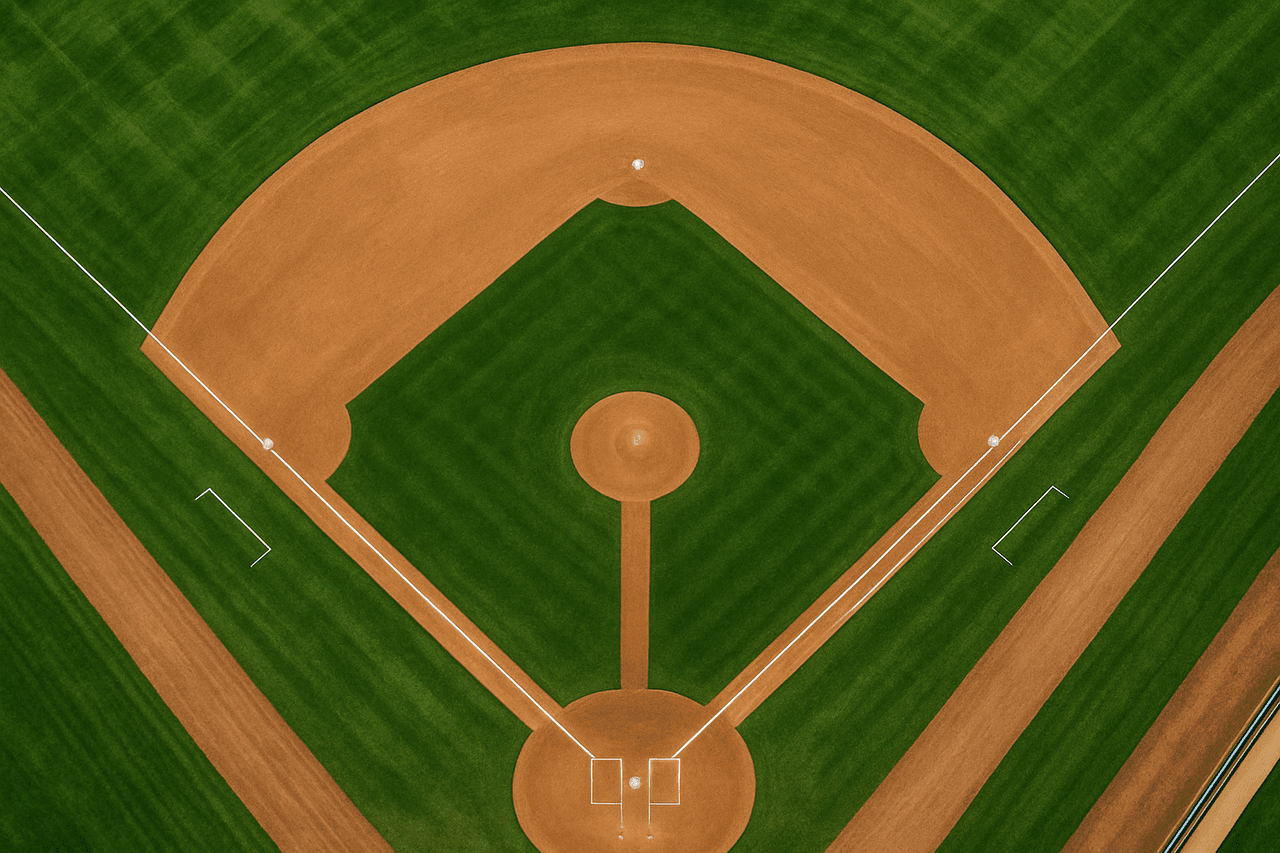
A baseball position generator is a tool that assigns each player a fielding position for every inning of a game. You give it your roster and your league's rules, and it produces an inning-by-inning defensive plan: who pitches, who catches, who is in the outfield, and who sits, with playing time kept fair across the whole game. Most coaches meet one as part of a lineup generator, which handles the batting order too.
That is the definition. The more useful question is why these tools exist at all, because on paper, assigning positions sounds easy. Nine spots, eleven kids, how hard can it be?
The Problem It Solves
Here is the actual job, the one youth coaches do on a clipboard at 10pm:
- 11 or 12 kids, 9 or 10 positions, so someone sits every inning, and it has to even out
- Half your roster cannot safely catch, two kids are your only real pitchers, and one is on a pitch-count limit from Tuesday
- Every kid should move around during the game, because eight-year-olds find out what they love by playing everywhere
- Nobody should live in the outfield all game, and nobody should sit twice before everyone sat once
- Then one kid texts that he is sick, and every one of those calculations starts over
Each rule is simple. Holding all of them at once, for six innings, every game, all season, is the hard part. A position generator is just software doing that bookkeeping perfectly and instantly, so the coach can spend the time coaching.
If you want to see what "normal" looks like when the bookkeeping is done right, we analyzed 4,765 real youth lineups: the average kid plays 3 to 4 different positions in a six-inning game, and about two players sit per inning at typical roster sizes. Those are the numbers a good position generator hits without you thinking about it.
Position Generator vs. Random Generator: Not the Same Thing
A lot of coaches go looking for a random baseball position generator, and the instinct makes sense: random feels fair, like drawing names from a hat.
But random and fair are different things:
- Random ignores your rules. A hat draw will eventually put your newest player at first base with the game on the line, or hand pitcher to a kid whose league innings are capped.
- Random is streaky. Flip a coin ten times and you get runs of heads. Draw positions randomly for a month and some kid pulls right field four games straight. Parents do not experience "random." They experience the streak.
What you actually want is variety with accounting underneath: assignments that feel shuffled, while the tool quietly tracks every player's innings at each position, bench time, and infield vs. outfield mix, and steers the next game back toward even. A good position generator gives you a regenerate button for the shuffle feeling, with the fairness math running underneath every result.
Baseball Positions by Number: The Standard 9-Player Chart
Two reference charts cover nearly every youth league. First, the baseball positions by number, the same 1 through 9 every scorekeeper uses:
| # | Position | Zone |
|---|---|---|
| 1 | Pitcher (P) | Infield |
| 2 | Catcher (C) | Infield |
| 3 | First Base (1B) | Infield |
| 4 | Second Base (2B) | Infield |
| 5 | Third Base (3B) | Infield |
| 6 | Shortstop (SS) | Infield |
| 7 | Left Field (LF) | Outfield |
| 8 | Center Field (CF) | Outfield |
| 9 | Right Field (RF) | Outfield |
Softball Positions by Number: The 10-Player Chart
Second, the softball positions by number for the 10-player defense used in slow pitch softball and many rec leagues, which adds one fielder:
| # | Position | Zone |
|---|---|---|
| 1-9 | Same as baseball | |
| 10 | Short Fielder / Rover (SF) | Outfield |
The tenth player usually plays as a fourth outfielder or floats behind second base, depending on your league. Co-ed leagues often layer gender rules on top, like a minimum number of each on the field. For the full breakdown of every position (what each one does, who to put there, and why), see our complete guides to baseball positions and softball positions. If you just want blank printable charts to fill in by hand, our lineup card templates are free PDFs, and the printable field diagram is handy for teaching younger kids where the positions are.
What a Good Position Generator Should Handle
If you are evaluating any tool (including ours), this is the checklist that separates a real position generator from a name shuffler:
- Position restrictions per player. "Cannot catch" and "only kid who can pitch" must be hard rules the tool never breaks.
- Fair bench rotation. Bench innings tracked and spread, not left to chance.
- Zone balance. Infield and outfield innings shared around, not just different patches of grass.
- Your league's defense. 9 or 10 fielders, co-ed minimums, non-standard setups for the littlest divisions.
- The ability to overrule it. You are still the coach. Drag a kid to shortstop for the first inning, keep your pitcher in place, and let the tool rebuild everything else around your call.
- A printable result. The output has to end up on a dugout fence, not trapped in an app.
Our free lineup generator does all six, along with the batting order, and does not require an account. Set your roster and rules once, and every game after that is a two-minute job.
Frequently Asked Questions
Is a position generator different from a lineup generator? A lineup generator does two jobs: the batting order and the fielding positions. The position generator is the fielding half. In practice you want them together so one printed card shows the whole game plan.
Does it work for Little League mandatory play rules? Yes, set your league's minimum innings and the rotation respects them. Our Little League lineup guide covers specifics by division.
What about 8 players, or extra fielders in tee ball? Good tools let you define whatever defense your league actually uses and rotate across it. Ours supports non-standard position setups for exactly this reason.
How many positions should each kid actually play? In real youth games, 3 to 4 per game is the norm, with more than 9 in 10 kids playing at least two. The full numbers are in our study of 4,765 youth lineups.
The position half of coaching should be the easy half. Define your rules once, let the position generator keep the books, and spend the saved hour on the parts of coaching a tool cannot do.
Generate your fielding rotation in about two minutes
Fair positions every inning, your restrictions respected, printable card included. Free, no registration.
Try the free position generatorAbout the Author
Beau Branton played college baseball at Stanford and professionally in the Seattle Mariners organization. He now coaches youth baseball and co-ed softball and builds the tools he wished he had as a coach.
Tags
Ready to Generate Your Perfect Lineup?
Try our free softball and baseball lineup generator to create balanced, fair lineups in minutes.
Try Free Lineup Generator