Batting Practice Distance Calculator
Find exactly where to stand so your batting practice feels like game speed
Tell it how hard you throw and the speed you want to simulate. Reaction-time matched for any league mound.
Quick reference: where to stand (feet)
| Your speed | 60 mph @ 46 ft | 70 mph @ 50 ft | 80 mph @ 60.5 ft | 90 mph @ 60.5 ft |
|---|---|---|---|---|
| 40 mph | 30.7 | 28.6 | 30.3 | 26.9 |
| 45 mph | 34.5 | 32.1 | 34.0 | 30.3 |
| 50 mph | 38.3 | 35.7 | 37.8 | 33.6 |
| 55 mph | 42.2 | 39.3 | 41.6 | 37.0 |
| 60 mph | 46.0 | 42.9 | 45.4 | 40.3 |
Distances under 30 ft are very close to the hitter. Use an L-screen and adjust effort as needed.
How it works
A hitter's difficulty comes from reaction time, the fraction of a second the ball is in the air, not the number on the radar gun. The ball covers less ground from a shorter distance, so a slower throw can give the hitter the same reaction window as a faster game pitch. To match them, scale your distance by the ratio of your speed to the game speed:
Example: you throw 45 mph and want it to feel like a 70 mph pitch from the 46 ft Little League mound. That is (45 / 70) x 46, which is about 29.6 ft. From there, your 45 mph throw reaches the hitter in the same time a 70 mph pitch would from the mound.
What is perceived velocity?
Perceived velocity is how fast a pitch feels to the hitter, set by the reaction window rather than the raw speed. The same concept drives pro and college training facilities, where pitchers and BP throwers move up to make a moderate arm play like high velocity. Move closer and the perceived speed climbs; move back and it drops.
Switch this tool to What does my BP feel like? to go the other direction: enter your speed and how far you stand, and it tells you the perceived game speed at the mound. It is a quick way to know whether your batting practice is challenging hitters at the level they actually play.
Pitching machine distance from home plate
For game-speed reps, set a pitching machine at the regulation mound distance for your level:
- Tee ball / coach pitch40 ft
- Little League (Majors)46 ft
- Intermediate 50/7050 ft
- Pony / Babe Ruth54 ft
- High school, college, MLB60 ft 6 in
- 10U / 12U / 14U softball35 / 40 / 43 ft
If your machine tops out below game speed, move it closer using the calculator above to keep the hitter's timing honest. A machine set to 50 mph at 36 ft, for instance, plays close to a 65 mph pitch from the Little League mound.
Gear for game-speed BP
The tools that turn the math above into a safe, fast-moving BP session.
*Affiliate links. We earn a commission at no extra cost to you.
Track your real throwing speed
Plug an actual radar reading into the calculator instead of guessing. The closer your input speed is to reality, the closer the distance it spits out matches the reaction time you wanted.

Bushnell Velocity Speed Gun
Entry-level radar gun. Point and shoot. Accurate to +/- 1 mph. Most coaches start here.
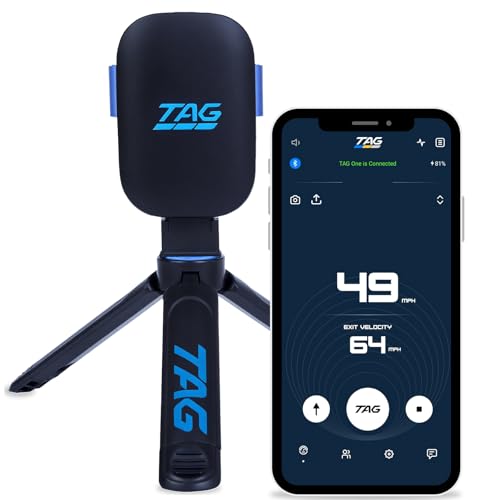
TAG ONE Sports Radar
Rechargeable, 6-hour battery. Works for baseball and softball. Bright display readable in sunlight.
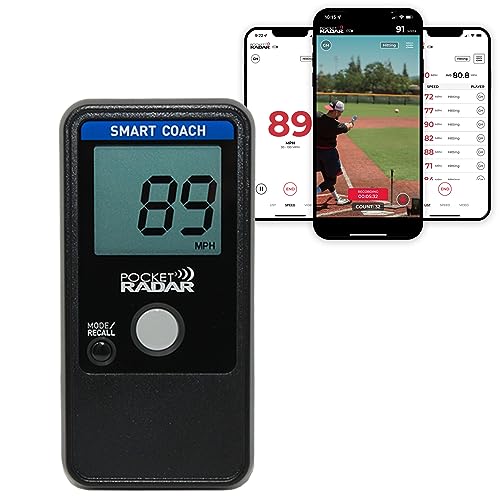
Pocket Radar Smart Coach
Used by MLB scouts and college programs. Bluetooth syncs with the Pocket Radar app for session tracking.
Set up safe, fast-moving BP
Reaction-time-matched BP means the ball gets there as fast as a game pitch. An L-screen is non-negotiable. A ball bucket keeps you throwing instead of bending. A cage net keeps balls from rolling away between reps.

Bownet L-Screen 8x7
Portable pitching protection screen. Pops up in under a minute. The standard L-screen at travel-ball and high-school programs.

Athletico Ball Bucket Cover
Padded seat lid that fits a 5-gallon bucket of balls. Sit, reach, throw, repeat. Saves your back over a long BP block.

Heater Sports Xtender 24 ft Batting Cage
Portable batting cage net + frame. Sets up in the yard, breaks down for the trunk. Keeps balls contained so BP doesn't become ball-hunting.
When your arm runs out, a machine plays at game speed
If you can't throw at game speed, move a slower machine closer using the formula above. A 50 mph machine at 36 ft plays close to a 65 mph pitch from the Little League mound.
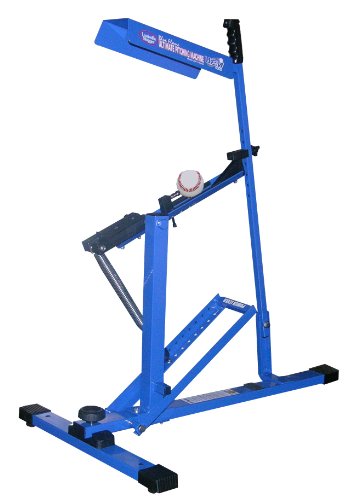
Louisville Slugger Blue Flame
Entry-level backyard machine. Throws baseballs, softballs, or training balls up to 50 mph. The right starting point for tee-ball through Little League BP.

Jugs Small-Ball Pitching Machine
Step up for travel ball and high school. Throws Jugs Small-Balls at up to 70 mph with real spin so reps train timing on real pitches, not soft toss.
Frequently asked questions
How close should I stand to throw batting practice?
Match the reaction time, not the radar speed. Divide your throwing speed by the game speed you want to simulate, then multiply by the game mound distance. For example, throwing 45 mph to mimic a 70 mph pitch from a 46 ft Little League mound means standing at (45 / 70) x 46, about 29.6 ft. Always throw from behind an L-screen.
What is perceived velocity?
Perceived velocity is how fast a pitch feels to the hitter based on how much time they have to react, not the number on the radar gun. A pitch thrown from a shorter distance reaches the plate sooner, so it plays faster than its actual speed. Throwing 50 mph from 40 ft feels like roughly 75 mph from 60 ft because the reaction window is the same.
How far should a pitching machine be from home plate?
Use the regulation mound distance for game-speed reps: 46 ft for Little League, 50 ft for 50/70 Intermediate, 54 ft for Pony and Babe Ruth, and 60.5 ft for high school, college, and pro. To make a slower machine play like a faster pitch, move it closer using the same reaction-time formula.
Does throwing BP closer actually make hitters better?
It can, when used on purpose. Throwing from a shorter distance compresses the hitter's decision time so they train to a faster perceived speed, which is useful for timing and pitch recognition. Keep it safe with an L-screen and do not crowd the plate so close that the hitter cannot track the ball.
Is this the same as the pitch speed converter?
The math is related, but the goal is different. The Pitch Speed Converter compares one speed across mound distances to answer "how good is this number." This tool answers "where do I stand" so a coach or parent can set up batting practice that feels like game speed.